A US study in mouse models found that chronic low-oxygen exposure—similar to living at high altitude—causes red blood cells to absorb roughly three times more glucose, rapidly lowering blood sugar. The effect persisted for weeks after returning to normal oxygen, and researchers identified a molecule that reduces hemoglobin’s oxygen affinity and appears to drive the change. A drug that mimicked this response reversed high glucose in diabetic mice, but human studies are needed before clinical use is considered.
High Altitude Triggers Red Blood Cells To Soak Up Glucose, Cutting Diabetes Risk In Mice

(Jordan Siemens/Stone/Getty Images)
New US research in mouse models of type 1 and type 2 diabetes suggests a physiological explanation for why people living at high altitude often have lower diabetes rates: chronic low oxygen makes red blood cells act like sponges for glucose, rapidly lowering blood-sugar levels.
What the Study Did
Researchers exposed rodents to sustained, controlled low-oxygen (hypoxic) conditions that simulate high-altitude air. They observed that red blood cells increased glucose uptake roughly threefold compared with animals breathing normal oxygen levels.
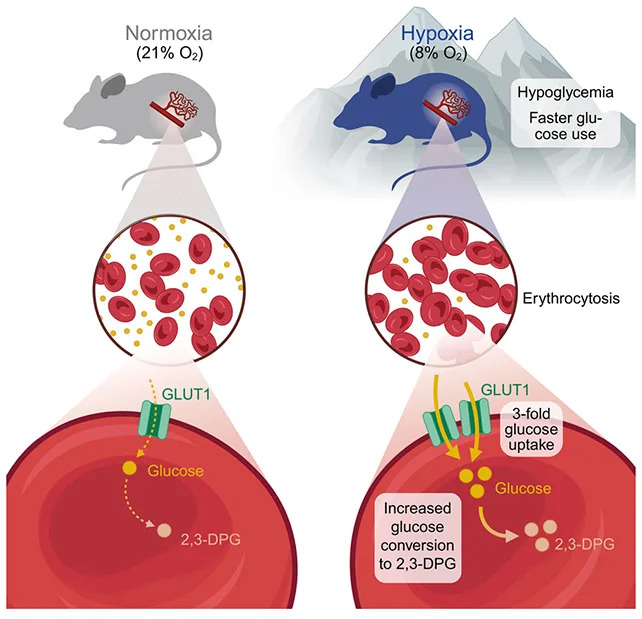
The researchers induced hypoxia in mice to study how glucose was handled. (Martí-Mateos et al.,Cell Metab., 2026)
Key Findings
The increased glucose uptake by red blood cells explained a rapid disappearance of glucose from the bloodstream that was not accounted for by usual tissues such as muscle, brain, or liver. Remarkably, the effect persisted for weeks after animals returned to normal oxygen, suggesting a durable physiological adaptation rather than a fleeting response.
The team identified a specific small molecule that modifies hemoglobin — the oxygen-carrying protein in red blood cells — reducing hemoglobin’s affinity for oxygen and improving oxygen delivery to tissues. That shift appears to drive the metabolic change that lets red blood cells consume more glucose under hypoxia.

Subscribe to ScienceAlert's free fact-checked newsletter
Therapeutic Implications And Caution
In diabetic mouse models, a newly developed drug that mimics key aspects of the high-altitude response reversed high blood-glucose levels, indicating a possible therapeutic route. The authors emphasize these are preclinical findings: further work is required to confirm whether the same mechanism exists and is safe to target in humans.
“Red blood cells represent a hidden compartment of glucose metabolism that has not been appreciated until now,” said biochemist Isha Jain of Gladstone Institutes. Angelo D'Alessandro (University of Colorado) added that red blood cells can account for a substantial fraction of whole-body glucose consumption under hypoxia.
Broader Context
The findings align with earlier work showing red blood cells adapt metabolically to low-oxygen environments, and similar mechanisms in other species suggest an evolutionary advantage at altitude. The study also offers a possible explanation for population differences: some high-altitude groups (for example, Sherpas) have genetic adaptations that alter typical responses to hypoxia and may not show the same red blood cell–driven glucose changes.
Publication: The research appears in the journal Cell Metabolism. The authors call for replication in human studies before any clinical application is considered.
Help us improve.