UC Irvine researchers report that in mice, high-fructose corn syrup (HFCS) can change intestinal fructose metabolism and the gut microbiome, leading to shorter intestinal lacteals and reduced dietary fat absorption. Mice lacking the intestinal enzyme Ketohexokinase-C ate the same calories but gained less weight and had better insulin sensitivity. Microbiome transplants transferred the effect to normal mice. The study was performed in mice, and human relevance has not been established.
Common Sweetener May Increase Dietary Fat Absorption, Mouse Study Suggests
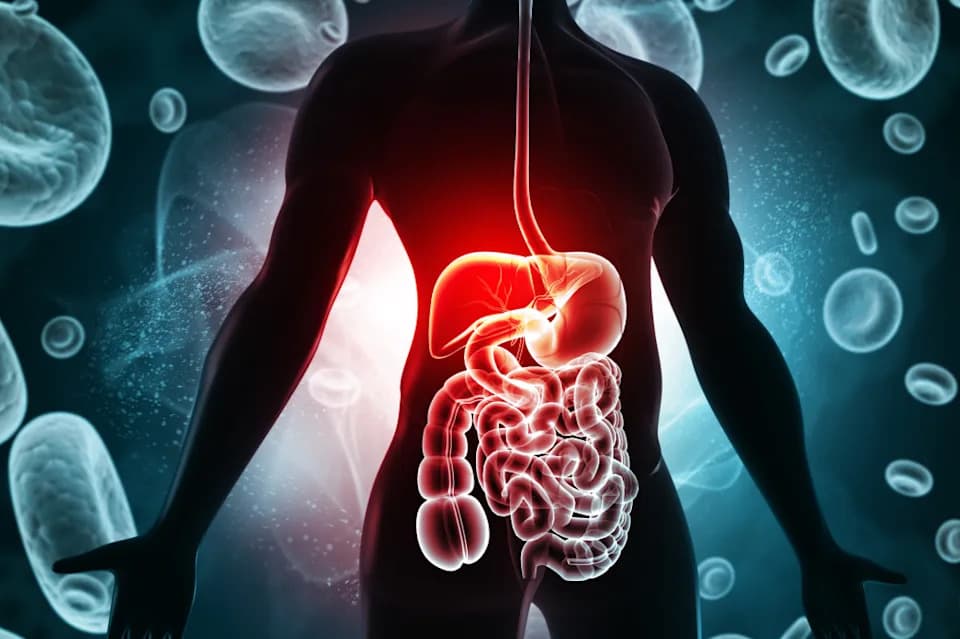
A detailed human digestive system anatomy illustration with red blood cells in the background.
New research from the University of California, Irvine suggests that a widely used sweetener — high-fructose corn syrup (HFCS) — can change the gut in ways that increase the body's uptake of dietary fat in mice. The study links altered intestinal fructose metabolism to shifts in gut bacteria and remodeling of tiny fat-absorbing vessels called lacteals, with consequences for body weight and insulin sensitivity.
What the Researchers Did
Scientists used a mouse model to examine the effects of blocking the enzyme Ketohexokinase-C (KHK-C), which helps break down fructose in the small intestine. For up to 12 weeks, mice received water containing HFCS while investigators tracked body weight, fat mass, blood glucose and intestinal fat absorption.
Main Findings
Mice lacking intestinal KHK-C consumed similar numbers of calories as control animals but gained significantly less weight, remained leaner and showed improved insulin sensitivity. The researchers found that when fructose was not metabolized in the small intestine it traveled farther down the gut, altering the composition of intestinal bacteria.
Those microbiome changes were associated with remodeling of ileal lacteals — the tiny vessels that transport dietary fat. In the modified mice, lacteals were shorter and absorbed less fat, so more dietary fat passed through the body instead of entering the bloodstream.
Testing Causality
To test whether the microbiome drove these effects, the team transplanted gut bacteria from the enzyme-deficient mice into normal mice. Recipients developed similar lacteal changes and reduced fat absorption, strengthening the evidence that microbial shifts mediated the effect.
Implications and Caveats
The paper, published in Science Advances, suggests fructose may influence body weight not only through its calories but also by changing how efficiently the intestine extracts fat from food. However, the authors emphasize that these experiments were performed in mice; the findings do not prove the same mechanism operates in humans. Further research is needed to determine whether similar pathways exist in people and whether they could be targeted to prevent obesity or metabolic disease.
Study citation: Lopez, M. L., et al., "Intestinal fructose catabolism promotes obesity and insulin resistance via ileal lacteal remodeling," Science Advances 12, eaec0481 (2026). DOI: 10.1126/sciadv.aec0481.
Bottom line: In mice, HFCS can alter intestinal fructose metabolism, reshape the microbiome and reduce lacteal fat absorption — changes that are linked to lower weight gain and better insulin sensitivity. Whether the same chain of events occurs in humans remains unknown.
Help us improve.