Mark Rutte told Reuters NATO will not invoke Article 5 after allied forces shot down a ballistic missile Turkey says came from Iran, calling the incident "serious" but denying any talk of collective defence. Turkey reported NATO air defences destroyed the missile; Iran denied launching it. Rutte warned Tehran could pose a growing threat to Europe and urged industry to scale up air-defence production so NATO can continue supporting Ukraine.
Rutte Says NATO Will Not Invoke Article 5 After Missile Shot Down Over Turkey — Calls Incident "Serious"
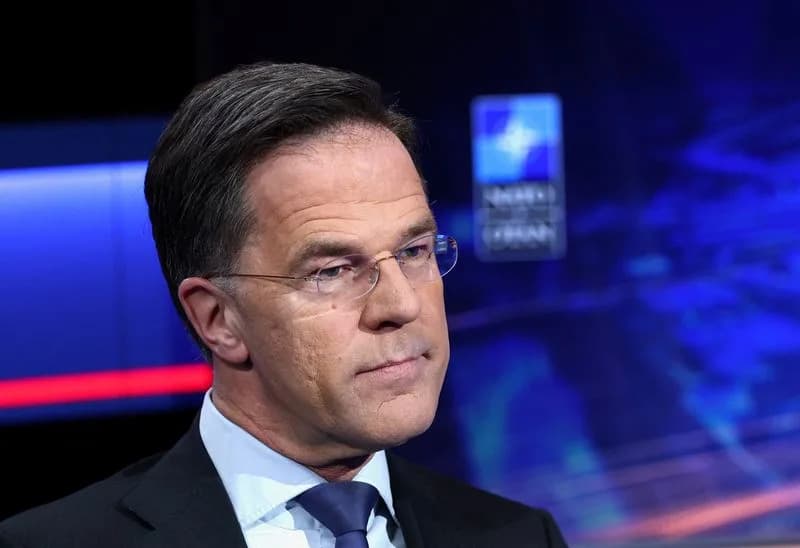
NATO Secretary General Mark Rutte reacts during a one-on-one interview with Reuters on the Iran crisis and Ukraine war, at the Alliance headquarters in Brussels, Belgium March 5, 2026. REUTERS/Yves Herman
BRUSSELS — NATO Secretary General Mark Rutte said on Thursday the alliance does not intend to invoke its Article 5 mutual defence clause after allied air defences shot down a ballistic missile that Turkey says was headed for its territory. He described the episode as "serious" but stressed there is no discussion of collective-defence action at this time.
"Nobody's talking about Article 5,"Rutte said in an interview at NATO headquarters, adding that the interception demonstrated how strong and vigilant the alliance is.
Turkish officials reported that NATO air-defence systems destroyed an Iranian ballistic missile as it approached or entered Turkish airspace, raising concerns that the U.S.–Iran conflict could widen and draw NATO into a broader confrontation. Iran's Armed Forces General Staff, however, denied that it had fired missiles at Turkey, saying the Islamic Republic respects the sovereignty of a "friendly" Turkey, according to Iranian state media.
What Article 5 Means
Article 5 of the NATO treaty states that an attack on one ally is considered an attack on all. It obliges members to take the actions they deem necessary to assist an ally under attack, which can include military measures, though any response requires consultation and consensus among allies.
As the U.S.–Iran confrontation entered its sixth day, the conflict had already extended beyond the Gulf region and into parts of Asia, unsettling global markets and prompting many tourists and residents to try to leave the Middle East.
Rutte said a number of NATO members back recent U.S. and Israeli strikes on Iran because they view Tehran as increasingly capable of posing a threat to Europe. At the same time, leaders in some NATO capitals — including Spain's Prime Minister Pedro Sánchez and Turkey's President Tayyip Erdoğan — have criticized the strikes, calling them a dangerous violation of international law.
Asked whether the United States had a clear end-state to avoid further instability that could threaten Europe, Rutte said his conversations with senior U.S. military and political officials gave him confidence that Washington understands its objectives.
Supporting Ukraine While Addressing New Threats
Rutte also said NATO leaders agreed they must find ways to continue supporting Ukraine in its defence against Russia even as Middle Eastern states urgently seek to expand air-defence capabilities. Noting that air-defence systems are in short supply, he urged industry to increase production of these "big-ticket" items the way it recently ramped up artillery ammunition output.
"We have to replicate what we are doing with ammunition when it comes to the other big-ticket items,"he said.
(Reporting by Andrew Gray; Writing by Inti Landauro and Sabine Siebold; Editing by Makini Brice, Richard Lough and William Maclean.)
Help us improve.