A 14th-century shipwreck off Singapore has revealed a record cargo of Yuan Dynasty blue-and-white porcelain, recovered after a four-year excavation. Researchers retrieved about 3.5 metric tons of ceramic fragments, including roughly 136 kg of identifiable Yuan porcelain featuring motifs such as dragons, phoenixes and mandarin ducks. The recurring duck-and-lotus design, tied to Emperor Wenzong (1328–1332), helps date the wreck between the late 1320s and 1371. The find underscores transregional trade—Persian cobalt was used for the pigments—and highlights Temasek’s 14th-century wealth.
14th-Century Shipwreck Off Singapore Yields Record Cache Of Yuan Blue-and-White Porcelain
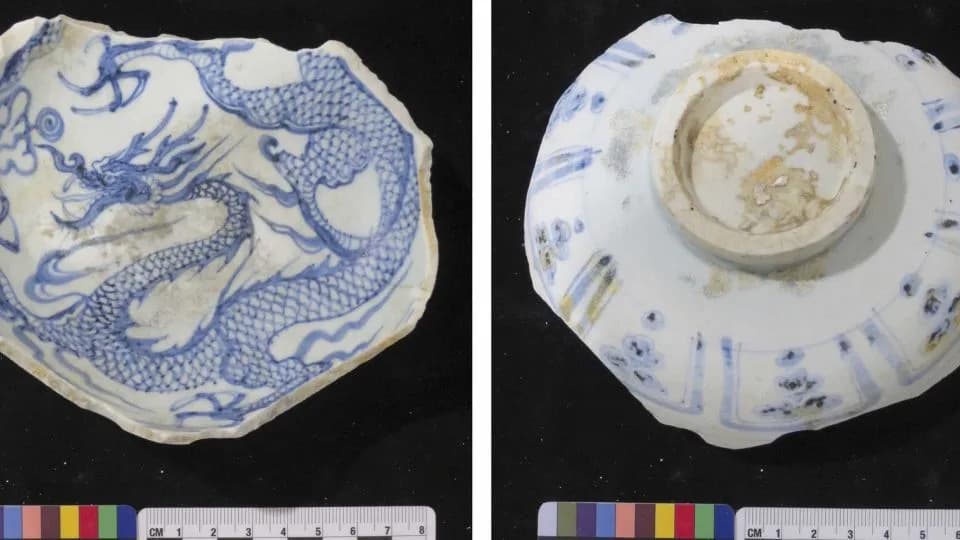
The blue-and-white porcelain is intricately decorated. - Michael Flecker/Science Direct
Archaeologists working off the coast of modern Singapore have uncovered a 14th-century shipwreck carrying an extraordinary cargo of blue-and-white porcelain from China’s Yuan Dynasty. The find—dated to roughly 650 years ago—sheds new light on Mongol-era craft, maritime trade routes and the prosperity of the historic settlement of Temasek.
What Was Found
Over four years of excavation, led by marine archaeologist Michael Flecker, the team recovered roughly 3.5 metric tons of ceramic fragments. About 136 kilograms (approximately 300 pounds) of that material were identified as Yuan Dynasty blue-and-white porcelain, including several intact or nearly intact pieces alongside many shards.
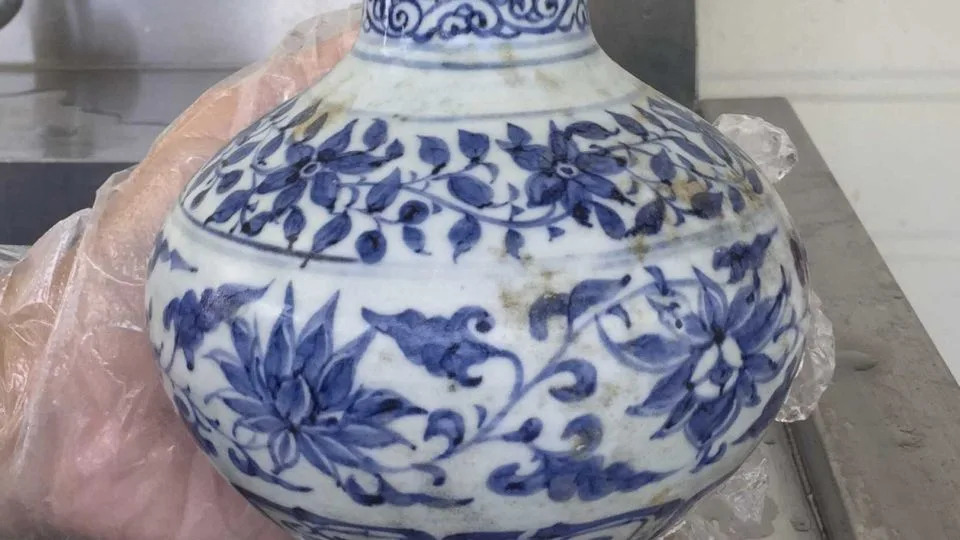
Archaeologists discovered about 136 kilograms (about 300 pounds) of Yuan Dynasty porcelain shards, along with several intact or nearly intact porcelain pieces, at the wreck. - Michael Flecker/Science Direct
Identifying Motifs
Preserved painted designs helped researchers date and contextualize the cargo. Notable motifs include a four-clawed dragon, a phoenix framed by a band of chrysanthemums, and repeated scenes of mandarin ducks in a lotus pond. The duck-and-lotus motif was once reserved for Emperor Wenzong (reigned 1328–1332) and its commercial proliferation after his deposition helps narrow the likely date range for the wreck.
Dating The Wreck
Combining stylistic evidence with historical events, the authors place a conservative date range for the sinking between the late 1320s and 1371. Imperial kiln closures after Red Turban disturbances (about two decades after Wenzong’s reign), the fall of the Yuan in 1368, and a Ming ban on maritime commercial trade around 1371 help define that window.
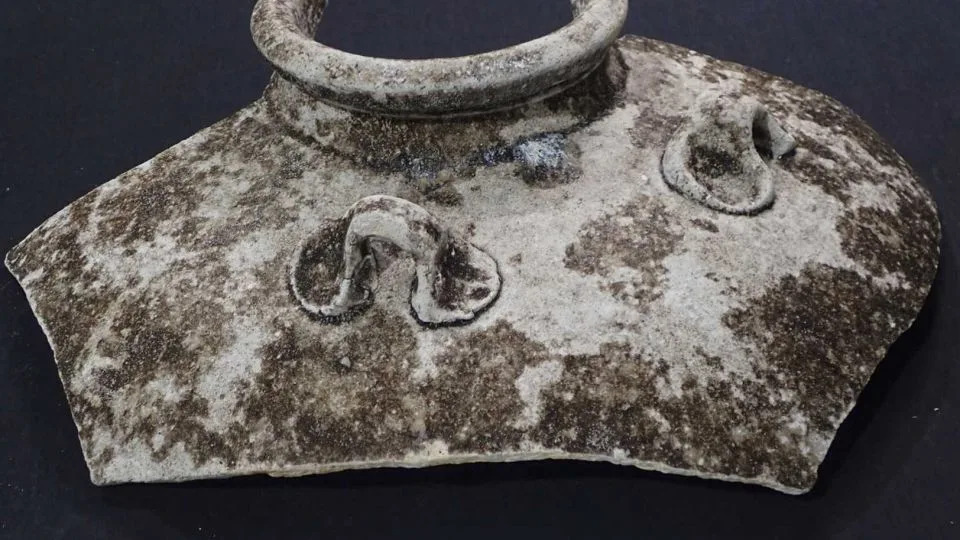
The ship itself had mostly disintegrated, but researchers recovered the remains of its huge ceramics cargo. - Michael Flecker/Science Direct
Challenging Excavation Conditions
Although the site was shallow, strong currents and very poor visibility limited diving to roughly one visit every four weeks. "Even then, we were occasionally sent tumbling along the seabed or groping our way back to the diver down-line in darkness," Flecker said. Those conditions contributed to the near-total disintegration of the wooden hull; few non-ceramic artifacts survived.
Trade Networks And Cultural Significance
The cargo likely embarked from Quanzhou, a major eastern Chinese port close to porcelain-producing regions in Fujian, Zhejiang and Jiangxi, and was probably bound for Temasek. Analyses indicate the blue pigment (cobalt) originated in Persia (modern-day Iran), highlighting transcontinental supply chains that fed China’s export ceramics and emphasizing the role of Mongol-era overland and maritime Silk Road networks.
Scholars note that Yuan blue-and-white porcelain represented a technological and artistic breakthrough whose importance was overlooked for decades. The scale and make-up of this cargo underline both the global demand for Yuan wares and Temasek’s status as a wealthy duty-free entrepôt in the 14th century.
Publication: The study describing the wreck was published in June 2025 in the Journal of International Ceramic Studies.
Help us improve.