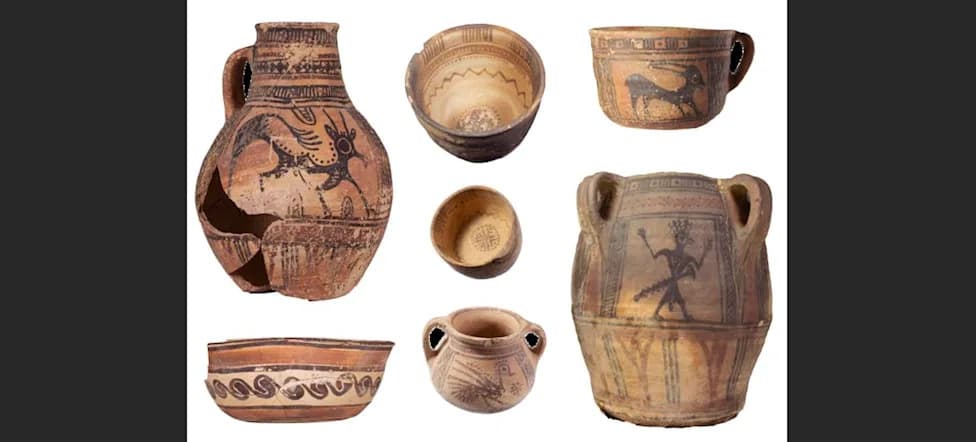
Jingdezhen, China’s “Porcelain Capital,” has preserved more than two millennia of ceramic craft while adapting to modern research and global exchange. Families like Chen Qing’s guard techniques handed down since the 19th century, while the Jingdezhen Imperial Kiln Institute uses archaeology and artificial intelligence to match and reconstruct ancient fragments. Universities and international residencies are bringing new generations of artists to revive and evolve the tradition.
Jingdezhen’s Porcelain Legacy: How China’s ‘Porcelain Capital’ Is Passing Centuries‑Old Craft to a New Generation
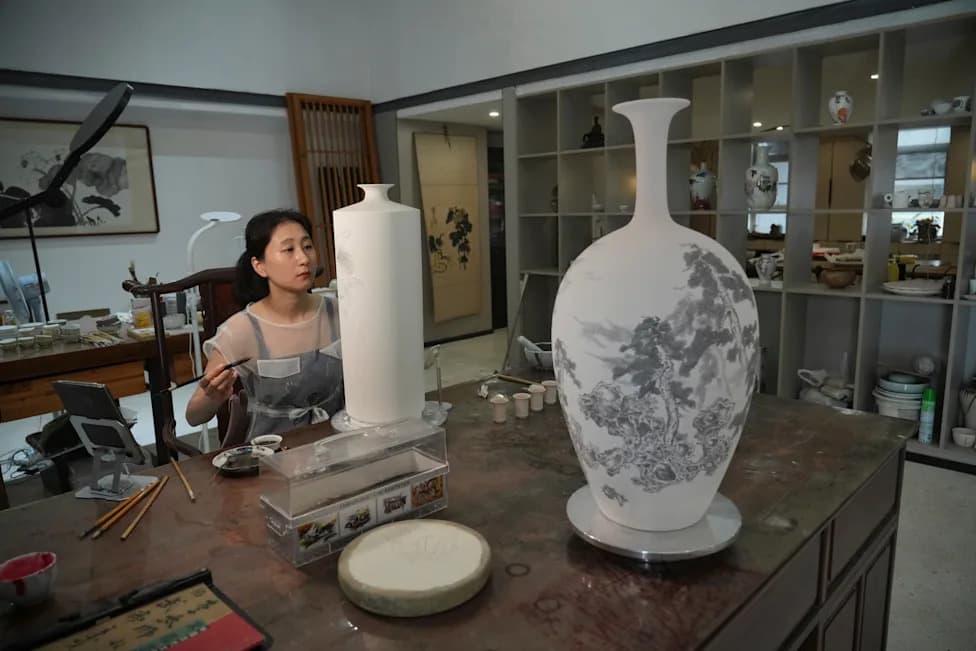
Chinese porcelain artist Chen Qing paints a vase in Jingdezhen, in eastern China's Jiangxi province, Tuesday, Sept. 1, 2026. (AP Photo/Achmad Ibrahim)(AP Photo/Achmad Ibrahim)
Chen Qing, a porcelain painter in Jingdezhen, remembers a childhood moment that captures how fragile and fiercely guarded these traditions are: her grandfather wrote down the family recipe for a distinctive red pigment, asked Chen’s mother to memorize it, then burned the paper minutes later. From then on the formula was transmitted orally.
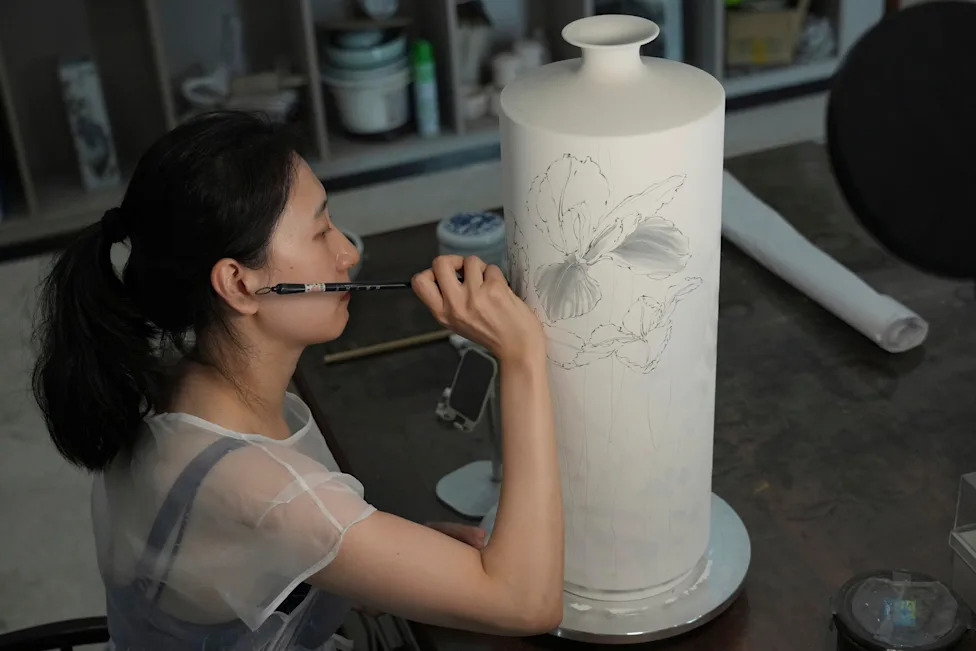
Chinese porcelain artist Chen Qing paints a vase in Jingdezhen, known as China's "Porcelain Capital," in eastern China's Jiangxi province, Tuesday, Sept. 1, 2026. (AP Photo/Achmad Ibrahim)(AP Photo/Achmad Ibrahim)
Heritage and Technique
Chen’s family has practiced porcelain painting in Jingdezhen since about 1860. The city, long nicknamed China’s “Porcelain Capital,” sits in Jiangxi province roughly 1,180 kilometers (735 miles) southeast of Beijing. Pottery production here stretches back more than 2,000 years to the Han dynasty, and in 2026 Jingdezhen’s porcelain sites were inscribed on UNESCO’s World Heritage List.
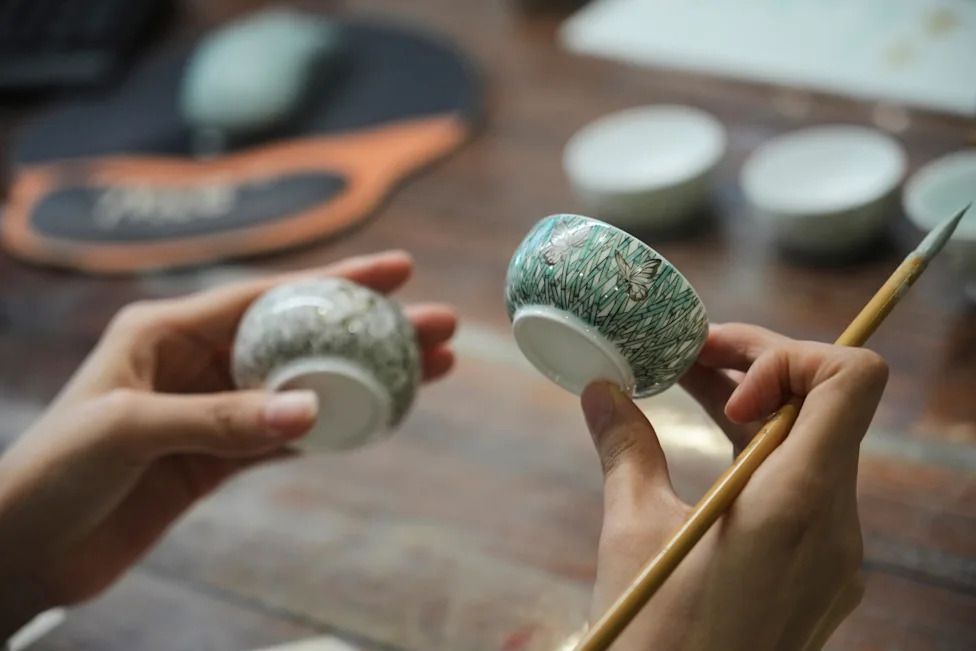
Chinese porcelain artist Chen Qing holds up two cups after painting them in Jingdezhen, known as China's "Porcelain Capital," in eastern China's Jiangxi province, Tuesday, Sept. 1, 2026. (AP Photo/Achmad Ibrahim)(AP Photo/Achmad Ibrahim)
Many techniques preserved in Jingdezhen were once used to produce porcelain for the imperial court and later spread to private artisans. “The craft is very difficult for an outsider to master,” Chen says. “A family might spend nearly a century developing a single technique.”
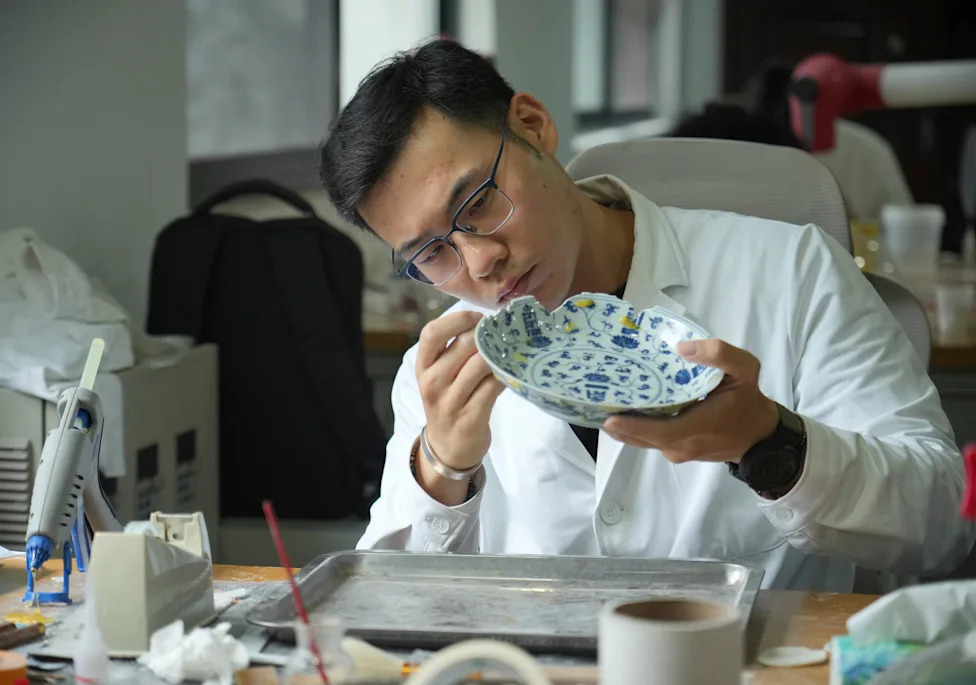
A researcher examines a plate at the Jingdezhen Imperial Kiln Institute which specializes in the research and restoration of ceramics excavated from the city's historic imperial kiln sites in Jingdezhen, in eastern China's Jiangxi province, Monday, Aug. 31, 2026. (AP Photo/Achmad Ibrahim)(AP Photo/Achmad Ibrahim)
Painstaking Craftsmanship
In her quiet studio, two tables hold brushes, unfinished pieces and pigments. Lamp light steadies her hand as she paints—never touching the porcelain surface, but anchoring her wrist on the rim to execute tiny, precise strokes. Painting a single teacup can take days; a speck of dust or a drop of sweat can ruin hours of work and force a restart. Landscapes are especially challenging because their tones and boundaries must blend subtly across the curved surface.
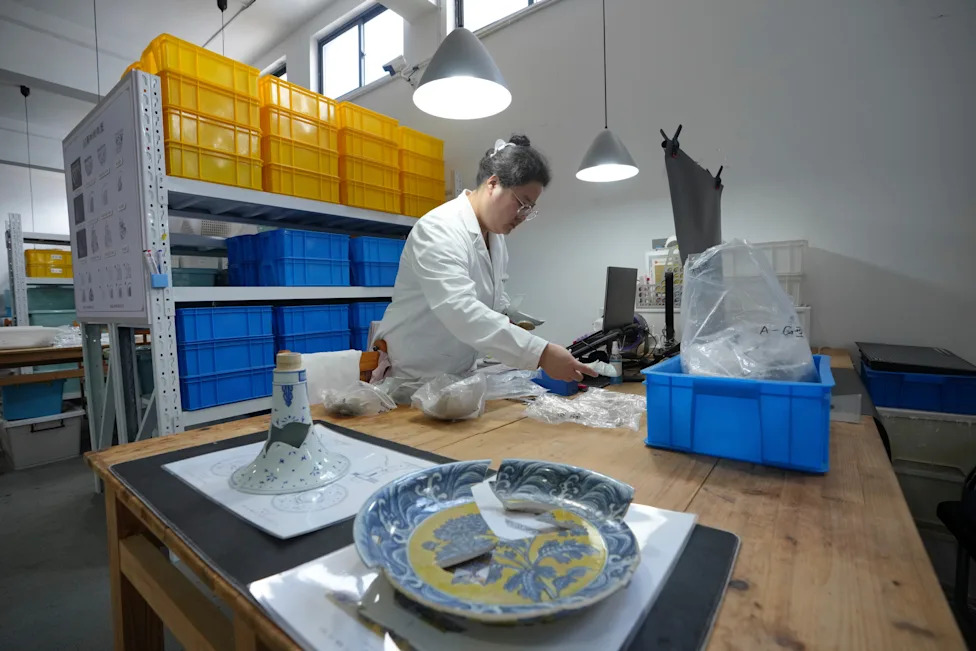
A researcher works at the Jingdezhen Imperial Kiln Institute which specializes in the research and restoration of ceramics excavated from the city's historic imperial kiln sites in Jingdezhen, in eastern China's Jiangxi province, Monday, Aug. 31, 2026. (AP Photo/Achmad Ibrahim)(AP Photo/Achmad Ibrahim)
“Mastering a craft is a lifelong process,” Chen says. “Few people are willing to spend more than 10 years learning such a painstaking craft.”
Research, Restoration and Modern Tools
Jingdezhen’s Imperial Kiln Institute researches and restores ceramics excavated from an adjacent imperial kiln complex whose remains are still visible. The institute is combining archaeological study with modern technologies—including artificial intelligence and a planned “ceramic gene bank”—to help match and reconstruct ancient fragments and to recover lost production methods.
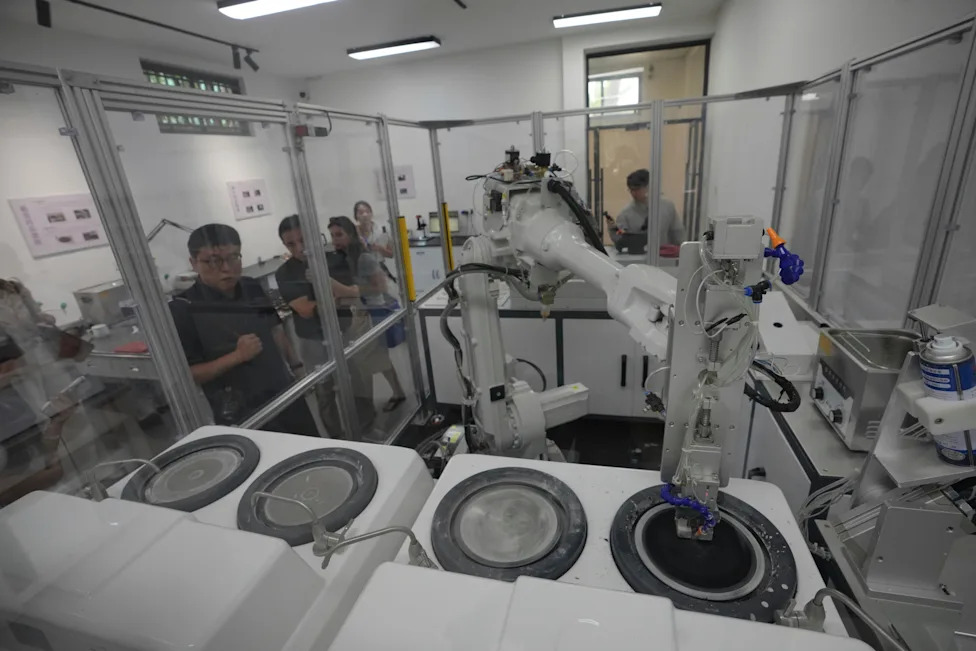
A robot with artificial intelligence helps to match and reconstruct ancient porcelain fragments at the Jingdezhen Imperial Kiln Institute which specializes in the research and restoration of ceramics excavated from the city's historic imperial kiln sites in Jingdezhen, in eastern China's Jiangxi province, Monday, Aug. 31, 2026. (AP Photo/Achmad Ibrahim)(AP Photo/Achmad Ibrahim)
“By the establishment of our ceramic gene bank, we can collect all kinds of information,” says institute president Weng Yanjun. “We hope that we can retrieve ancient technology with modern science.” The institute’s work also sheds light on the cultural and religious influences embedded in porcelain decorations, which reflect interactions with Buddhism, Taoism, Islam and later European Christianity.
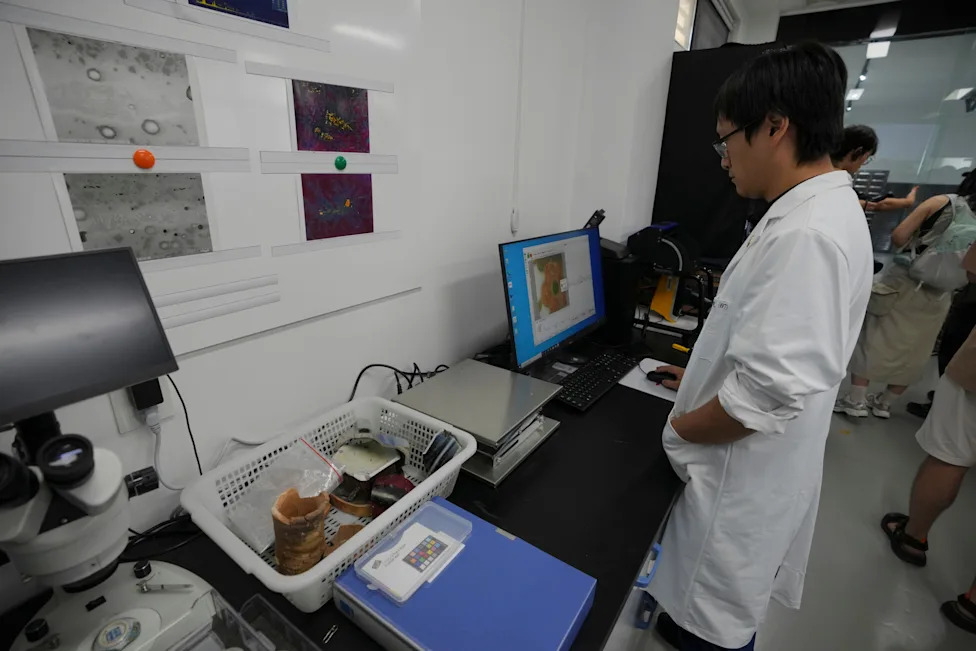
A researcher works with porcelain fragments at the Jingdezhen Imperial Kiln Institute which specializes in the research and restoration of ceramics excavated from the city's historic imperial kiln sites in Jingdezhen, in eastern China's Jiangxi province, Monday, Aug. 31, 2026. (AP Photo/Achmad Ibrahim)(AP Photo/Achmad Ibrahim)
Ritual, Reverence and the Kiln God
Within the imperial kiln complex stands a shrine to Tong Bin, the Kiln God—known locally as the “Immortal Master of Wind and Fire.” According to tradition, Tong protested the mistreatment of kiln workers and sacrificed himself during the Qing dynasty. The shrine remains open, and some workshops still display figures such as Budai (the laughing Buddha) for good fortune, while other artisans take no formal rituals.
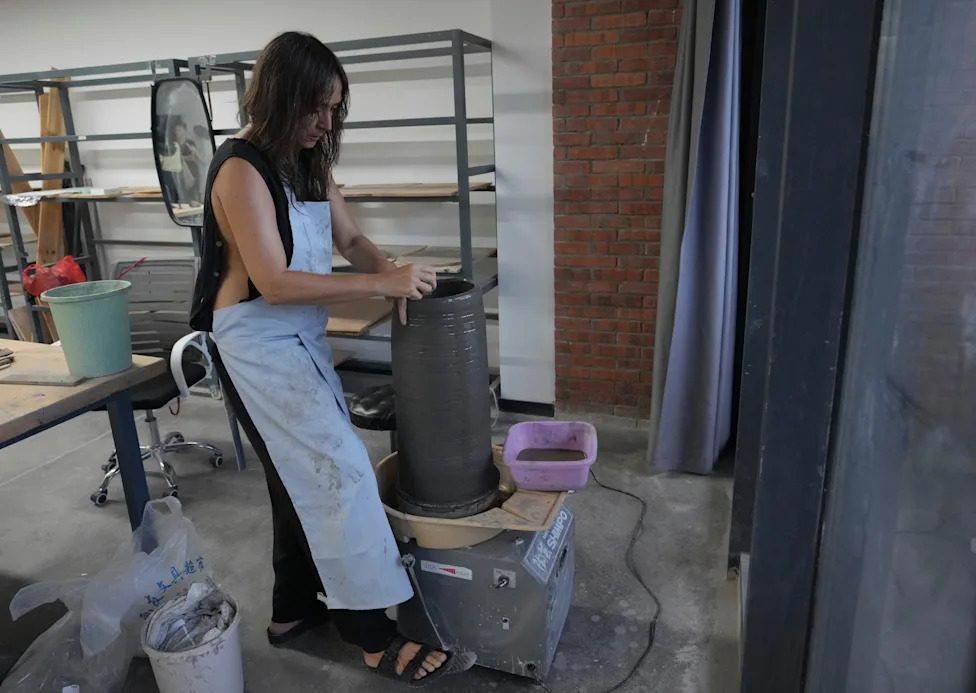
Italian ceramic artist Paola Masi works on a piece in Jingdezhen, known as China's "Porcelain Capital," in eastern China's Jiangxi province, Monday, Aug. 31, 2026. (AP Photo/Achmad Ibrahim)(AP Photo/Achmad Ibrahim)
Master Sun Lixin, a fourth‑generation artisan who began training at 13, says that although rituals have faded, a reverence for the craft persists. Before each firing he bows silently to the Kiln God, mindful both of the clay’s deep geological history and of the skill required to do the material justice.
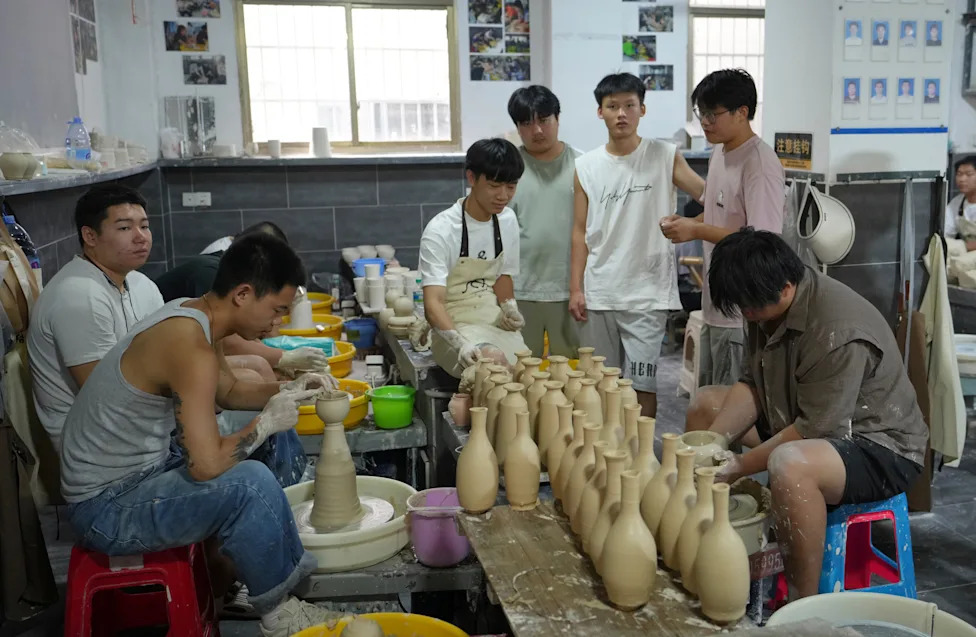
Students practice traditional ceramic craftsmanship at Zhan Shao Ceramic Arts Practice Base in Jingdezhen, in eastern China's Jiangxi province, Tuesday, Sept. 1, 2026. (AP Photo/Achmad Ibrahim)(AP Photo/Achmad Ibrahim)
A Living Tradition Attracting New Generations
While many skills are still passed down through families, universities and international residency programs are drawing new makers to Jingdezhen. Artists such as Italian ceramist Paola Masi and Chinese alumna Huang Qi have found inspiration in Jingdezhen’s long history—Huang returned after graduating from Jingdezhen Ceramic University and now serves as an artist‑in‑residence.
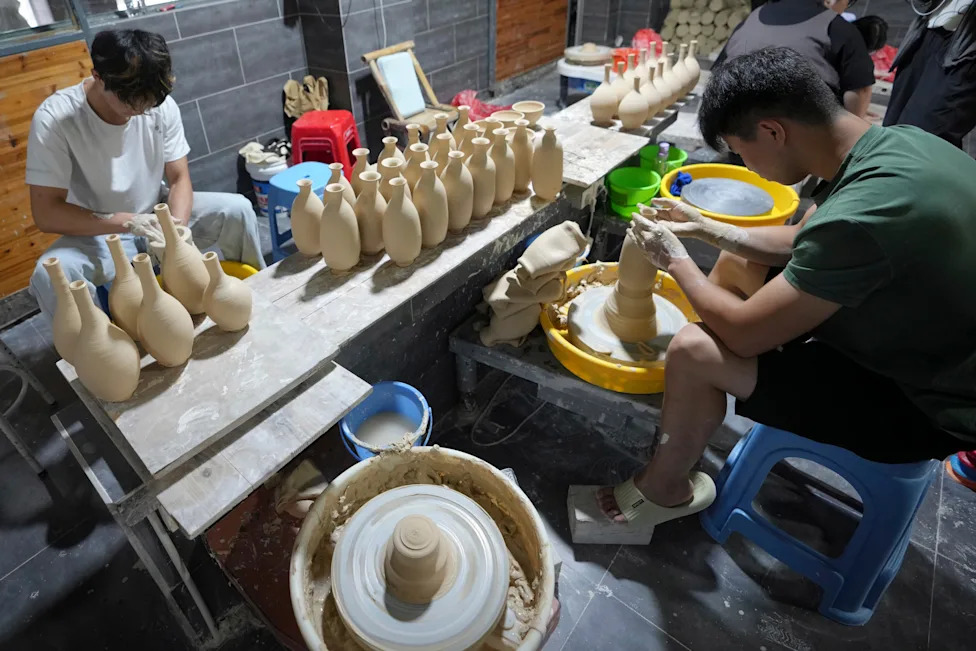
Students practice traditional ceramic craftsmanship at Zhan Shao Ceramic Arts Practice Base in Jingdezhen, known as China's "Porcelain Capital," in eastern China's Jiangxi province, Tuesday, Sept. 1, 2026. (AP Photo/Achmad Ibrahim)(AP Photo/Achmad Ibrahim)
The UNESCO listing in 2026 has bolstered confidence among local artisans and cultural institutions that the city’s porcelain heritage can be protected and adapted for the future. Collaboration between traditional craftsmen, researchers and international artists suggests Jingdezhen will remain a vibrant center for ceramics in the years ahead.
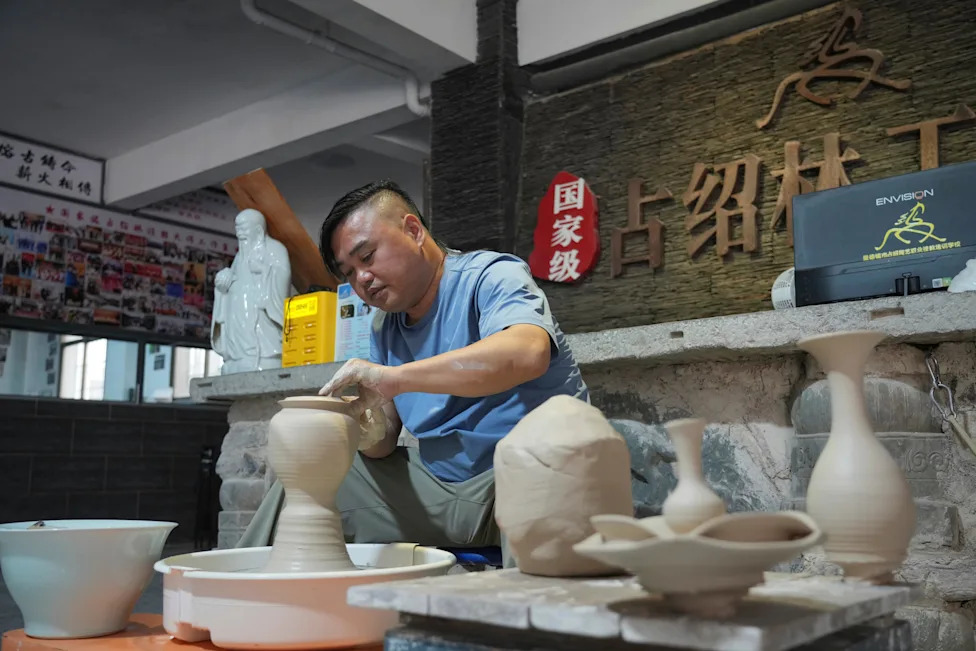
Chinese ceramic wheel-throwing artist Zhan Shaolin demonstrates his craft in Jingdezhen, known as China's "Porcelain Capital," in eastern China's Jiangxi province, Tuesday, Sept. 1, 2026. (AP Photo/Achmad Ibrahim)(AP Photo/Achmad Ibrahim)
Credits: Reporting and quotes adapted from Associated Press coverage.
Help us improve.