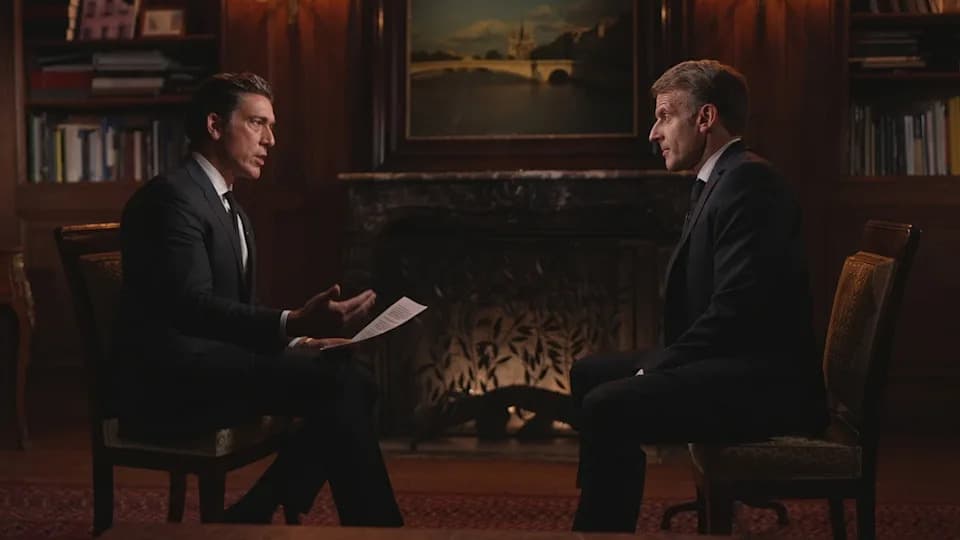
French President Emmanuel Macron will unveil updates to France's nuclear doctrine from the Ile Longue submarine base, outlining how Paris could use its atomic forces to bolster European defence amid rising global tensions. The speech follows recent US and Israeli strikes on Iran and comes as Russia's war in Ukraine enters its fifth year. Macron has discussed cooperation with countries including Germany and Poland, but French officials insist final launch authority would remain in Paris. The proposals could provoke significant domestic political debate ahead of the 2027 presidential election.
Macron to Outline How France's Nuclear Forces Could Shield Europe Amid Rising Geopolitical Tensions
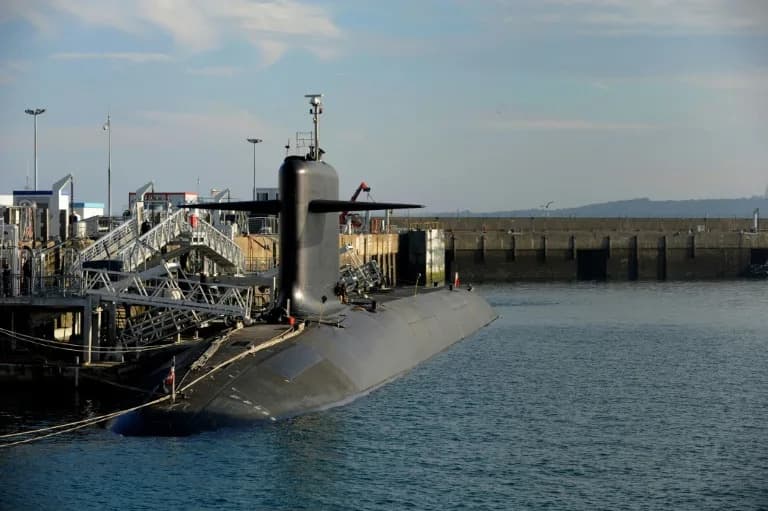
France is the EU's only nuclear-armed power (FRED TANNEAU)(FRED TANNEAU/AFP/AFP)
French President Emmanuel Macron will on Monday present revisions to France's nuclear doctrine from the Ile Longue submarine base, explaining how Paris might use its strategic forces to help deter threats to Europe in an increasingly unstable world.
The speech comes amid heightened regional tension after recent US and Israeli strikes on Iran and as Russia's war in Ukraine enters its fifth year. A member of Macron's team said the developments underscore "that in the world to come, power and independence will be two indispensable forces for dealing with the proliferation of threats."
What Macron Is Expected To Announce
Macron is expected to outline shifts in doctrine that clarify how France could deepen security cooperation with European partners while maintaining national control over nuclear weapons. A source said the address, scheduled for 14:15 GMT, will include "some significant shifts and developments" but stressed Paris intends to retain ultimate launch authority.
"I can't see us having 27 buttons. From a credibility standpoint, that just doesn't work," Bernard Rogel, former top military adviser to Macron, told AFP, emphasising that any decision to use nuclear weapons would remain French.
Context And Diplomatic Talks
European capitals that relied on a US nuclear umbrella during the Cold War are increasingly debating whether to reinforce their own deterrence. Paris has held talks with countries including Germany and Poland about how French nuclear forces could contribute to continental defence. Last year, Macron said he was open to discussing possible deployments of French aircraft armed with nuclear weapons in allied countries.
In February, Macron suggested a doctrine that could include "special cooperation, joint exercises, and shared security interests with certain key countries," signalling a more concrete role for French forces in European defence planning.
Arsenals And Public Opinion
France possesses the world's fourth-largest nuclear arsenal, estimated at roughly 290 warheads. The United Kingdom remains the only other European nuclear power. By contrast, the United States and Russia hold thousands of warheads each.
Public sentiment in parts of Europe appears to be shifting: analysts say increasing numbers of people in countries such as Denmark, Estonia, Germany, Portugal, Spain and Switzerland are now more open to a stronger European deterrent. Rafael Loss, a policy fellow at the European Council on Foreign Relations, said wider European investment in French or British deterrence would be beneficial.
Domestic Politics And Risks
Analysts warn Macron must proceed carefully. Historian Florian Galleri noted the president's relatively low approval ratings and the political stakes ahead of the 2027 presidential election, where Marine Le Pen's eurosceptic far right is viewed as a serious contender.
There is broad consensus in France on retaining a nuclear arsenal, Galleri said, but not on how or when to use it. The proposal has already drawn sharp domestic criticism: Philippe Olivier, an adviser to Marine Le Pen, warned on X that any attempt to cede control over French nuclear weapons to the EU would provoke impeachment proceedings for treason.
What To Watch For
- How precisely Paris defines "special cooperation" and which countries would be partners.
- Whether any tangible steps—such as joint exercises or basing agreements—are announced.
- Political reactions at home and across Europe, and possible legal or parliamentary challenges.
Macron's address is likely to clarify how France envisions cooperation with European partners while insisting that the ultimate authority over nuclear use remains national. The speech comes as European capitals weigh whether deeper defence integration is needed amid strategic competition and uncertainties about US commitments.
Help us improve.