Summary: In an ABC News interview, President Emmanuel Macron said reopening the Strait of Hormuz was the main objective of his meeting with President Trump, warning the risk posed by Iran "was probably underestimated." He said France is willing to be more engaged to protect transit without seeking confrontation, rejected regime-change bombing as ineffective, expressed skepticism about Vladimir Putin's non-aggression claims, and called for international cooperation on AI regulation. Macron also noted improved U.S. understanding of Russia's setbacks in Ukraine and defended Paris’s cultural landmarks.
Macron: Hormuz Risks "Probably Underestimated" — Urges U.S. to Act, Says France Ready to Help Secure Transit
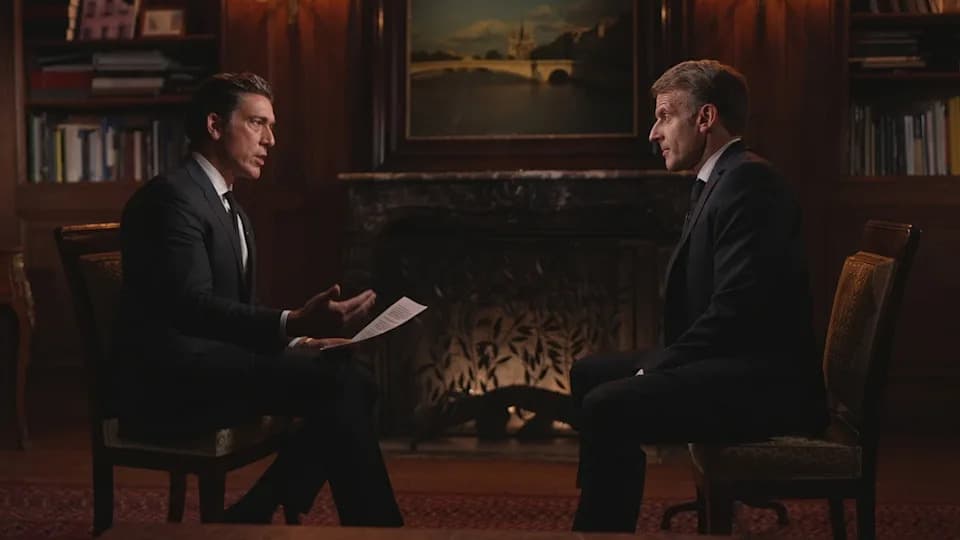
ABC News - PHOTO: French President Emmanuel Macron speaks with David Muir, anchor for ABC World News Tonight in New York City.
In a wide-ranging interview in New York with ABC News anchor David Muir, French President Emmanuel Macron said the primary goal of his recent meeting with U.S. President Donald Trump was "to find the right deal in order to open" the Strait of Hormuz and ease a growing global energy crisis that has pushed up gasoline, diesel and jet-fuel prices.
Concern Over Iran and the Strait of Hormuz
Macron warned that once the conflict began, "the Iranian regime discovered they had this card in their hands" — the ability to close the strategic waterway. He added that the risk "was probably underestimated," and urged swift action to restore safe passage for commercial and energy shipments.
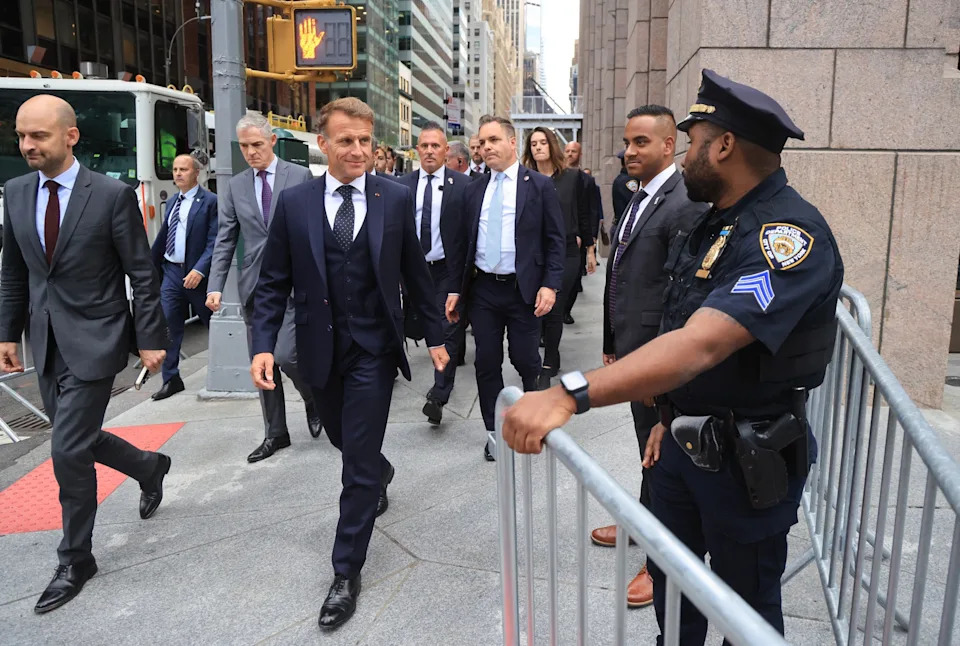
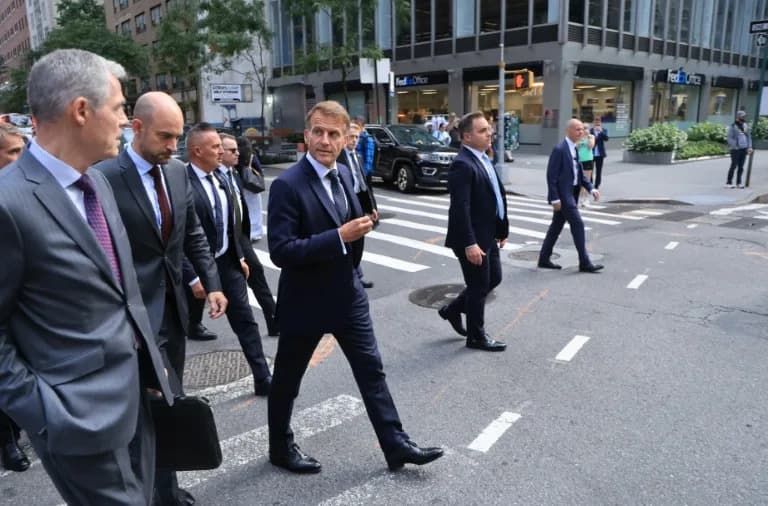
Ludovic Marin/AFP via Getty Images - PHOTO: France's Foreign Affairs Minister Jean-Noel Barrot and French President Emmanuel Macron arrive at Trump Tower in New York City, September 21, 2026, ahead of a meeting with President Donald Trump.
"I will not here blame anybody. We are where we are. I think the U.S. — I mean, your country — is the one able to fix this issue, and we need you," Macron told Muir.
France's Role: Engagement Without Confrontation
Asked whether France would deploy forces to help reopen the strait, Macron emphasized that Paris does not seek confrontation but is prepared to be "more engaged in order to protect some capacities in order to make this transit possible, yes." He framed the approach as protective and cooperative rather than aggressive.
On Military Intervention and Regime Change
Macron strongly criticized the idea of overthrowing regimes by bombing, calling regime-change bombing "not something I think feasible." He said such interventions have repeatedly failed over recent decades and that France decided not to join a particular war because it judged the option wrong.
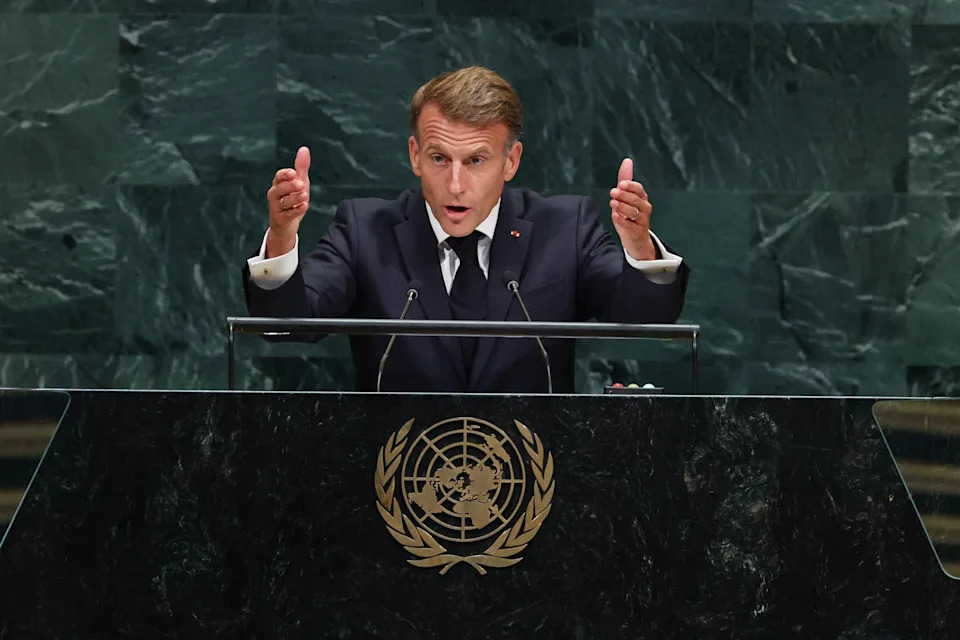
Timothy A. Clary/AFP via Getty Images - PHOTO: France's President Emmanuel Macron speaks during the 81st United Nations General Assembly at the United Nations Headquarters in New York City, September 22, 2026.
Russia, Ukraine and Transatlantic Relations
Turning to European security, Macron said he does not accept Russian President Vladimir Putin's public assurances of non-aggression: "No. I don't buy when President Putin... say he doesn't -- he's not aggressive with -- with Europeans. This is not true." He added that he had a "very good discussion" with President Trump about the war in Ukraine and believes the U.S. president now has a clearer assessment of Russia's setbacks and the need to support Kyiv.
Technology, Geopolitics and Diplomatic Tone
Macron urged global coordination on the rapidly developing field of artificial intelligence, arguing that decisions about frontier models and safety cannot be left to a single government. "It's a necessity to have a proper discussion between [the] U.S., China, Europe, and the rest of the world ... to deal with AI excesses and with AI risks for our economies and national securities," he said.
Cultural Notes and Closing Remarks
When asked about a Trump social-media post showing a U.S. flag across North America that included French territories near Canada, Macron said he had told the U.S. president "several times" that "people have strange ideas. They say strange things." On Mr. Trump’s proposed arch in Washington, inspired by Paris’s Arc de Triomphe, Macron was diplomatic: "No. Paris will remain Paris and the Arc de Triomphe remain the Arc de Triomphe...These monuments are bigger than ourselves."
Context: The Strait of Hormuz is a critical chokepoint for global energy supplies. Any sustained disruption there could exacerbate fuel-price inflation and strain international relations. Macron’s comments underscore European concern and a call for coordinated international action.
Help us improve.