The 14th-century shipwreck off modern Singapore yielded a record cache of Yuan Dynasty blue-and-white porcelain, recovering about 3.5 metric tons of ceramics and roughly 136 kg of Yuan ware. Distinctive motifs—dragons, phoenixes and mandarin ducks—help dated the cargo to between the late 1320s and 1371. The find highlights Chinese craftsmanship using Persian cobalt and underscores Temasek's role as a wealthy trading port during Mongol-era maritime networks.
Record Haul of 14th-Century Yuan Blue-and-White Porcelain Recovered Off Singapore
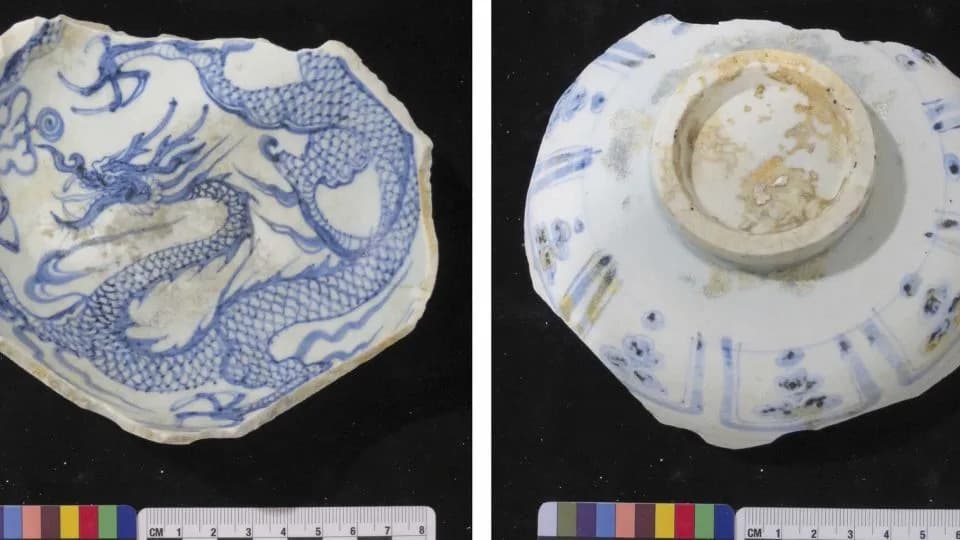
The blue-and-white porcelain is intricately decorated. - Michael Flecker/Science Direct
A recently excavated 14th-century shipwreck off the coast of modern Singapore has yielded a record cargo of Yuan Dynasty blue-and-white porcelain, offering fresh insight into ceramic production and long-distance trade during Mongol rule.
The Discovery
The wreck, estimated at about 650 years old and likely bound from China to the historic port of Temasek (present-day Singapore), was examined over four years by a team led by marine archaeologist Michael Flecker. The excavation recovered roughly 3.5 metric tons of ceramic material, of which about 136 kilograms were identified as Yuan blue-and-white porcelain, including several nearly intact vessels amid many shards.
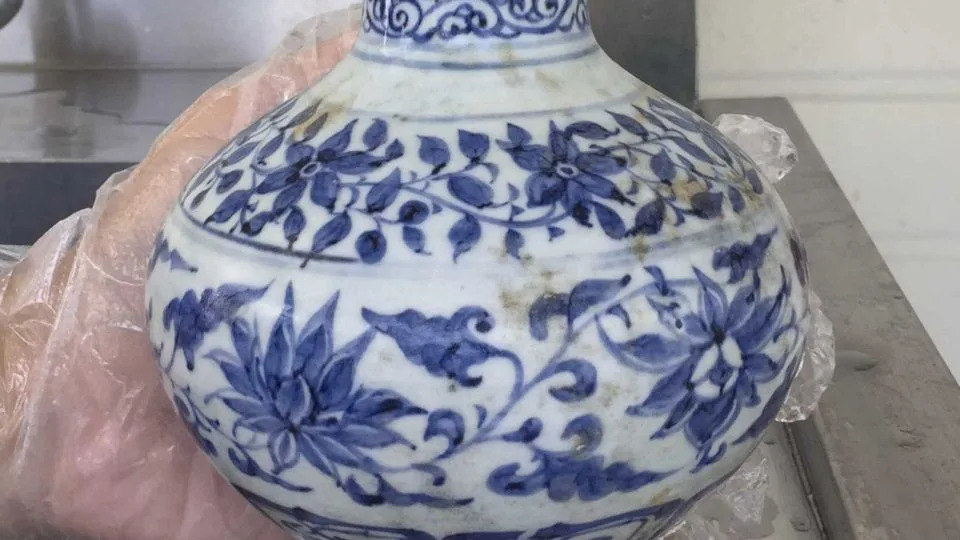
Archaeologists discovered about 136 kilograms (about 300 pounds) of Yuan Dynasty porcelain shards, along with several intact or nearly intact porcelain pieces, at the wreck. - Michael Flecker/Science Direct
Challenging Conditions
Although the site lies in relatively shallow water, the team faced strong currents and extremely poor visibility, limiting safe dives to roughly once every four weeks. Flecker described dives in which researchers were "occasionally sent tumbling along the seabed or groping our way back to the diver down-line in darkness." Because of these conditions the wooden hull and most organic components disintegrated; Flecker believes the vessel was probably a Chinese junk.
Decorative Motifs and Dating
Despite the fragmentary nature of the cargo, enough whole or near-complete pieces survived to identify key motifs. Researchers recorded a four-clawed dragon, a phoenix encircled by chrysanthemums, and numerous examples of mandarin ducks in a lotus pond. The duck-and-lotus motif was closely associated with Emperor Wenzong (reigned 1328–1332) and became more widespread in commercial wares after his deposition, allowing the team to narrow the wreck's date to a window between the late 1320s and 1371.
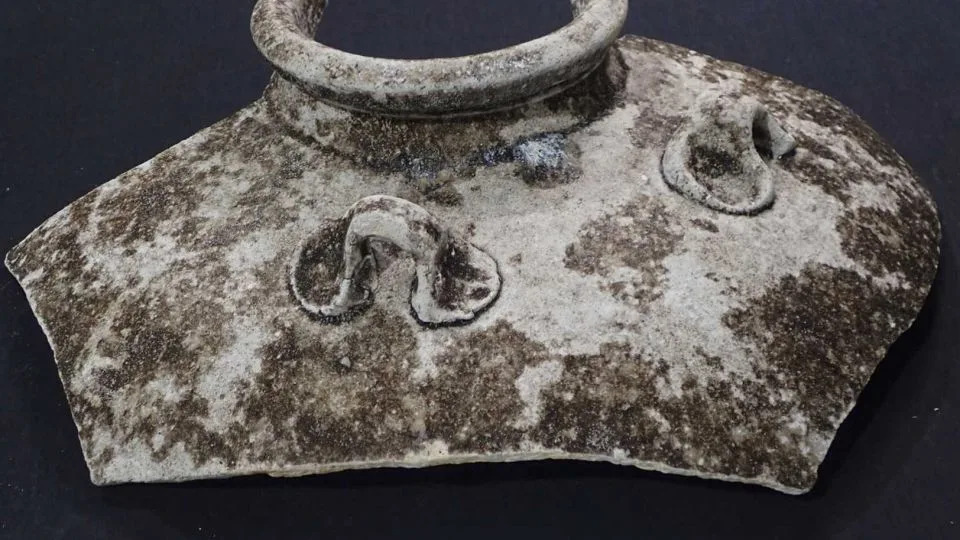
The ship itself had mostly disintegrated, but researchers recovered the remains of its huge ceramics cargo. - Michael Flecker/Science Direct
“Even with limited visibility and strong currents, the ceramics told a clear story about production, ownership and trade networks,” said Michael Flecker.
Trade Networks and Technology
Experts note that Yuan blue-and-white porcelain combined Chinese craftsmanship with cobalt pigment sourced from Persia (modern Iran). These wares moved along both overland and maritime Silk Routes, networks that expanded under Mongol dominance. As Shane McCausland of SOAS observed, blue-and-white porcelain became a widely desired material across Eurasia because of its translucency and hardness, and it played an important role in cultural and commercial exchange during the period.
Provenance and Historical Significance
Flecker suggests the shipment likely originated from Quanzhou, a major eastern Chinese port close to ceramic-producing regions in Fujian, Zhejiang and Jiangxi provinces. Bound for Temasek, the cargo underscores the settlement's importance as a duty-free entrepôt in the 14th century and suggests significant local consumption and wealth.
The findings and analysis were published in June 2025 in the Journal of International Ceramic Studies.
Why this matters: The wreck provides rare physical evidence linking imperial-period Chinese production techniques, cross-regional raw-material sourcing, and the maritime trade networks that connected East Asia to markets across the Indian Ocean and beyond.
Help us improve.