President Claudia Sheinbaum will send an electoral reform bill to Congress next week proposing cuts to electoral and party funding and a change to how proportional (plurinominal) representatives are chosen. The draft seeks roughly a 25% reduction in party financing, direct voting for plurinominal lawmakers, and new measures to curb disinformation and bot use. Opponents and some potential allies warn the changes could weaken democratic representation and consolidate Morena's power; the bill requires two-thirds approval in both chambers, making its passage uncertain.
Sheinbaum To Send Electoral Reform Bill To Congress, Proposes Big Cuts To Party Funding
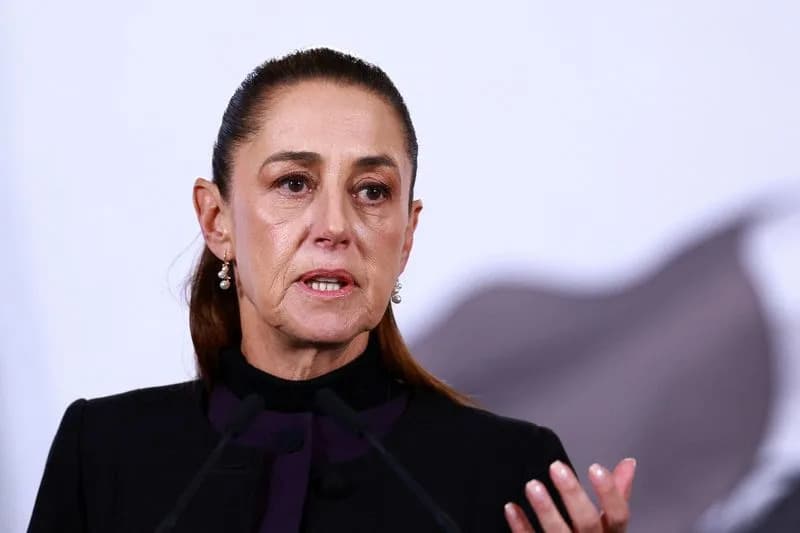
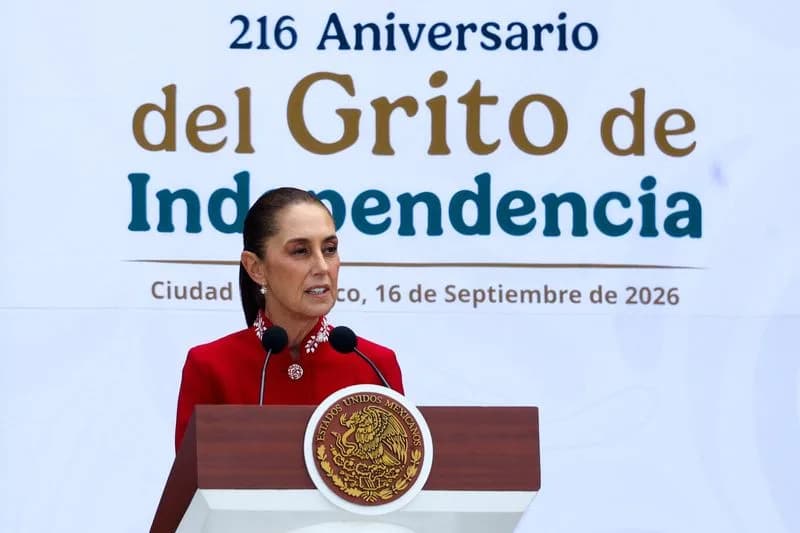
Mexico's President Claudia Sheinbaum speaks during a press conference at Palacio Nacional, in Mexico City, Mexico, February 23, 2026. REUTERS/Raquel Cunha
Mexico City, Feb. 25 — President Claudia Sheinbaum announced she will send a proposal to Congress next week to reform Mexico's electoral law, a package of changes that supporters say will reduce costs but critics warn could erode democratic representation and strengthen the ruling Morena party's hold in the legislature.
The draft bill, expected to be submitted on Monday, follows Morena's overhaul last year of judicial election procedures—moves that critics said risked the rule of law. The current proposal targets budget reductions for electoral processes and political parties and seeks structural changes to how some lawmakers are selected.
"The total public spending on electoral systems in Mexico continues to be the highest in the world, at 61 billion Mexican pesos ($3.55 billion) annually in 2024," said Pablo Gomez, head of the Financial Intelligence Unit (UIF), at the president's press briefing.
According to officials, the reform would cut public financing to political parties by about 25%, introduce direct voting for plurinominal (proportional-representation) lawmakers who are now allocated seats based on each party’s vote share, allow Mexicans living abroad to elect their own representatives, and include measures intended to limit disinformation and the use of automated accounts during campaigns.
The proposal must be approved by at least two-thirds of both chambers of Congress, a high threshold that means Morena will likely need backing from allies. The Labor Party and the Green Party have signaled opposition to key provisions, while the opposition Institutional Revolutionary Party (PRI) warned the reform could undermine Mexico's democratic system by eliminating elements of party representation.
Analysts say the debate is as much about institutional balance and political power as it is about expenditure: supporters emphasize efficiency and cost savings, while opponents emphasize risks to pluralism and checks on governing parties. The proposal is expected to prompt intense negotiations in Congress.
($1 = 17.1840 Mexican pesos)
(Reporting by Sarah Morland, Aida Pelaez-Fernandez, Raul Cortes and Lizbeth Diaz; Editing by Daina Beth Solomon)
Help us improve.