Brief: Donald Trump’s record 107‑minute State of the Union combined theatrical spectacle with combative, often divisive rhetoric. Interruptions from lawmakers such as Reps. Al Green, Ilhan Omar and Rashida Tlaib highlighted disputes over race, immigration and accuracy. Trump touted economic gains and announced a "war on fraud" led by Vice‑President J.D. Vance, but offered few new policy specifics, and his approval rating remained low. The speech’s length did not translate into persuasive impact.
Why the Record 107‑Minute State Of The Union Felt Mostly Symbolic
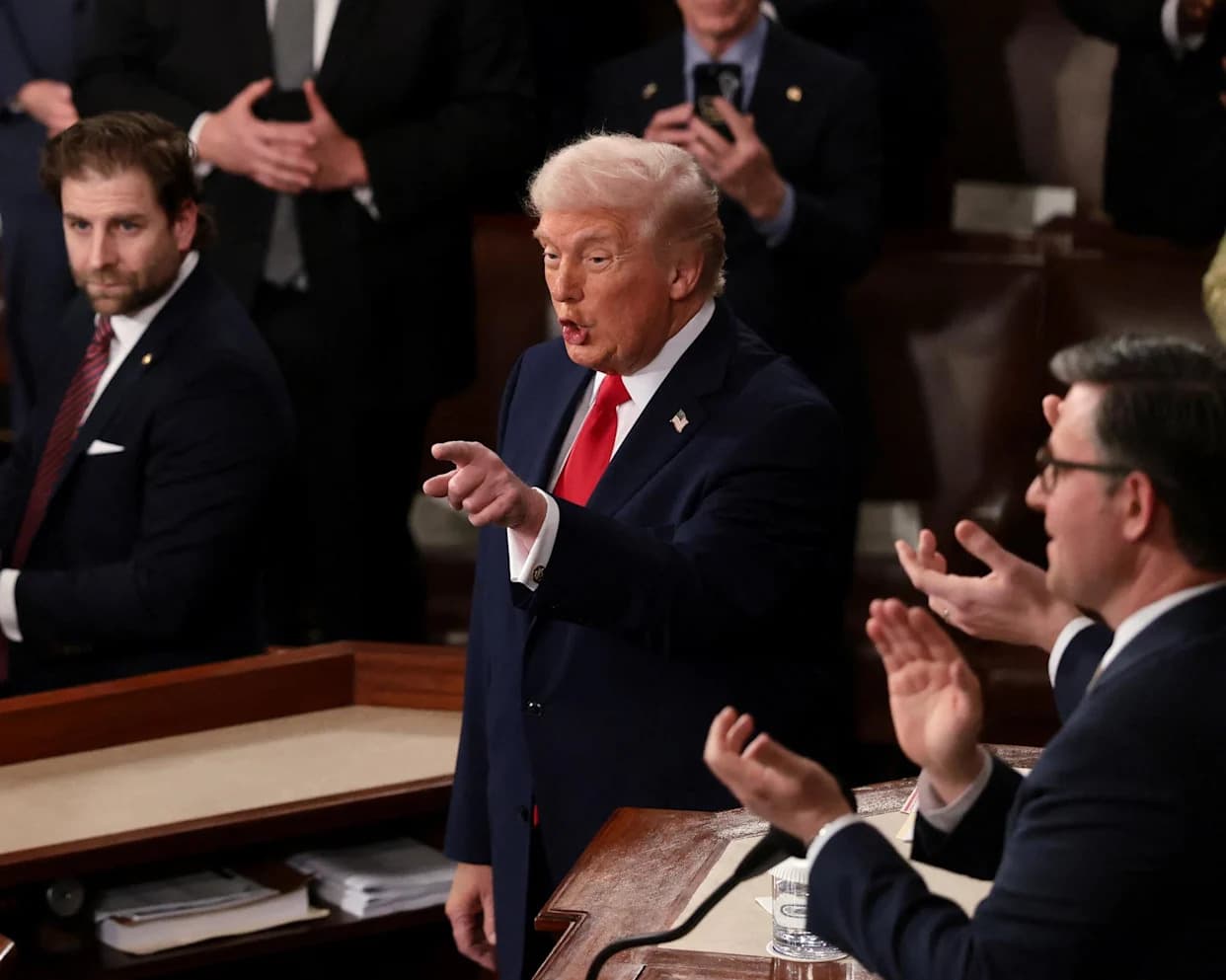
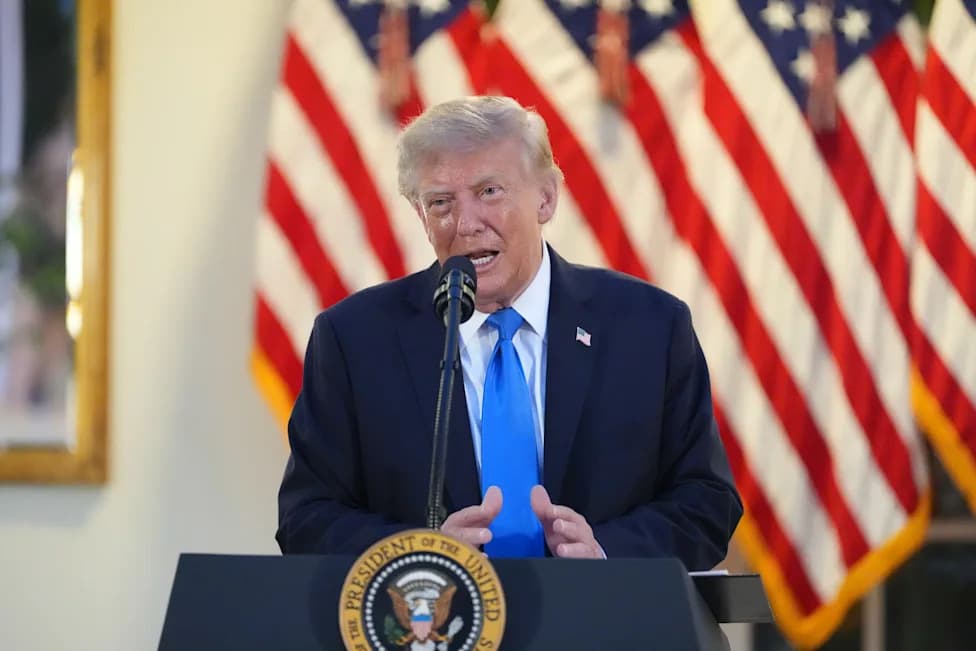
Donald Trump during the State of the Union address in Washington DC on Tuesday.Photograph: Evelyn Hockstein/Reuters(Photograph: Evelyn Hockstein/Reuters)
Donald Trump entered the US House chamber on Tuesday with the theatrical air of a monarch, flanked by Republicans who reached out as if to touch regal robes and, in two instances, to take selfies. The ceremony’s pomp dissolved almost immediately when Democratic Representative Al Green of Texas held up a handwritten placard reading, "Black people aren’t apes!" — a rebuke to a racist video Trump had recently shared. Republicans surged toward Green and tried to rip the sign away; he was escorted out of the chamber for the second consecutive year as tensions flared and some members attempted chants of "USA! USA!"
The scene was an early indication of how the record 107‑minute address would unfold: theatrical entrances, repeated interruptions from lawmakers of color and an evening that alternatingly courted applause and provoked outrage. Throughout the address, Trump emphasized upbeat economic talking points while advancing combative rhetoric on immigration, crime, election integrity and culture-war issues.
Economic Claims and a Brief Moment of Unity. Sporting his familiar red tie and tanned complexion, the president opened with a sales pitch: "Our nation is back — bigger, better, richer and stronger than ever before." He touted falling inflation and gas prices, rising stock-market returns, expanded oil production and gains in factory and construction jobs. Moments of cross‑aisle applause came when he recognized the U.S. men’s Olympic hockey team, whose presence briefly softened partisan response in the gallery.
Partisan Tension and Rhetoric on Race. Much of the address, however, reverted to partisan combat. Trump accused Democrats of "destroying our country," recycled long‑standing attacks on immigrants and framed race and immigration as central fault lines — a theme that has animated his politics since his 2015 campaign launch. The chamber’s composition underscored his point: visibly diverse Democrats sat across from a largely white Republican delegation.
Policy Announcements and Contentions. Trump announced a so‑called "war on fraud" to be led by Vice‑President J.D. Vance, citing an alleged social‑services scam in Minnesota he claimed had cost $19 billion — a figure disputed from Democratic seats. He criticized the Supreme Court’s decision on tariffs as "very unfortunate" and promoted restrictions on immigration, calling on members to support prioritizing citizens over "illegal aliens." When Democrats remained seated, he rebuked them for not standing.
Several representatives vocally challenged his claims throughout the address. Reps. Ilhan Omar and Rashida Tlaib repeatedly interjected — calling out factual inaccuracies and demanding the release of documents (including calls to "release the Epstein files"). When Trump said he had ended eight wars, members shouted objections. Rep. Mark Takano demanded accountability on insider‑trading rules, responding to Trump’s pledge to ban such activity among members of Congress with, "How about you first?"
Omissions and Accountability Questions. Critics noted conspicuous omissions: the president did not mention the Minneapolis operation that led to the deaths of two U.S. citizens, Renee Good and Alex Pretti, nor did he address victims of Jeffrey Epstein — points raised loudly from the Democratic side during the speech.
Length vs. Impact. Despite its historic length — the longest State of the Union in U.S. history at 107 minutes — the address did little to shift public opinion. Entering the speech, Trump’s approval rating stood at 39% positive and 60% negative in a Washington Post‑ABC News‑Ipsos poll, the weakest start for a president delivering a first State of the Union in modern polling. Over nearly two hours he repeated familiar themes and grievances but offered limited new policy detail, making the evening feel more performative than substantive.
It was therefore unsurprising that Reps. Ilhan Omar, Rashida Tlaib and several others walked out before the speech concluded. Al Green’s seat remained empty at the end of the night, occupied only by a small piece of cardboard bearing his name.
Takeaway
Trump’s record‑long address reinforced his strengths as a showman and his reliance on culture‑war messaging, but it delivered few concrete policy advances and prompted sharp exchanges that underscored the deep partisan and racial divisions in Washington.
Help us improve.