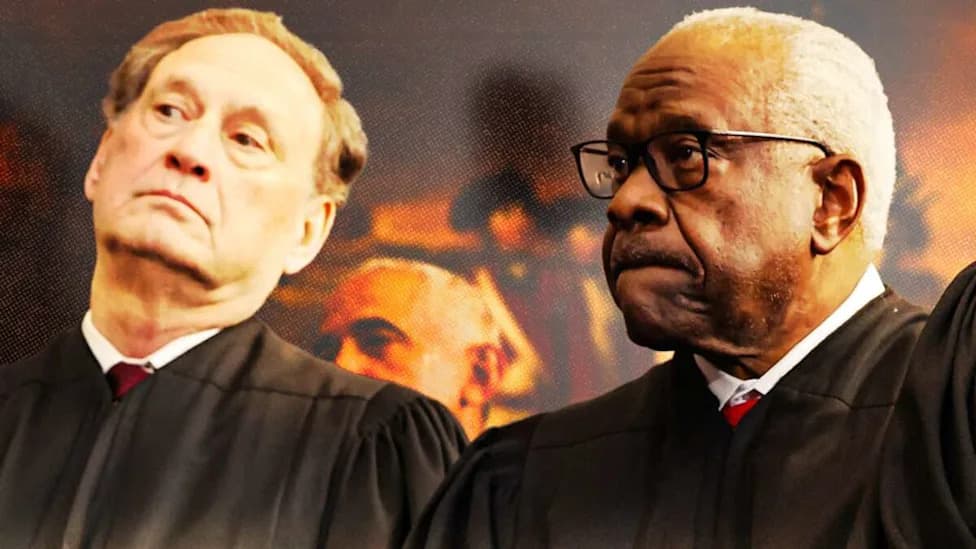
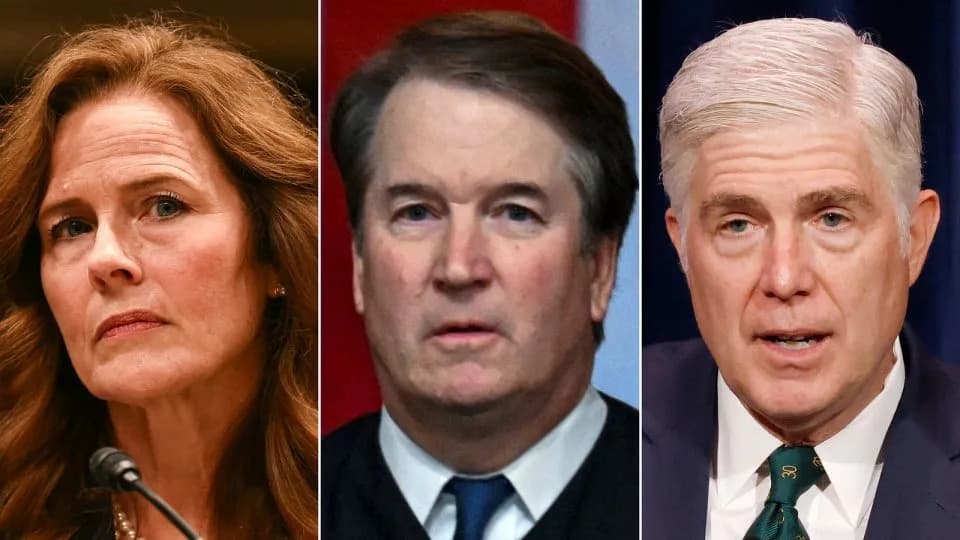
Justice Neil Gorsuch did not attend the State of the Union after the Supreme Court’s 6-3 decision limiting the administration’s tariff authority. Only four justices were present while five were absent, and President Trump called the ruling “unfortunate” while signaling he would pursue Section 122 to impose a 10% global tariff. Gorsuch had written that major policy choices like tariffs should be made through Congress rather than by unilateral executive action. The ruling has heightened tensions between the White House and the Court amid sagging presidential approval ratings.
Gorsuch Skips State of the Union After Supreme Court Curbs Trump's Tariff Authority
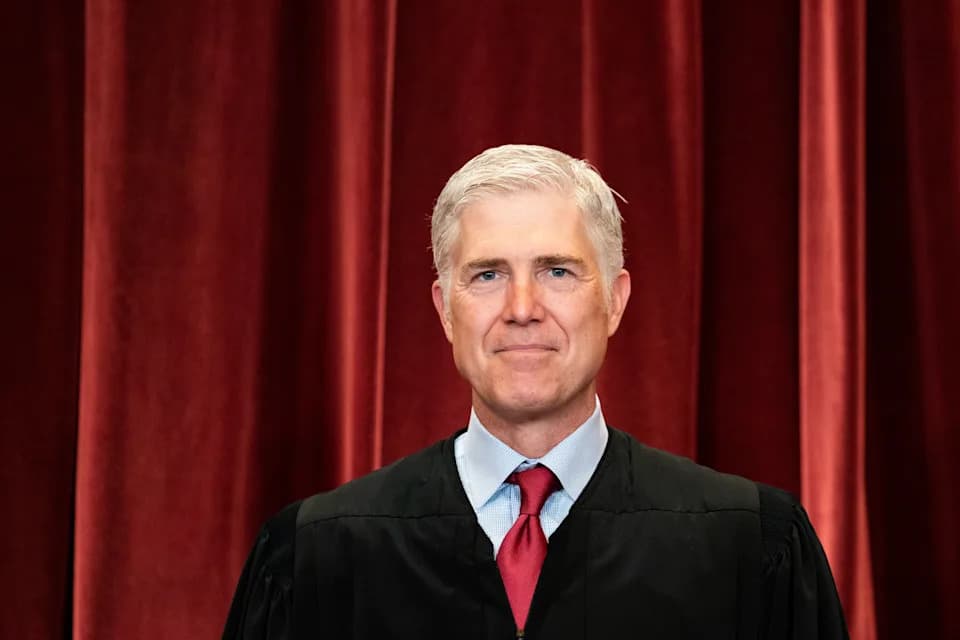
Neil Gorsuch stands during a group photo of the Justices at the Supreme Court in Washington, DC on April 23, 2021. / Pool / Getty Images
Justice Neil Gorsuch, a conservative appointee of former President Donald Trump, declined to attend Tuesday’s State of the Union address just days after the Supreme Court struck down the administration’s expansive tariff authority in a 6-3 decision.
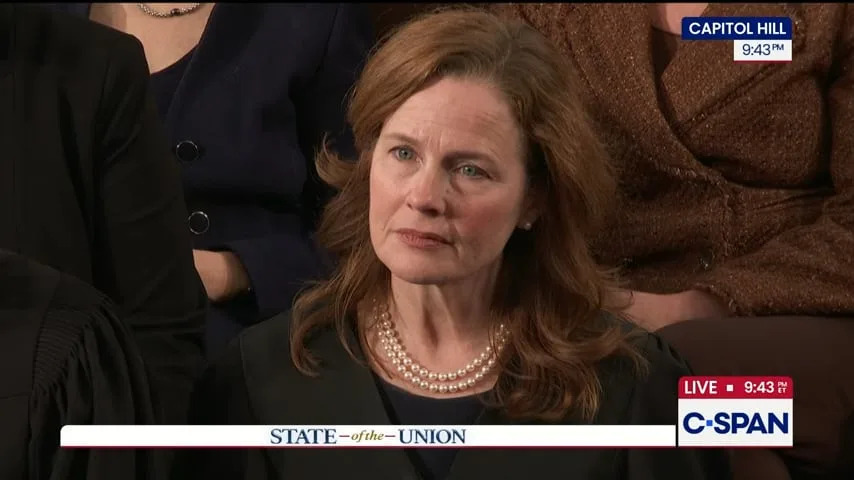
Amy Coney Barrett during the 2026 State of the Union Address. / CSPAN
Only four of the nine justices were present in the House chamber: Chief Justice John Roberts and Trump-appointed Justices Amy Coney Barrett and Brett Kavanaugh, along with liberal Justice Elena Kagan. Absent were Justices Neil Gorsuch, Samuel Alito and Clarence Thomas, as well as liberal Justices Sonia Sotomayor and Ketanji Brown Jackson.
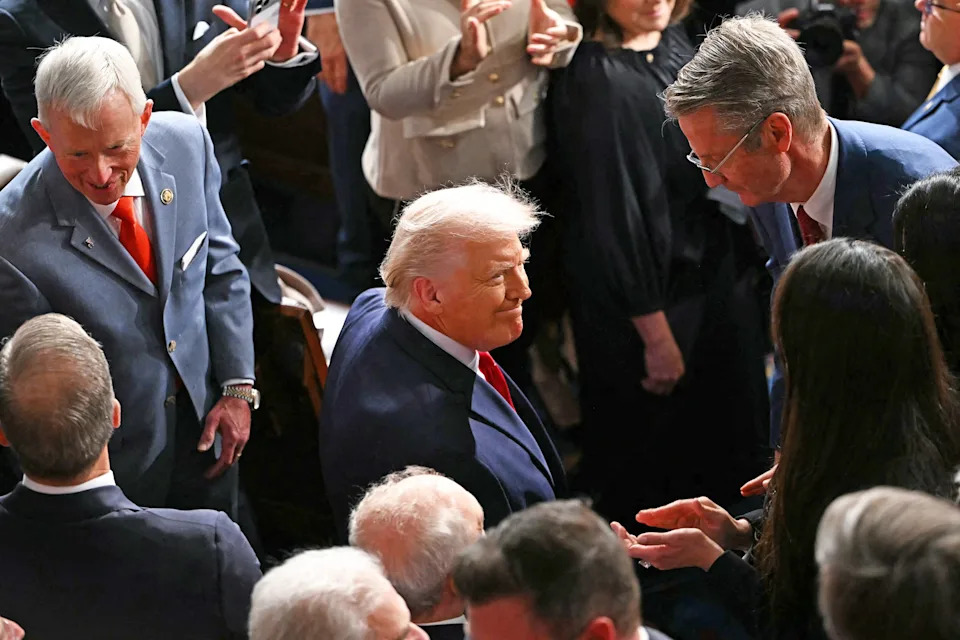
President Donald Trump arrives to deliver his State of the Union address in the House Chamber of the US Capitol in Washington, DC, on Feb. 24, 2026. / Andrew Caballero-Reynolds/AFP via Getty Images
After entering the chamber, the president paused to greet the justices and shook hands with those in attendance while Republican members of the House applauded.
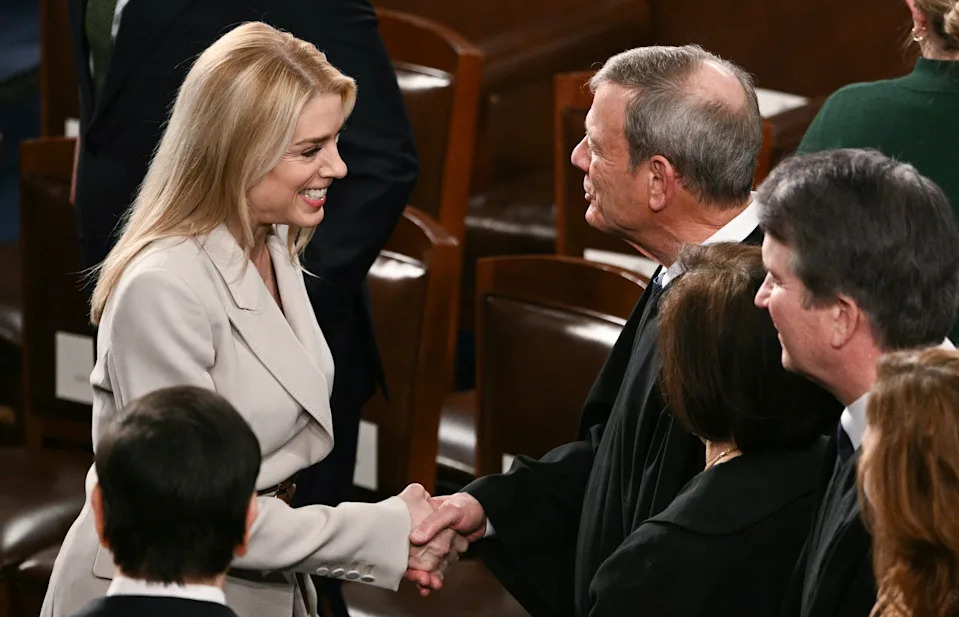
US Attorney General Pam Bondi shakes hands with Chief Justice John Roberts before the arrival of President Donald Trump for the State of the Union address in the House Chamber of the US Capitol in Washington, DC, on February 24, 2026. (Photo by Brendan SMIALOWSKI / AFP via Getty Images) / BRENDAN SMIALOWSKI / AFP via Getty Images
During his address, Mr. Trump described the Court’s decision on tariffs as “unfortunate” and “totally wrong,” but he did not single out individual justices in the chamber with personal attacks. He signaled he would pursue other trade authorities, saying he would consider invoking Section 122 to impose a 10 percent global tariff.
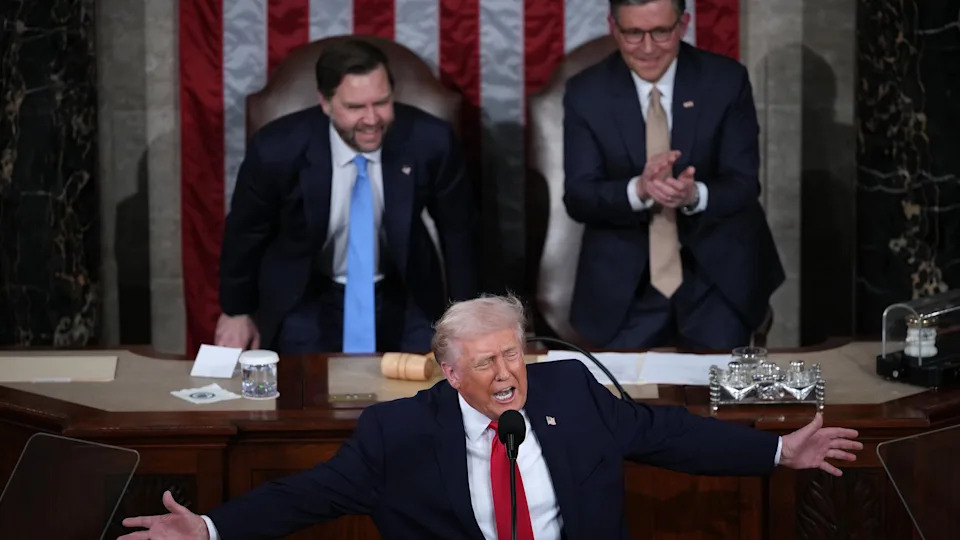
Donald Trump, with JD Vance and Speaker of the House Mike Johnson looking on, delivers his State of the Union address during a Joint Session of Congress at the U.S. Capitol on February 24, 2026. / Andrew Harnik / Getty Images
Gorsuch’s absence followed his written opinion in the case, in which he criticized the administration’s broad view of executive power. In a concurring opinion he warned that weighty national decisions—“including the duty to pay taxes and tariffs”—belong to the legislative process and should not be determined by a single faction or person.
“Yes, legislating can be hard and take time. And, yes, it can be tempting to bypass Congress when some pressing problem arises. But the deliberative nature of the legislative process was the whole point of its design,” Gorsuch wrote, adding that deliberation and compromise help produce stable policy.
The fallout from the 6-3 ruling intensified tensions between the White House and the Court. The president reacted angrily after the decision, calling it “very unpatriotic” and accusing certain justices of disloyalty to the Constitution. He also criticized members of the Court using partisan language and vowed to find alternative trade tools.
The absence of multiple justices added an edge to an already high-stakes evening. By longstanding custom, justices attend the State of the Union as silent witnesses while the president outlines his legislative priorities; departures from that tradition draw attention and comment.
Political headwinds for the president continued outside the chamber. A Washington Post–ABC/Ipsos poll released the day before the speech found that 60 percent of Americans disapprove of Mr. Trump’s job performance, with 47 percent saying they strongly disapprove.
Defiant in public remarks, Mr. Trump dismissed the polls as biased and insisted he retains quiet or “silent” support among voters.
Help us improve.