Balendra "Balen" Shah, a 35-year-old rapper-turned-politician and former Kathmandu mayor, has emerged as a leading contender for Nepal’s prime ministership ahead of the March 5 election. His rapid rise follows a youth-led uprising that toppled the previous prime minister and has been fueled by a strong social media following and visible municipal reforms. The Rastriya Swatantra Party promises ambitious five-year economic targets, but analysts warn Balen’s success will hinge on assembling an expert team to reform a corrupt, weak bureaucracy.
From Rapper To Prime Minister Contender: How Balen Became Nepal’s Front-Runner
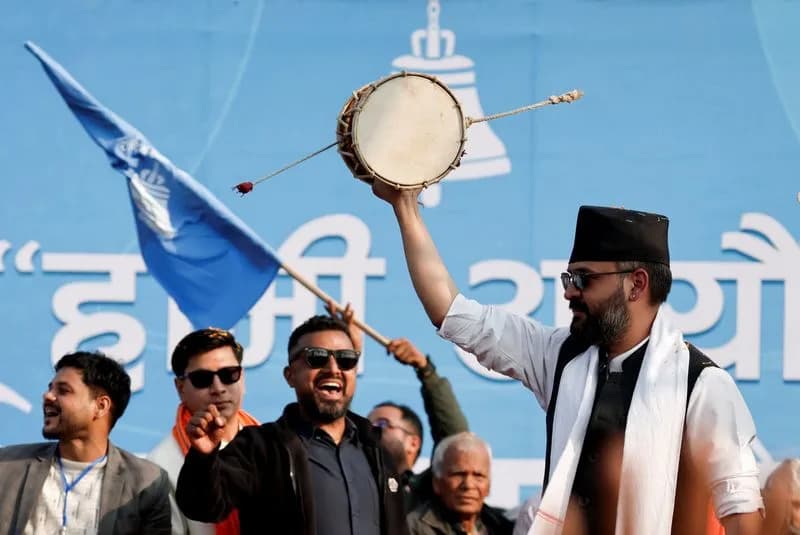
Balendra Shah, former mayor of Kathmandu popularly known as "Balen", who according to party officials, will become prime minister under an internal agreement if the Rastriya Swatantra Party (RSP) wins the March 5 elections, plays a "damru" percussion instrument during an election campaign in Janakpur, Nepal, January 19, 2026. REUTERS/Navesh Chitrakar
After a youth-led uprising last September that left 77 people dead and forced then-Prime Minister K.P. Sharma Oli to resign, 35-year-old rapper-turned-politician Balendra Shah — widely known as Balen — declared to his millions of followers: “Dear Gen Z, the resignation of your killer has come. Now your generation will have to lead the country. Be prepared.” Five months later, the former Kathmandu mayor is widely viewed as a leading contender to become Nepal’s next prime minister ahead of the March 5 general election.
Background And Rise
Balen first rose to national attention as a rap artist whose songs criticized the political establishment. He parlayed that popularity into an independent mayoral campaign in Kathmandu in 2022, winning by a large margin on a platform called “Time for change.” He resigned as mayor in January to contest the national election.
Mayoral Record And Public Image
As mayor, Balen prioritized visible urban reforms — from waste management to improving delivery of basic health services — and cultivated a direct rapport with young voters through an active social media presence (more than 3.5 million followers across platforms). His trademark campaign imagery often shows him in dark sunglasses and a salt-and-pepper beard.
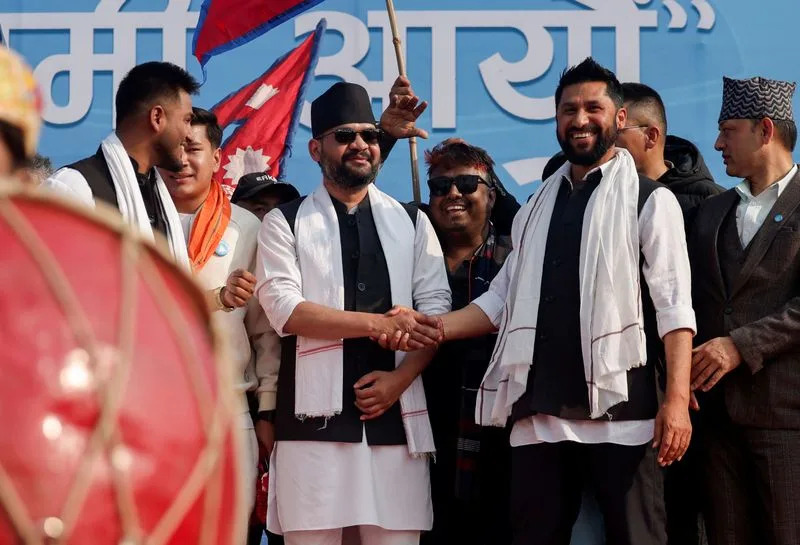
Balendra Shah, former mayor of Kathmandu popularly known as "Balen", who according to party officials, will become prime minister under an internal agreement if the Rastriya Swatantra Party (RSP) wins the March 5 elections, shakes hand with Rabi Lamichhane, president of Rastriya Swatantra Party (RSP) during an election campaign in Janakpur, Nepal, January 19, 2026. REUTERS/Navesh Chitrakar
Critics, including Human Rights Watch, have accused him of heavy-handed tactics such as using police to remove street vendors and seize land used by people without formal title. Supporters point to quicker, more tangible local improvements they say were missing from Nepal’s traditional parties.
Platform And Political Landscape
In December, Balen joined the centrist Rastriya Swatantra Party (RSP), led by former TV host Rabi Lamichhane, and was named the party’s prime ministerial candidate. The RSP manifesto offers an ambitious five-year plan: create 1.2 million jobs, raise per-capita income from about $1,447 to $3,000, double the economy to roughly $100 billion GDP, and provide nationwide health insurance.
Nepal’s politics have long been dominated by a handful of established parties — notably the Communist Party of Nepal (UML), generally seen as relatively China-leaning, and the centrist Nepali Congress, seen as closer to India. The RSP positions itself as a centrist newcomer promising “balanced foreign relations” with both neighbours.
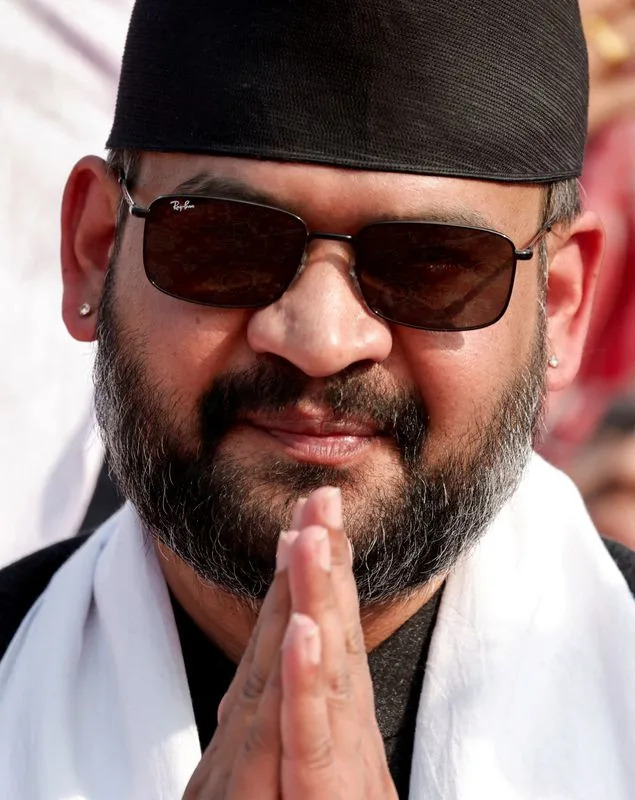
FILE PHOTO: Balendra Shah, former mayor of Kathmandu popularly known as "Balen", who according to party officials, will become prime minister under an internal agreement if the Rastriya Swatantra Party (RSP) wins the March 5 elections, gestures as he greets his supporters during an election campaign in Janakpur, Nepal, January 19, 2026. REUTERS/Navesh Chitrakar/File Photo
Popular Appeal And Cultural Roots
Balen’s background helps explain his broad youth appeal: born to a father who practiced Ayurvedic medicine and a homemaker mother, he developed a love of poetry and rap early on. After a civil engineering degree in Nepal and a master’s in structural engineering in southern India, he became a national rap star. His 2019 song "Balidan" ("Sacrifice") has more than 12 million views on YouTube. Its refrain —
"Let me speak, sir, it is not a crime, Let me open the mind, I am not a curse to the palace, My mind is not bad, it is not afraid to speak the truth."— resonated with many Nepalis frustrated by inequality and limited opportunities.
Challenges Ahead
Analysts caution that running a national government is far more complex than running a city. Nepal’s public administration faces chronic problems — weak capacity, entrenched corruption and political patronage — that any incoming leader must confront. "It needs a team, experts and support," said analyst Puranjan Acharya. "Under the existing state apparatus, he can't perform and he will be finished like wood attacked by termites."
Whether Balen can convert social-media momentum and mayoral reforms into national governance will depend on his ability to build a competent cabinet and work with other parties in a fragmented parliament. If successful, his rise would signal a major shift in Nepali politics, where a new generation could displace the long-standing political elite.
Reporting: This article summarizes reporting by Saurabh Sharma with additional contributions and editing noted in the original Reuters dispatch. All facts reflect the original reporting: the 77 deaths in the September uprising, Balen’s age and mayoral tenure, his resignation to contest the March 5 election, RSP manifesto targets and cited criticisms.
Help us improve.