India replaced a bust of British architect Edwin Lutyens at the presidential palace with one of independence-era leader Chakravarti Rajagopalachari (Rajaji). Officials say the move is part of efforts to shed colonial-era symbols and celebrate Indian heritage. The decision sits alongside other high-profile changes under Prime Minister Narendra Modi, including a new parliament building opened in 2023, and has drawn mixed reactions from descendants of Lutyens and others.
India Replaces Lutyens Bust With Independence-Era Leader at Presidential Palace
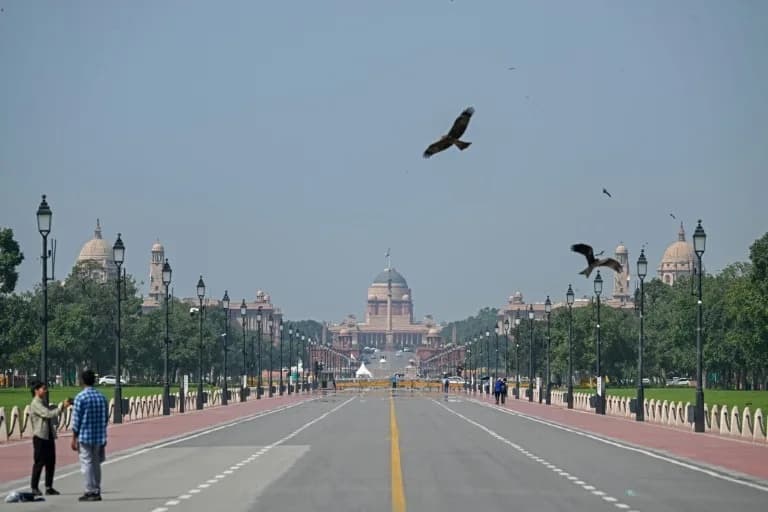
India's presidential palace, Rashtrapati Bhavan (Sajjad HUSSAIN)(Sajjad HUSSAIN/AFP/AFP)
India unveiled a bust of independence-era leader Chakravarti Rajagopalachari — commonly known as Rajaji — at the presidential palace on Monday, removing a monument to British architect Sir Edwin Lutyens. Officials described the change as a symbolic step away from colonial-era symbols and toward celebrating India’s own historical figures.
Background
Edwin Lutyens was the chief architect of New Delhi, the precinct that contains India’s seat of government. His work — and his name — have long been associated with the area often referred to as "Lutyens' Delhi." The new bust honors Rajagopalachari, a prominent statesman, jurist and writer who served as India’s Governor‑General from 1948 to 1950 and helped steer the nation’s early transition from colonial rule to republican governance.
Government Rationale
"This initiative is part of series of steps being taken towards shedding the vestiges of colonial mindset and embracing, with pride, the richness of India's culture,"— President Droupadi Murmu said in a statement, explaining the change as part of a broader effort to foreground Indian leaders and heritage.
Political Context and Related Moves
Prime Minister Narendra Modi, a leader associated with Hindu nationalist politics, has pursued a pattern of replacing or recontextualizing colonial-era monuments while advancing large infrastructure projects that remake prominent British‑era sites. In 2023, his administration inaugurated a new hexagonal national parliament building that replaced the colonial-era structure originally designed by Lutyens and his colleague Sir Herbert Baker.
Modi framed the removal of Lutyens' bust as part of an effort to achieve what he called "freedom from the mindset of slavery," saying in a radio broadcast that "Statues of British administrators were allowed to remain... but those of the nation's greatest sons were denied space."
Earlier Replacements and Controversy
Similar decisions include a 2022 installation of a statue of independence leader Subhas Chandra Bose on a long-empty plinth near the India Gate war memorial that once held a statue of King George V. Bose is venerated by many for his fight against British rule but remains controversial for wartime contacts with Nazi Germany. The canopy sheltering Bose’s statue was also a Lutyens design.
Reactions
Not everyone welcomed the change. Matt Ridley, a British biologist and Lutyens' great-grandson, said he was "sad to read that the bust of Lutyens (my great grandfather) is to be removed from the presidential palace he designed in Delhi." The decision has reignited debate in India about how to balance historical preservation with efforts to reassert national identity.
What It Means: The replacement of Lutyens' bust with that of Rajagopalachari underscores a broader cultural and political project by the current government to reassess colonial-era monuments and elevate figures linked to India’s independence and nation‑building.
Help us improve.