The Taliban's virtue ministry has ordered men to grow beards longer than a fist and is dispatching patrols to enforce the rule, putting barbers at risk of detention. Barbers report arrests, short detentions and daily checks, and some say customers avoid shops because of the restrictions. Imams and universities have been told to promote stricter grooming standards, and barbers report a noticeable drop in business.
Afghan Barbers Face Detention as Taliban Enforces 'Fist-Length' Beard Rule
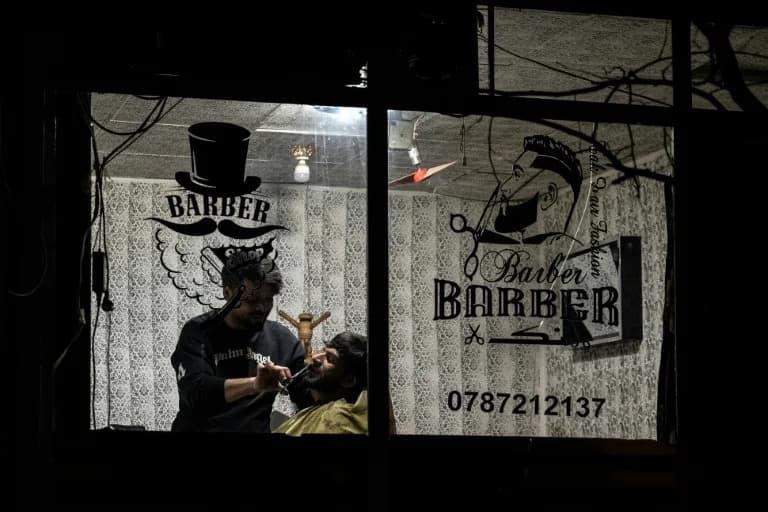
An Afghan barber trims a customer's beard at a salon in Kabul (Wakil KOHSAR)(Wakil KOHSAR/AFP/AFP)
Barbers across Afghanistan say they risk detention for trimming men's beards too short as Taliban authorities step up enforcement of a strict interpretation of Islamic law.
New Rules and Official Rationale
Last month the Ministry for the Propagation of Virtue and Prevention of Vice declared it "obligatory" for men to grow beards longer than a fist, reaffirming an earlier directive. Minister Khalid Hanafi said the government has a duty to "guide the nation to have an appearance according to sharia," adding that officials tasked with promoting virtue "are obliged to implement the Islamic system." Patrols from the ministry have been sent into city streets to check compliance.
Barbers' Accounts of Detention and Fear
Multiple barbers interviewed on condition of anonymity told AFP they face the risk of detention if they trim beards too closely. In southeastern Ghazni province, a 30-year-old barber said he was detained for three nights after officials learned an employee had given a client a Western-style haircut. "First, I was held in a cold hall. Later, after I insisted on being released, they transferred me to a cold shipping container," he said. He was released without charge but now hides with clients when patrols pass by.
"The thing is that no one can argue or question the ministry officials. Everyone fears them," one barber said.
Other accounts say when both barbers and clients are detained, clients are often released while barbers remain in custody. A UN report cited three barbers in Kunar province who were jailed for three to five months last year for violating ministry rules.
Broader Social and Institutional Pressure
The religious affairs ministry has also issued guidance telling imams to describe shaving beards as a "major sin" in sermons. The ministry argues that shaving constitutes "trying to look like women." Directives have reached universities—now attended only by men since women were banned—where one Kabul University student said lecturers warned that marks could be deducted if students do not maintain a "proper Islamic appearance," including beards and head coverings.
Economic Impact on Barbers
Barbers say business has fallen as fewer men seek close shaves. "Many civil servants used to tidy their hair a couple of times a week, but now most have grown beards and don't show up even in a month," a 25-year-old Kabul barber said. A 50-year-old barber added that morality patrols "visit and check every day," recounting an incident in which an officer ordered a barber to give an "Islamic" haircut rather than an "English" one.
Context
Before the Taliban's return to power in 2021, residents of major Afghan cities generally had the freedom to choose their appearance. In areas of conflict, some men had already grown longer beards either by choice or out of fear; the recent ministry orders and daily patrols represent a nationwide intensification of enforcement.
Help us improve.