Operation Metro Surge sparked fear after reports that ICE agents entered homes without warrants and detained people largely based on appearance, including U.S. citizens and documented residents. Available data indicate undocumented immigrants commit violent and felony crimes at lower rates than U.S.-born citizens. Immigrants — including an estimated 8 million undocumented workers — are essential to industries like construction, hospitality, and ride-hailing. The author calls for a pragmatic pathway to legal status to protect both civil rights and the economy.
America Needs Immigrants — ICE's "Operation Metro Surge" Did More Harm Than Good
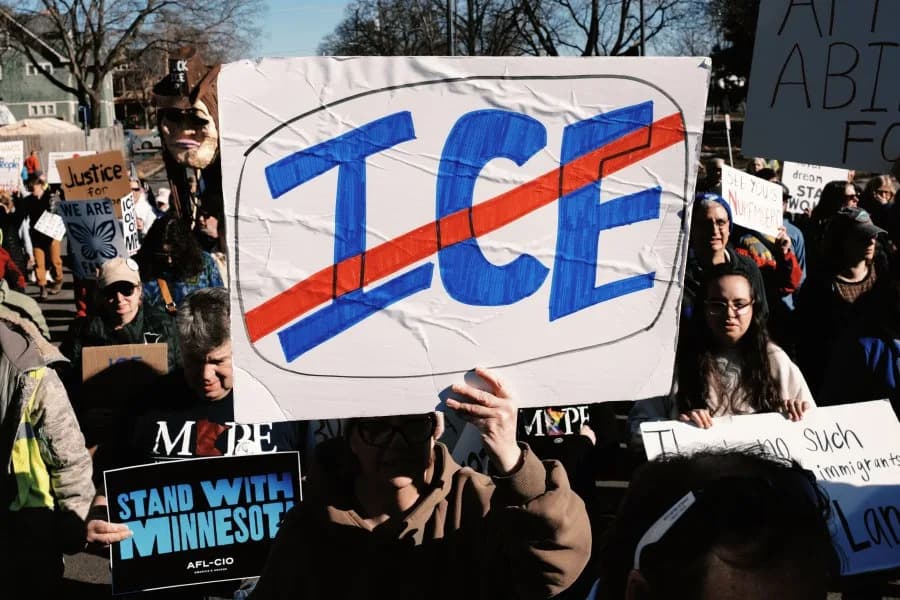
Operation Metro Surge in Minneapolis has wound down, but the operation’s consequences continue to ripple through communities, the economy, and public trust. What began as an enforcement effort became a flashpoint over allegations of heavy-handed tactics — including reports of agents entering homes without judicial warrants and detaining people based largely on appearance.
What Happened
Multiple reports say ICE officers stopped and questioned individuals primarily because of how they looked, producing numerous false positives. Several people detained were later identified as U.S. citizens or documented legal residents. Those incidents generated intense media scrutiny and public protests, and they played a role in a funding standoff that contributed to a partial government shutdown.
Crime, Data, and Rhetoric
The administration framed the operation on the basis that targeted undocumented immigrants were engaged in criminal activity in addition to being in the country illegally. However, available evidence indicates that undocumented immigrants commit felonies and violent crimes at rates that are, by some estimates, less than half those of U.S.-born citizens. That mismatch between rhetoric and data helps explain why broad, appearance-based enforcement can produce so many wrongful detentions.
Immigrants' Economic Role
Immigrants are a large and growing part of the nation. As of June 2025 there were more than 51 million foreign-born residents — over 15 percent of the U.S. population — and immigrants make up roughly 19 percent of the workforce. The Department of Homeland Security estimated about 11 million undocumented immigrants in 2022, implying roughly one in six immigrants is undocumented. With that distribution, reliance on appearance alone will inevitably yield frequent false identifications and risk racial profiling.
The national workforce is about 170 million people, and estimates suggest roughly 8 million undocumented workers participate in the labor market, concentrated in sectors such as construction and hospitality. The construction industry — valued at more than $2 trillion annually — and the hospitality sector depend on immigrant labor for essential tasks, from building and repairs to hotel housekeeping and restaurant kitchens. Ride-hailing platforms likewise depend on immigrant drivers.
Real-World Consequences
When immigration enforcement prompts immigrants or lawful residents of color to stay home out of fear of detention, the effects are immediate and practical: construction timelines slip, roofs and repairs are delayed, hotel rooms go uncleaned, meals are harder to prepare, and ride services become scarcer. These disruptions affect communities, businesses, and consumers across the country.
Policy And Politics
Some politicians, including JD Vance, have argued that immigrants take jobs from American workers. But research and public polls suggest that many of the roles filled by undocumented and some documented immigrants are positions U.S. citizens are less likely to take, and there is little evidence that immigrants broadly displace native workers.
The clear policy implication is practical: craft a sensible pathway that allows undocumented immigrants who contribute to the economy to remain legally and continue to work. Such an approach would reduce the collateral harm of aggressive enforcement, temper public resistance to enforcement tactics perceived as unconstitutional, and help stabilize labor supply for businesses that rely on immigrant workers.
Bottom line: Enforcement that relies on appearance and aggressive tactics damages civil liberties, undermines trust, and risks real economic harm. A pragmatic legal pathway for workers would protect civil rights and support the economy.
About the author: Sheldon H. Jacobson, Ph.D., is a professor of computer science in the Grainger College of Engineering at the University of Illinois Urbana-Champaign. As a data scientist, he applies risk-based analytics to public policy issues.
Help us improve.