Several states that run their own ACA marketplaces are using state funds to replace some or all of the enhanced federal premium subsidies that expired on Dec. 31. New Mexico fully backfilled the federal aid through June 30 for all enrollees, and other states including California, Colorado, Connecticut, Massachusetts and Maryland are offering targeted assistance. Experts warn that if healthier people drop marketplace coverage, premiums could rise further, and many states face budget pressures as health care costs increase.
States Step In to Replace Lapsed ACA Subsidies — New Mexico Fully Fills The Gap; Others Offer Targeted Aid

Colorado Republican state Sen. Rod Pelton, left, and Senate President James Coleman, a Democrat, speak during the sixth day of the special legislative session in August 2025. Colorado is among the states using state funds to help residents buy health coverage on Obamacare exchanges. (Photo by Delilah Brumer/Colorado Newsline)
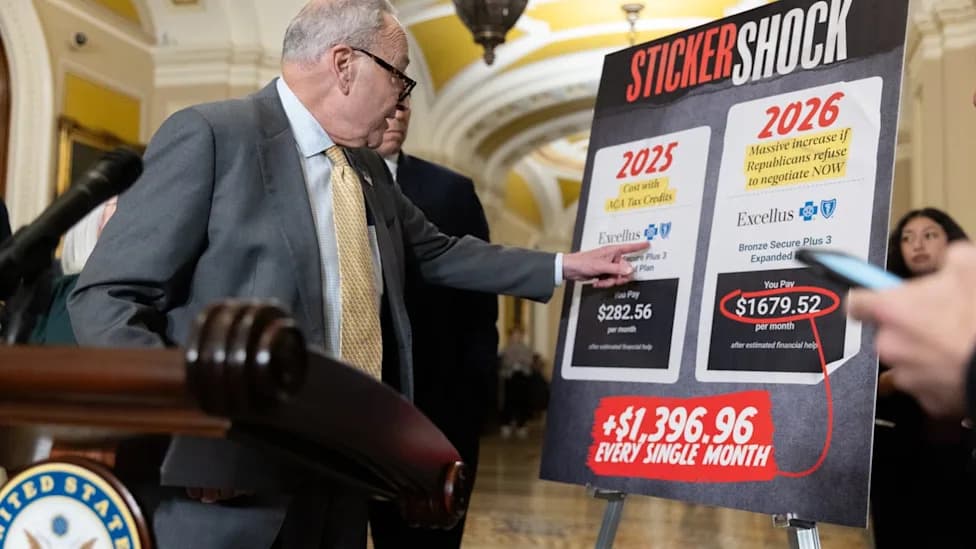
Many states that operate their own Affordable Care Act (ACA) marketplaces have moved quickly to soften the blow from the expiration of enhanced federal premium subsidies, which lapsed at the end of the year. At least 10 states are using state funds to partially or fully replace those subsidies, helping hundreds of thousands of residents avoid steep premium increases.
Background
The enhanced federal subsidies were created by the American Rescue Plan Act in 2021 and extended through 2025 by the Inflation Reduction Act. Those temporary measures boosted enrollment in ACA marketplaces from 11.4 million in 2020 to about 24.3 million last year. Congress allowed the enhanced subsidies to lapse on Dec. 31, and federal data show marketplace enrollment is down roughly 1.2 million people compared with a year earlier.
Why Premiums Are Rising
Insurers cite multiple pressures that are driving premium increases: labor shortages in the health sector, rising prescription drug costs and higher utilization of expensive medications — including growing demand for GLP‑1 drugs such as Ozempic and Wegovy. In some markets, those cost pressures combined with the subsidy expiration would have caused premiums to double or triple for some enrollees.
Who Can Act — And Which States Did
Only states that run their own ACA exchanges (21 states plus the District of Columbia) can offer state-funded tax credits or subsidies. At least 10 of those states — California, Colorado, Connecticut, Maryland, Massachusetts, New Jersey, New Mexico, New York, Vermont and Washington — have moved to provide state assistance, though program size and eligibility vary significantly.
State Responses — Examples
New Mexico
New Mexico took the most comprehensive approach. Governor Michelle Lujan Grisham and state lawmakers tapped an additional $17.3 million from the five-year-old Health Care Affordability Fund to fully replace the expired federal subsidies through June 30 for all marketplace enrollees, regardless of income. Roughly 82,400 New Mexicans buy coverage on the state marketplace, and most are eligible for some state help. Enrollment in New Mexico is up about 18% this year.
“It is a pretty substantial amount of money, and it is going to strain the programs that we can provide with that funding,” said Kari Armijo, cabinet secretary for the New Mexico Health Care Authority, acknowledging sustainability concerns.
California
California set aside $190 million this year to fully replace lost federal subsidies for people earning up to 150% of the federal poverty level and to partially replace aid for people slightly above that threshold. About 390,000 enrollees are receiving state-funded assistance. The state’s marketplace had about 1.9 million enrollees in 2025, but enrollment is down roughly 32% from last year.
Colorado
Colorado approved up to $110 million in an August 2025 special session for a new Colorado Premium Assistance program to provide partial help for people making between 133% and 400% of the federal poverty level. State officials say assistance will not fully replace the expired federal aid; cancellations on the exchange have risen sharply, with the state reporting an 83% increase in plan cancellations compared with last year.
Other States
Several other states adopted more targeted programs: Connecticut is offering aid to households up to 200% of the poverty level and plans to spend $115 million in 2026 to offset the federal subsidy loss; Massachusetts set aside $250 million to bolster its state subsidy program; Maryland launched a premium assistance program that fully replaces federal aid for enrollees under 200% of the poverty level and partially helps those between 200% and 400%; New York, Vermont and Washington also provide varying levels of state support.
Expert Concerns And Fiscal Trade-Offs
Policy analysts warn of a risky feedback loop: if relatively healthy people drop marketplace coverage because of higher costs, the remaining enrollee pool will be sicker and more expensive to insure, which could push premiums even higher. Matt McGough, a KFF policy analyst, described many marketplace participants as those who fall between the gaps of employer coverage, Medicare and Medicaid.
“States want to be able to keep as many people in the marketplace as possible,” McGough said.
State leaders also face budget trade-offs. New Mexico’s surtax-funded affordability fund has limits, and California and other large states have projected deficits that make long-term commitments difficult. The Congressional Budget Office has warned that letting the enhanced federal subsidies lapse could raise the number of uninsured Americans by 4.2 million by 2034.
Outlook
State interventions have softened the immediate impact for many residents, but officials emphasize the strain these programs place on state budgets as health care costs continue to rise. Policymakers are now balancing short-term relief against long-term fiscal sustainability — a choice that will shape enrollment trends and premiums in the years ahead.
Reporting contributions by Stateline reporter Shalina Chatlani.
Help us improve.