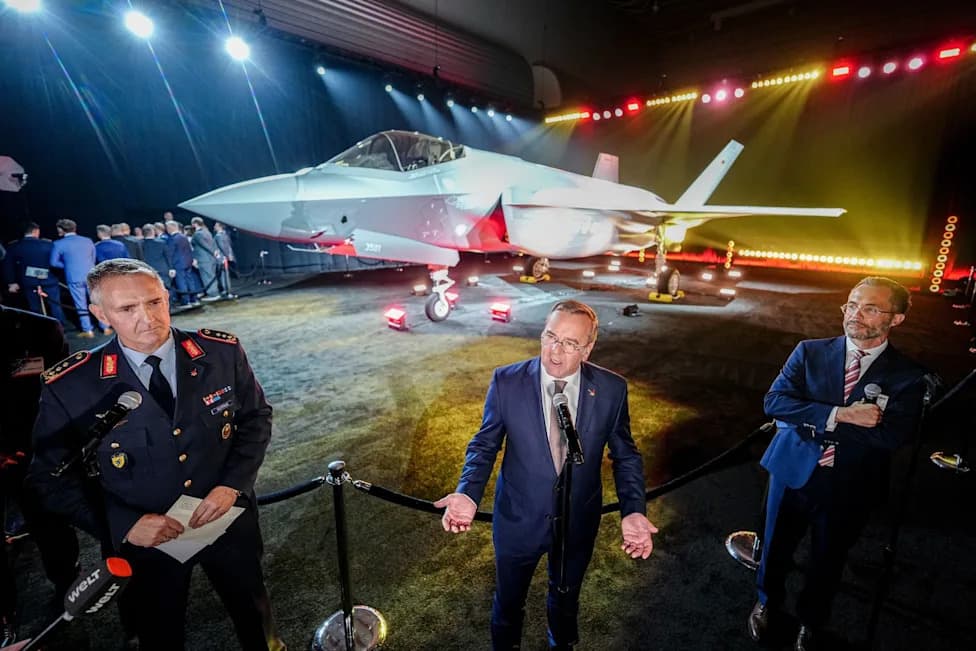
Chancellor Friedrich Merz indicated Germany may withdraw from the €100bn Future Combat Aircraft System (FCAS) programme, saying German requirements differ from France's—particularly over carrier operations and nuclear capability. The project, launched in 2017 to field a new fighter, drones and a cloud system by about 2040, has been hampered by disputes between Dassault and Airbus over control. German industry groups are urging Berlin to explore alternatives, with Saab frequently named as a potential partner.
Merz Signals Germany May Quit €100bn FCAS Fighter Project Over French Requirements
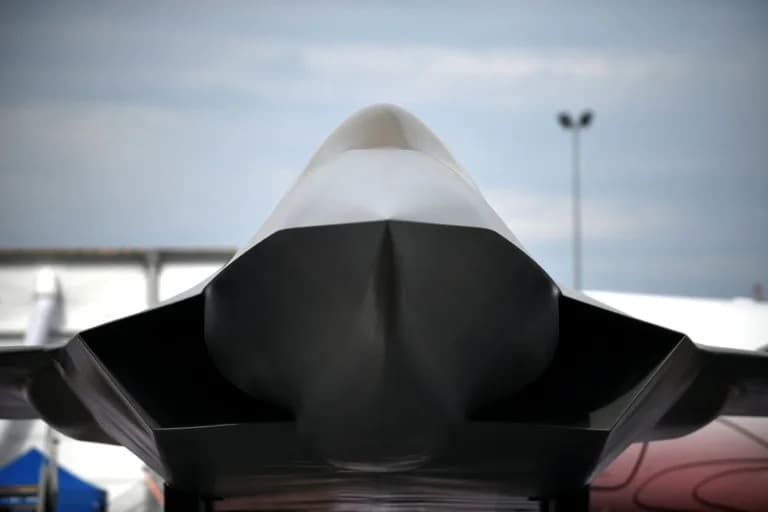
A mock-up of the European New Generation Fighter for the Future Combat Air System (FCAS) at the Paris Air Show in 2023 (JULIEN DE ROSA)(JULIEN DE ROSA/AFP/AFP)
Germany's Chancellor Friedrich Merz said on Wednesday that Berlin does not need the same next-generation fighter jet as France and could withdraw from the high-profile Future Combat Aircraft System (FCAS) programme, putting a major European defence collaboration at risk.
Key Remarks
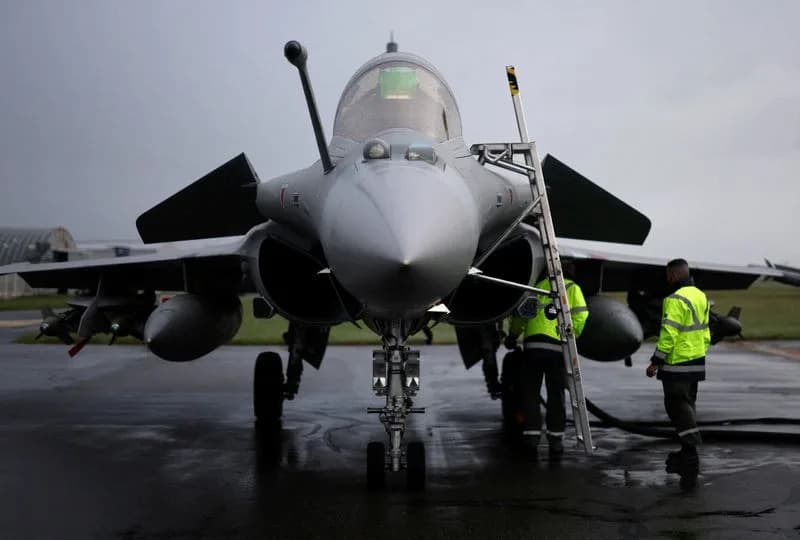
"The French need, in the next generation of fighter jets, an aircraft capable of carrying nuclear weapons and operating from an aircraft carrier," Merz told the German podcast Machtwechsel. "That's not what we currently need in the German military."
Merz: "Do we have the strength and the will to build two aircraft for these two different requirement profiles, or only one? If this is not resolved, Germany will not be able to continue the project."
Project Background
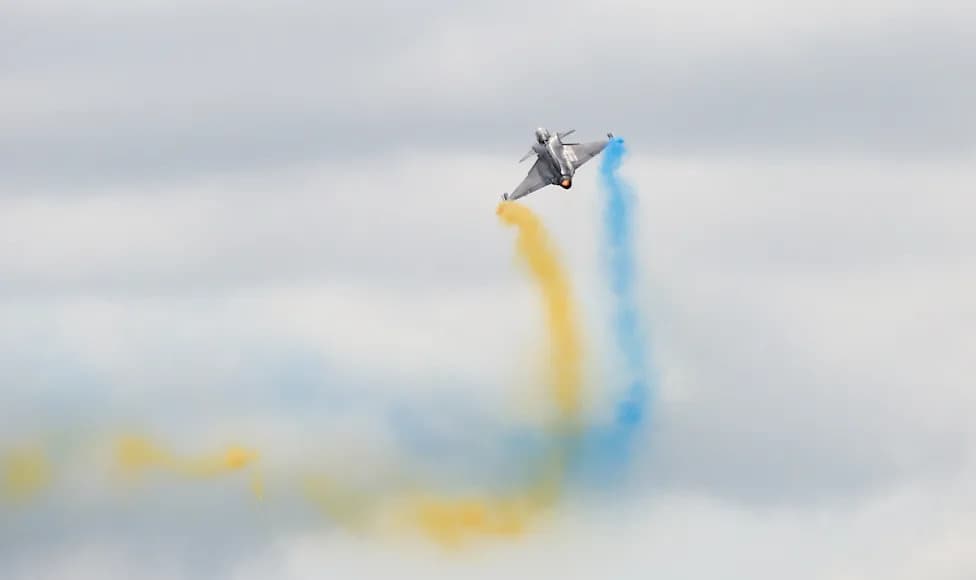
Launched in 2017, FCAS is intended to replace France's Rafale and the Eurofighter jets used by Germany and Spain with a next-generation system expected to enter service around 2040. The programme envisions a manned fighter, interconnected drones and a cloud-based combat system. Estimated costs have been reported around €100 billion ($118 billion).
Tensions and Responses
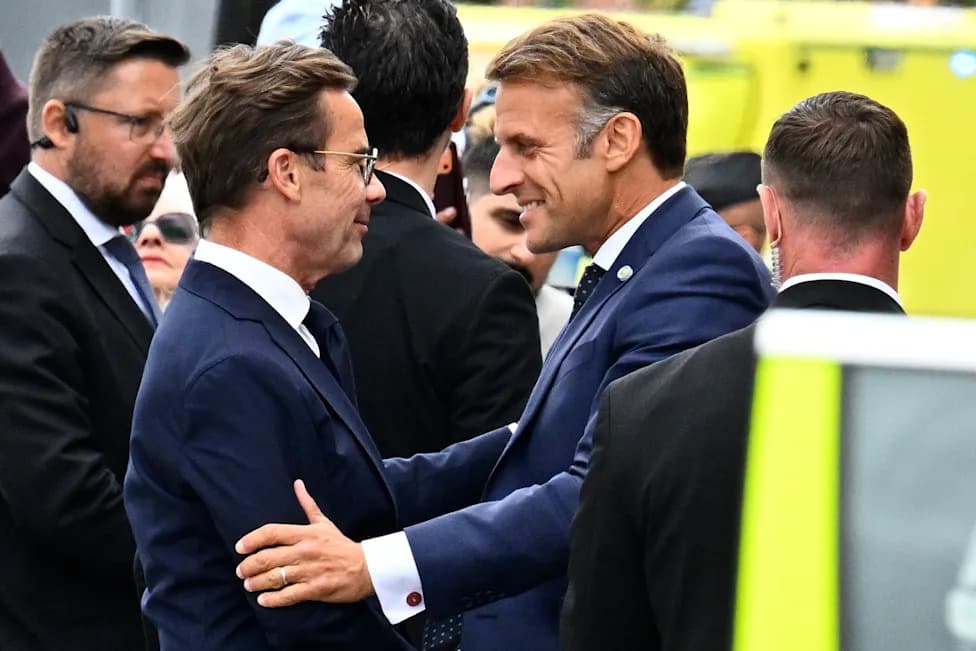
The trilateral project has stalled amid disputes between France's Dassault Aviation and Airbus Defence and Space over control of the aircraft component. Paris has sought to reassure partners: the office of President Emmanuel Macron said he "remains committed to the success" of FCAS and stressed that France's nuclear deterrent requirements were part of the original specifications.
Macron's statement added that, given the strategic stakes for Europe, industrial differences should be overcome and European partners must demonstrate unity in industry, technology and defence.
Industrial and Political Fallout
Airbus is Germany's lead contractor on FCAS, with Spain's Indra Sistemas also involved. German industry groups and political figures have pushed back against perceived French attempts to take greater control. The influential IG Metall trade union and the German Aerospace Industries Association — represented by Juergen Kerner and Marie-Christine von Hahn respectively — have urged Berlin to consider alternative partners if agreements are revised to France's advantage.
Sources and media reports have suggested alternatives for Germany (and potentially Spain), most notably a partnership with Swedish aerospace firm Saab. Dassault's CEO Eric Trappier has said his company could develop a fighter independently, but that option could place additional strain on France's public finances.
Wider Strategic Implications
Failure to keep FCAS on track would be a setback for European defence cooperation at a time when NATO allies seek closer coordination in the face of threats from Russia and uncertainty about long-term U.S. security commitments. Germany, by contrast, has launched a substantial military investment programme and Merz has pledged to build Europe's largest conventional armed forces.
Next Steps: Merz had previously promised a decision on FCAS by the end of last year but postponed the final call. The coming weeks and diplomatic talks between Paris, Berlin and Madrid will determine whether the trilateral effort can be salvaged or whether Germany pursues new partnerships.
Help us improve.