The study identifies the exercise‑linked metabolite N‑lactoyl‑phenylalanine (Lac‑Phe) as a direct suppressor of hunger in mice by acting on a specific hypothalamic circuit. Lac‑Phe activates KATP channels on AgRP neurons, reducing their firing and thereby disinhibiting PVH neurons to lower food intake without signs of sickness. The work maps a clear causal pathway and highlights Lac‑Phe as a potential target for weight‑management research, while noting that human safety and efficacy remain to be established.
Exercise Molecule Lac‑Phe Quietens Hunger by Targeting a Specific Brain Circuit, Mouse Study Shows

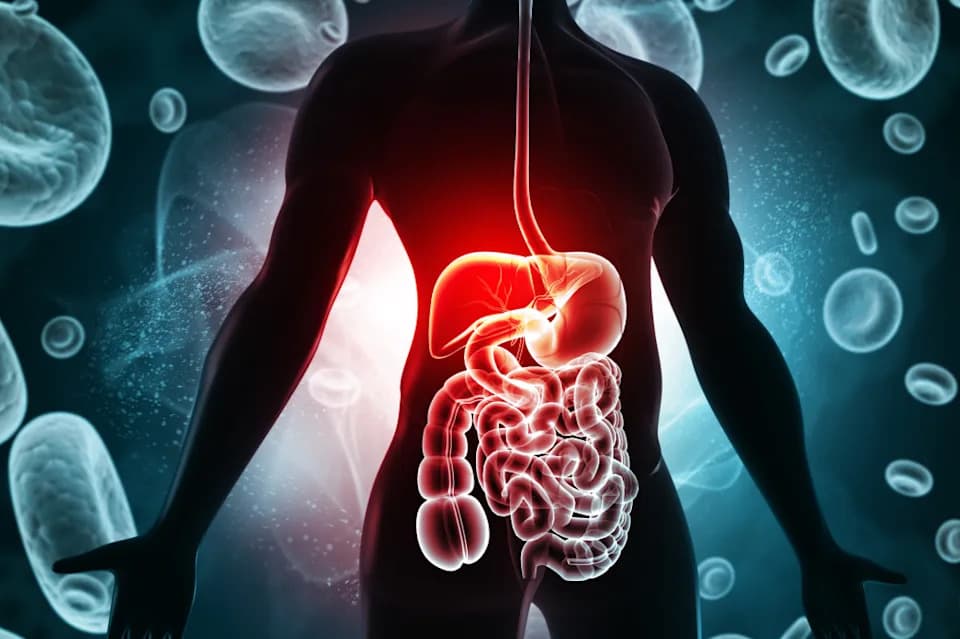
Researchers mapped how Lac-Phe, a compound raised by intense exercise, suppresses appetite in mice by targeting hunger neurons and KATP channels. (CREDIT: Shutterstock)
Sweating does more than burn calories: intense exercise also produces a small molecule that can reduce appetite, at least in mice. Researchers from Baylor College of Medicine, the Jan and Dan Duncan Neurological Research Institute at Texas Children’s Hospital, Stanford University School of Medicine and collaborating institutions report that the exercise‑linked metabolite N‑lactoyl‑phenylalanine (Lac‑Phe) lowers food intake by acting on a defined hypothalamic circuit.
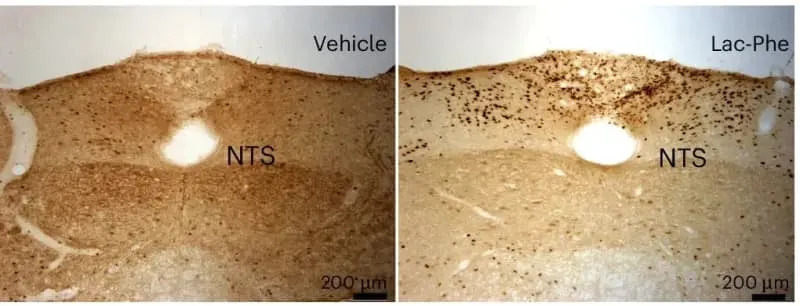
Lac-Phe suppresses feeding and activates PVH neurons. (CREDIT: Nature Metabolism)
“Regular exercise is considered a powerful way to lose weight and to protect from obesity‑associated diseases, such as diabetes or heart conditions,” said co‑corresponding author Dr. Yang He of Baylor. He added that, beyond burning calories, exercise likely influences body weight through additional biochemical signals.
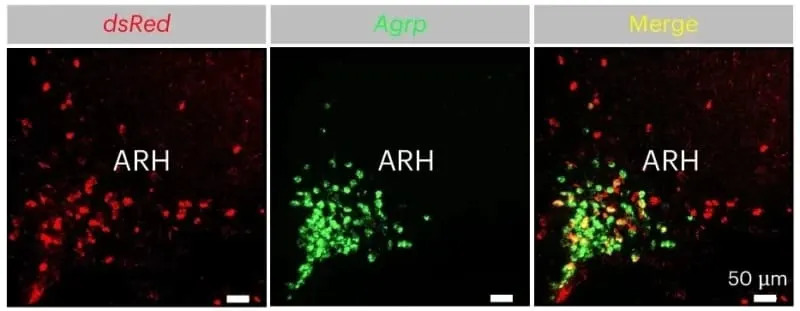
The PVH is not directly targeted by Lac-Phe. (CREDIT: Nature Metabolism)
From Blood to Brain: How Lac‑Phe Alters Appetite
Earlier work by the team found Lac‑Phe rises in the bloodstream after intense exercise in mice, humans and racehorses. When administered to obese mice, Lac‑Phe reduced food intake and body weight without obvious adverse effects. The new study answers the next question: how does Lac‑Phe act inside the brain to change feeding behavior?
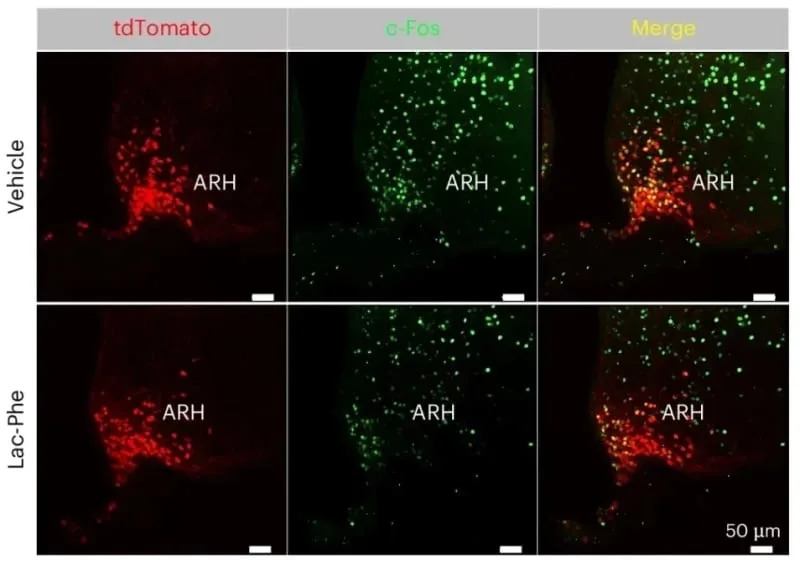
Lac-Phe directly inhibits AgRP neurons to suppress feeding. (CREDIT: Nature Metabolism)
The researchers focused on the hypothalamus, the brain’s hub for hunger and energy balance. Two neuron populations there play opposing roles: AgRP neurons in the arcuate nucleus stimulate feeding when active, while neurons in the paraventricular nucleus (PVH neurons) suppress appetite. Normally, AgRP neurons inhibit PVH neurons; reducing AgRP activity releases that inhibition and allows PVH neurons to curb eating.
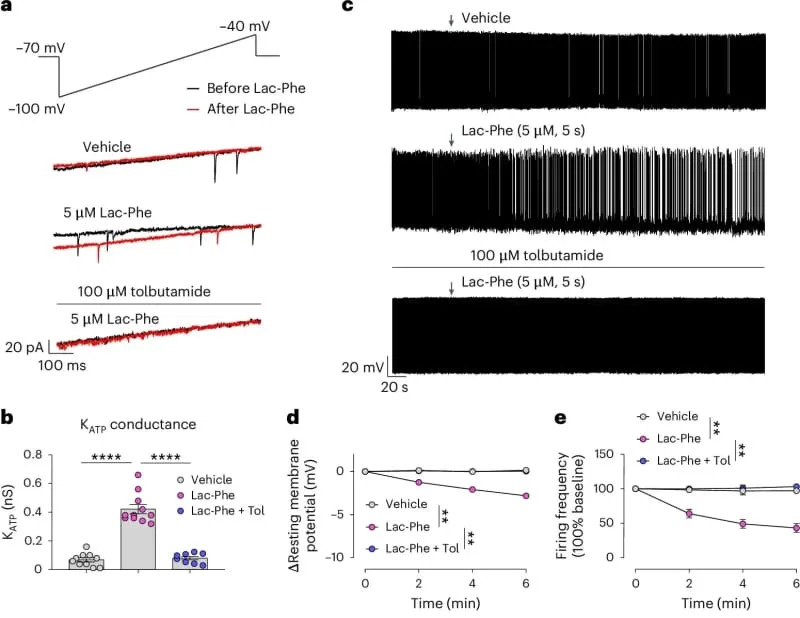
Lac-Phe inhibits AgRP neurons by activating the KATP channel. (CREDIT: Nature Metabolism)
Using mouse models, the team showed that Lac‑Phe suppresses firing of AgRP neurons. As AgRP activity falls, PVH neurons become more active and the animals eat less. Importantly, the mice did not exhibit behaviors consistent with sickness or distress, supporting the idea that Lac‑Phe acts through a targeted appetite circuit rather than by making animals unwell.
The Molecular Switch: KATP Channels
To identify how Lac‑Phe quiets AgRP neurons, the investigators traced the effect to a potassium channel known as the KATP channel. Activation of KATP channels reduces neuron excitability. The study found that Lac‑Phe activates KATP channels on AgRP neurons, which decreases their firing and thus disinhibits PVH neurons to suppress feeding.
Blocking KATP channels with drugs or genetic tools prevented Lac‑Phe from reducing food intake, confirming that these channels are essential for the effect. This pharmacological and genetic evidence strengthens the causal pathway: Lac‑Phe → KATP activation on AgRP neurons → reduced AgRP firing → increased PVH activity → lower food intake.
Implications and Limits
The findings provide a clear mechanistic link between an exercise‑generated molecule and a defined brain circuit controlling appetite. That precision makes Lac‑Phe an intriguing target for future weight‑management research. However, the experiments were done in mice; translating these results to humans will require careful study of how Lac‑Phe reaches the brain, how it behaves in different metabolic states (for example, obesity versus leanness), and whether it is safe and effective in people.
Overall, the study suggests that part of exercise’s impact on appetite may come from chemical signals like Lac‑Phe that act on specific neurons and ion channels in the hypothalamus, not solely from calorie expenditure. The full report is published online in Nature Metabolism.
Help us improve.