The author — who has represented Missouri’s 5th Congressional District since 2005 and previously served as Kansas City’s mayor — argues that partisan pressure from Washington and state leaders produced a gerrymandered map that will harm local representation. In under 90 days more than 305,000 Missourians signed a petition for a statewide referendum, but state officials moved to implement the map despite constitutional protections. The map splits Kansas City into three districts, revives Troost Avenue as a racial dividing line, pairs urban neighborhoods with distant rural areas, and has prompted ten lawsuits alleging violations of the state constitution and the principle of equal representation.
Gerrymandered Map Threatens Kansas City Representation — Over 305,000 Missourians Demand a Referendum
GOP gerrymandering efforts are distorting the Missouri district I represent
President Donald Trump’s call for Republicans to “nationalize the voting” followed a concerted push last year for partisan redistricting — pressure that reached into my home state and targeted the congressional district I represent.
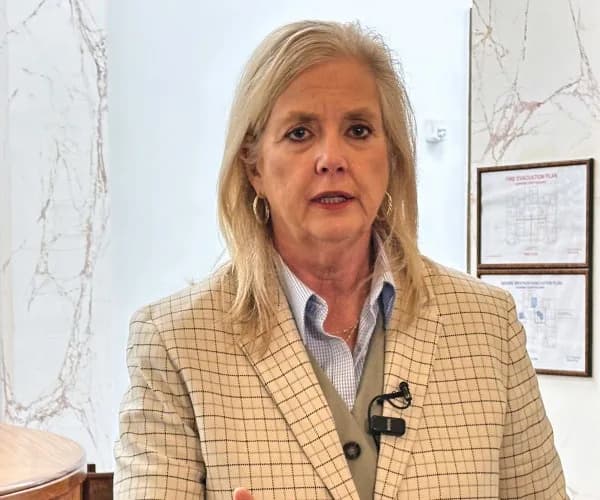
I have represented Missouri’s 5th Congressional District since 2005. Before that, I served 12 years on the Kansas City City Council and became the city’s first African American mayor, serving two terms. I know this community well, and what is now proposed for the 5th District will harm Kansas City and voters across the Show-Me State.
What Happened
Late last summer, after sustained pressure from the president to redraw congressional boundaries in multiple states, Missouri Gov. Mike Kehoe called a special session of the General Assembly. After two days of intense debate, the Missouri House approved a congressional map widely criticized as a gerrymander, along with a companion bill designed to make it harder to amend the state constitution by ballot initiative.
Despite bipartisan objections, the legislature — itself shaped by partisan maps — moved forward under pressure from out-of-state power brokers. Lawmakers who resisted were reportedly targeted with political retribution.
Voter Response And Legal Pushback
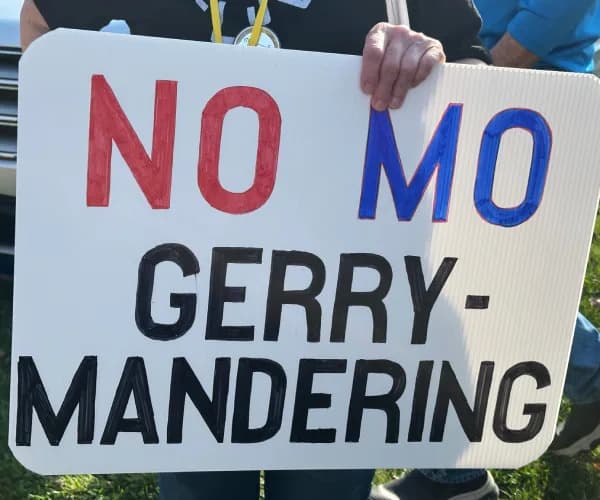
Missourians reacted quickly. In fewer than 90 days, more than 305,000 citizens signed a petition calling for a statewide referendum to overturn the proposed congressional map. Historically, Missouri voters have succeeded in 25 of 27 statewide referendums since 1908 — a 93% success rate.
Nonetheless, state officials including Secretary of State Denny Hoskins and Attorney General Catherine Hanaway moved to block the referendum, contending the new map was already in effect. That claim conflicts with the Missouri Constitution, which provides citizens a clear right to a statewide vote before newly enacted maps take effect.
Political action committees and outside groups have poured money into the ensuing legal battles over both the gerrymandered map and the referendum effort. To date, ten lawsuits have been filed challenging the plan.
How The Map Harms Local Representation
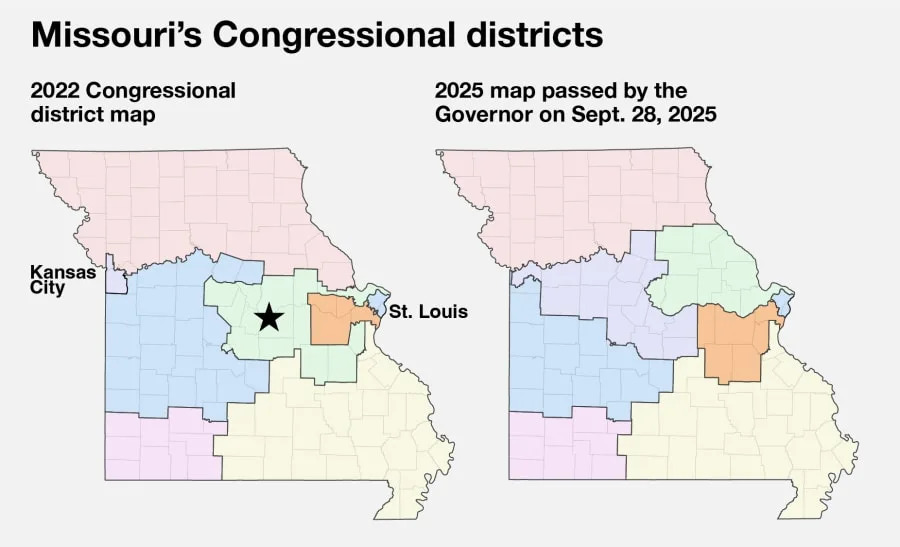
The proposed map carves Kansas City into three separate congressional districts in ways that undermine coherent local representation:
- The central business district would be placed in a district stretching to the Missouri-Iowa border and across the northern half of the state to Illinois.
- The Plaza — a distinct Kansas City neighborhood — would be attached to a broad swath of rural southwest Missouri.
- The east side of Kansas City, including historically African American communities, would be merged with the Lake of the Ozarks and more than a dozen rural counties.
Under this configuration, members of the same household could live, work, and send their children to school in three different congressional districts — an outcome that fragments community interests and weakens accountability.
Racial And Constitutional Concerns
Congressional districts are more than lines on a map; they shape political power and can reinforce segregation. Troost Avenue has long been the city’s historic racial dividing line — west of Troost predominantly white neighborhoods, east predominantly Black neighborhoods. After decades of targeted efforts to erase that divide and expand opportunity across the region, the proposed map shockingly resurrects Troost as the boundary between the 5th and 4th Congressional Districts. This deliberate use of a historic segregation line risks reigniting racial tensions and undoing hard-won progress.
Critics also note serious constitutional and technical flaws. The Missouri Constitution mandates that redistricting follow the decennial census to ensure equal representation; enacting a map prior to a new census can produce unequal districts. Additionally, the proposed plan reportedly duplicates the same ward and precinct across two congressional districts, which could allow the same voters to cast ballots for two members of Congress — a clear violation of the principle of one person, one vote.
What’s At Stake
My constituents — independents, Republicans and Democrats alike — have expressed confusion, anger and frustration. Throughout my public-service career I have worked to represent everyone in this community, regardless of how they voted. Elected officials must honor the Constitution and uphold the public’s right to fair representation, not bow to intimidation or partisan schemes.
The foundations of our constitutional republic depend on representation that is of the people, by the people and for the people. More than 300,000 Missourians signed a petition to force a referendum. The political process must proceed according to law — not as part of a plan to impose an unlawful gerrymander.
Help us improve.