Iowa and a group of naturalized citizens settled a federal lawsuit that bars the state from relying solely on driver’s license records for citizenship checks in the three months before an election. The settlement rescinds a 2024 DOT-derived list that flagged about 2,000 voters and prevents its future use; plaintiffs agreed to dismiss their claims. A later review found 35 noncitizens among more than 1.6 million who voted in 2024, and Iowa now has access to the federal SAVE system to verify voter information.
Iowa Settles Voter-Eligibility Lawsuit; 2024 Noncitizen List Rescinded
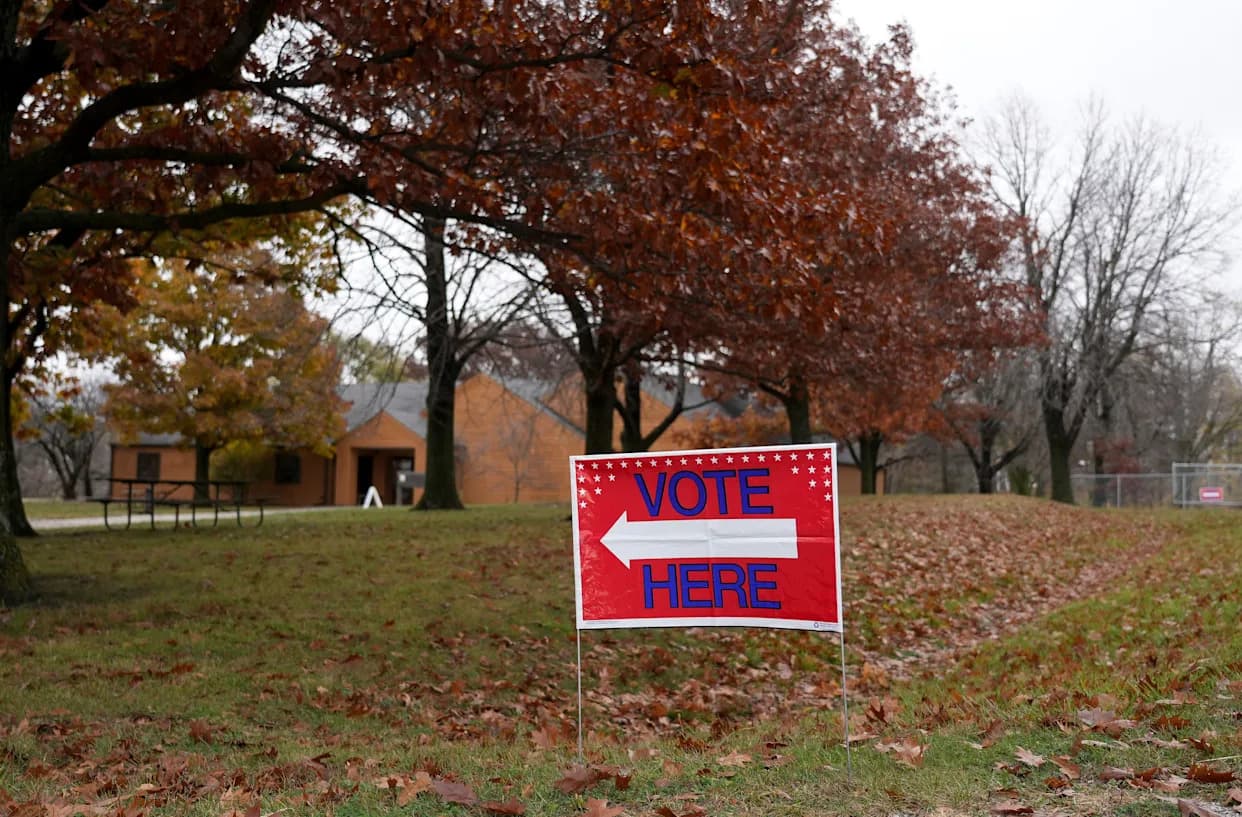
FILE - A "Vote Here" sign is seen on Election Day on Nov. 5, 2024, at Perfect Games in Ames, Iowa. (AP Photo/Bryon Houlgrave, File)(ASSOCIATED PRESS)
DES MOINES, Iowa — Iowa’s secretary of state and a group of naturalized U.S. citizens reached a federal settlement Wednesday that limits how the state may use certain records to check voter citizenship status ahead of elections.
What the Settlement Does
The agreement prevents Iowa from relying exclusively on driver’s license or Department of Transportation (DOT) records for citizenship information during the three months before an election. The settlement also rescinds the list compiled in 2024 — which county officials had used to flag roughly 2,000 registered voters as possible noncitizens — and bars that list from being used in any future ballot challenges or voter-roll maintenance.
Background
Naturalized citizens sued Iowa Secretary of State Paul Pate in late October 2024 after his office directed election workers to challenge ballots from about 2,000 voters identified from DOT records as potential noncitizens. A separate review of Iowa’s voter rolls later found that only 35 noncitizens had voted among more than 1.6 million ballots cast in 2024, and that 277 noncitizens were registered to vote out of nearly 2.3 million registrants.
Why This Happened
Pate’s office had matched the state’s voter rolls to DOT records showing people who at some point self-reported as noncitizens. Officials acknowledged some on that list may have become naturalized and thus were eligible to vote. The DOT-derived list was forwarded to county election officials roughly two weeks before the election, but voters were not contacted directly as part of that action.
Federal Verification Access
Under an arrangement with the Department of Homeland Security reached under the prior administration, Iowa now has the ability to run searches through the Systematic Alien Verification for Entitlements (SAVE) program — using names, birthdates and Social Security numbers — to verify citizenship information. The secretary of state’s office has already used SAVE in its review, according to court filings. SAVE is operated by U.S. Citizenship and Immigration Services (USCIS) and has existed for decades, though it was significantly enhanced in recent years, prompting concerns from voting rights groups about the potential for improper flagging or removal of eligible voters.
Settlement Terms And Reactions
In exchange for rescinding the list and restrictions on its future use, the naturalized citizens agreed to dismiss their claims. The settlement was filed in federal court Wednesday but had not yet been formally approved by a judge.
“The overwhelming majority of voters wrongly put on this list, including all our clients, are naturalized United States citizens who have the right to vote,” said Rita Bettis Austen, legal director for the ACLU of Iowa. “We are hopeful today’s settlement will safeguard Iowans from this happening again in future elections.”
Secretary of State Paul Pate and Iowa Attorney General Brenna Bird, both Republicans, also called the outcome a win, noting the state’s new access to federal databases for voter verification.
Why It Matters
The settlement aims to strike a balance between protecting the integrity of elections and safeguarding eligible voters from being wrongly challenged or removed from rolls. It also highlights ongoing tensions over which data sources states should use to verify voter eligibility and how those sources are managed.
Help us improve.