Abbas Araghchi has ruled out negotiating Iran's ballistic missile program and warned U.S. bases could be targeted if provoked. Analysts say Iran is using talks in Oman to buy time and signal resolve while rejecting core U.S. demands on missiles and enrichment. Washington has reinforced its regional forces, and Tehran has said it would consider diluting 60% enriched uranium only if sanctions are fully lifted. Both sides remain divided by hard red lines.
Iran Draws 'No-Negotiate' Line On Ballistic Missiles As Oman Talks Stall And Tensions Rise
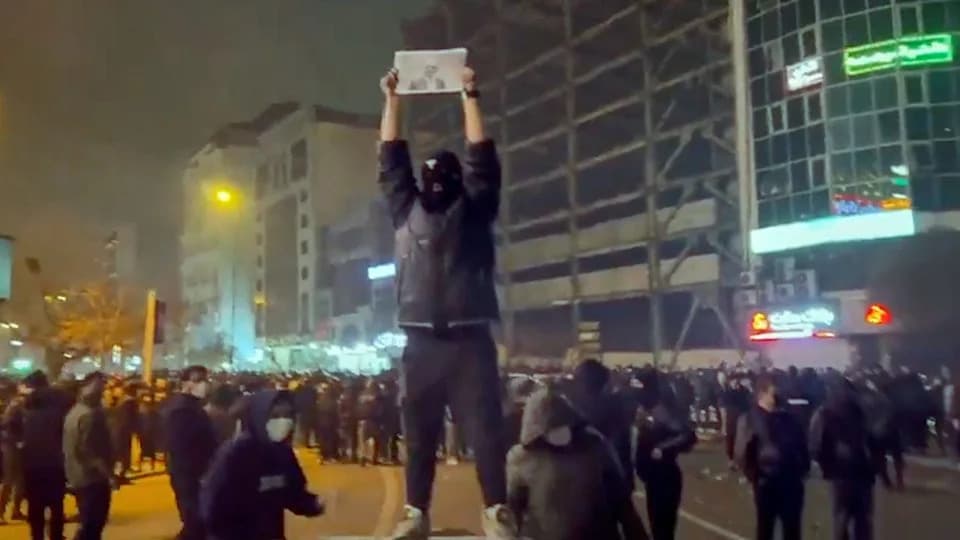
In this frame grab from video obtained by the AP outside Iran, a masked demonstrator holds a picture of Iran's Crown Prince Reza Pahlavi during a protest in Tehran, Iran, Jan. 9, 2026.(AP Newsroom)
Iranian Foreign Minister Abbas Araghchi has ruled out any negotiations over Tehran’s ballistic missile program, rejecting a core U.S. demand and further dimming prospects for a comprehensive agreement. In an interview with Al Jazeera, Araghchi warned that Iran would target U.S. bases in the Middle East if provoked, calling the missile program "never negotiable."
Diplomacy Amid Military Posturing
The comments came as U.S. and Iranian delegations met in early February in Oman, even as Washington reinforced its military posture across the region. U.S. officials say the deployments are meant to deter escalation, while analysts argue the buildup highlights how far apart the two sides remain on core issues.
Analysts See Negotiations as Delay Tactic
Many analysts say Iran is using talks to buy time, signal resolve and shape domestic politics rather than to make substantive concessions. Rosemary Kelanic, an analyst at Defense Priorities, described Tehran’s approach as classic asymmetric logic: a militarily weaker state may endure greater costs because it perceives the stakes as existential.
"One country is much stronger, but the weaker country cares more," Kelanic said. "Historically, the country that cares more often wins by outlasting the stronger one."
Behnam Taleblu of the Foundation for Defense of Democracies argued Iran’s chief leverage is its ability to threaten broader regional instability, noting that even intercepted attacks can still produce significant damage.
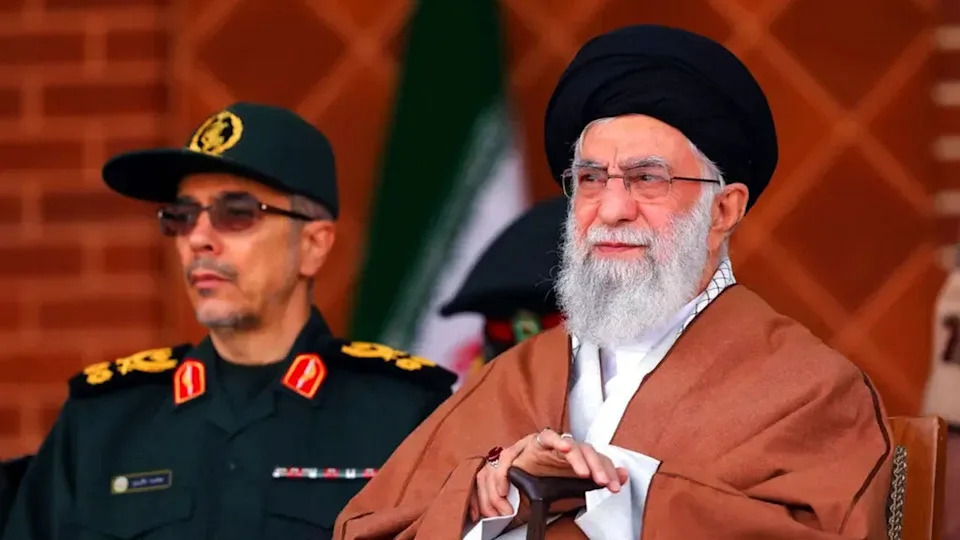
Iranian Supreme Leader Ayatollah Ali Khamenei is pictured sitting next to a senior military official in Iran.
Core Disputes Remain
U.S. negotiators have pressed for limits on Iran’s ballistic missiles, an end to enrichment programs that could lead to a weapons capability, and the surrender of enriched-uranium stockpiles. Iran says it will negotiate nuclear matters but insists enrichment is an "inalienable right" that must continue.
Araghchi said Tehran is prepared to discuss reassuring arrangements on enrichment, and Iran’s atomic agency chief indicated Tehran might consider diluting uranium enriched to 60% — a level close to weapons-grade — but only in exchange for the lifting of all sanctions.
U.S. Response And Regional Military Moves
Washington has increased its regional presence: in late January, a carrier strike group centered on the USS Abraham Lincoln was sent to the North Arabian Sea, accompanied by destroyers and other assets. Additional F-15E aircraft, air-defense systems and thousands of repositioned personnel have also been reported across the region.
Domestic Pressure In Iran
Anti-government protests that began in early 2026 were met with a harsh crackdown. Iranian authorities have acknowledged 3,117 deaths linked to the demonstrations, while human-rights groups and opposition organizations contend the toll is significantly higher.
Outlook
Observers warn both sides still hold firm red lines. Analysts say Iran appears to be using negotiations to deter immediate strikes, weaken internal opponents over time and seek eventual sanctions relief — while the United States balances diplomatic engagement against bolstering deterrence and preparing military options.
Help us improve.