Kamala Harris relaunched her KamalaHQ channels as “Headquarters” in partnership with People for the American Way, targeting Gen Z with meme-style digital content. Early posts leaned on anti-Trump snark and saw limited engagement despite 1.1 million followers, prompting criticism that the effort favors viral reach over organizing. Critics urge Democrats to shift funding from short-term content plays toward durable, on-the-ground youth infrastructure modeled by well-funded conservative networks and some successful progressive local campaigns.
Why Kamala Harris’s ‘Headquarters’ Rebrand Won’t Win Gen Z — And What Democrats Really Need

Kamala Harris’ rebooted online ‘Headquarters’ is not the answer for Democrats
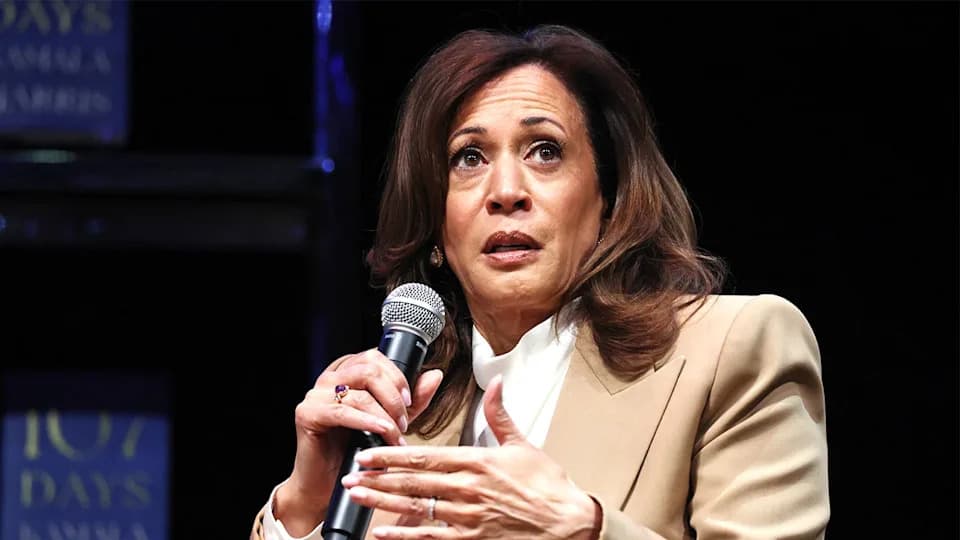
Former Vice President Kamala Harris briefly revived her dormant KamalaHQ channels this week, announcing a partnership with People for the American Way to convert her campaign accounts into a new digital hub called “Headquarters,” aimed at younger voters.
The relaunch quickly drew criticism from digital organizers and youth advocates who say the effort emphasizes viral content over sustained organizing. In its first 24 hours the account leaned into anti-Trump meme culture — tweeting provocative emojis, recycling video clips of past gaffes, and trading barbs with figures associated with Trump’s orbit — behavior critics say feels more like internet theater than civic mobilization.
Handles, Reach And Engagement
The account first appeared under the handle @headquarters_67 — a nod to a Gen Alpha meme — but after widespread mockery it changed to @headquarters68_. Despite retaining roughly 1.1 million followers from the KamalaHQ era, most posts so far have attracted fewer than 1,000 retweets, suggesting a large but largely passive audience.
Content Without Infrastructure
Many of the same young digital operatives behind KamalaHQ’s 2024 virality are involved with the new project, but critics say “Headquarters” reads like another anti-MAGA content account rather than a sustained youth-organizing effort. Since the 2024 cycle, Democrats have built a growing cohort of creators and operations that push back digitally, yet adding one more voice to that chorus is unlikely to translate into long-term voter mobilization without offline structures to match it.
“Views don’t register voters — organizers do.”
What The Left Lacks—and What The Right Built
Observers on the left have repeatedly asked why there is no dominant, fundraising-backed youth infrastructure on their side comparable to conservative networks. The answer often lies in incentives: donors and consultants prefer quick digital wins that generate viral clips over the slower, less glamorous work of funding full-time organizers, local chapters and continuous programming.
Turning Point USA is frequently cited as an instructive counterexample. Its online prominence is supported by more than a decade of investment in a national grassroots operation — with full-time staff, daily programming and persistent voter outreach — which turned digital attention into durable organizing. Replicating something similar would require sustained funding and a commitment to long-term field work rather than periodic content pushes.
Positive Models And A Path Forward
There are examples on the left of how hybrid digital-plus-ground strategies can work. New York City Mayor Zohran Mamdani’s rise, often dismissed as a viral-first phenomenon, was paired with a grassroots voter-turnout operation composed of tens of thousands of volunteers who knocked doors and made calls — creating offline community and durable engagement beyond a single news cycle.
Harris’s refreshed “Headquarters” does not necessarily signal a presidential comeback, but it does expose a broader strategic weakness: an inclination to conflate youth organizing with viral content creation. Young people want places to show up, networks to join, and movements to build — not another ephemeral account centered on impressions.
The recommendation for Democrats is clear: use digital assets as recruitment and amplification tools, but prioritize investment in organizing infrastructure — chapters, paid organizers, consistent programming and voter-registration systems — so that online attention converts into sustained political power.
Help us improve.