A string of deadly crashes in Nigeria and South Africa has highlighted Africa’s road safety emergency. The continent records about 26 road deaths per 100,000 people — the highest rate worldwide — despite having only ~3% of the world’s vehicles. Vulnerable road users (pedestrians, cyclists and motorcyclists) make up a large share of fatalities, and weak infrastructure, poor enforcement and limited public transport drive the toll. Holiday travel periods further raise risks.
Africa's Road Toll Crisis: Why the Continent Has the World's Highest Traffic Death Rate
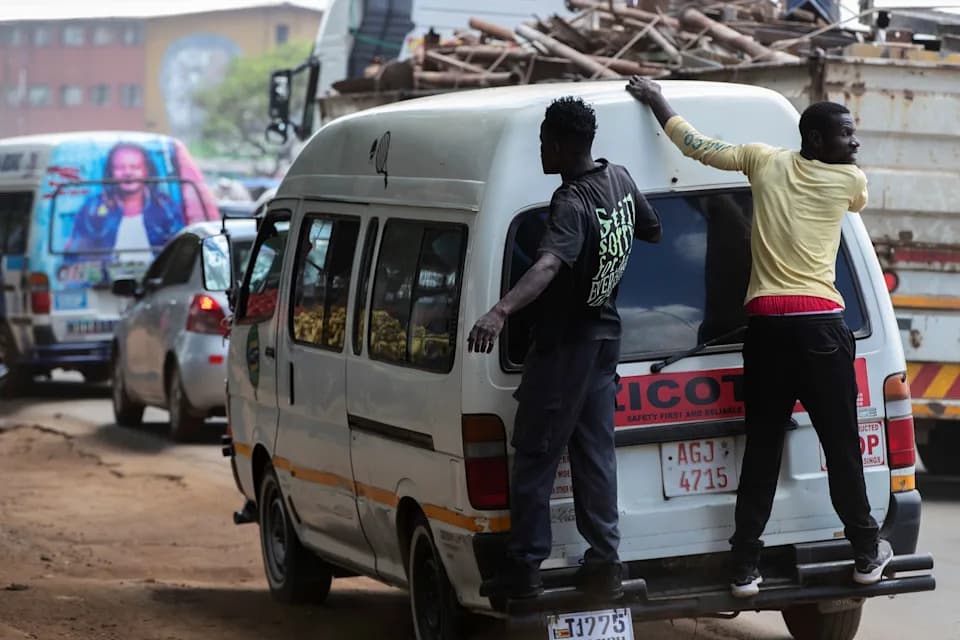
Minibus conductors hang at the back of a moving minibus taxi in Harare, Zimbabwe, Tuesday, Dec. 16, 2025. (AP Photo/Aaron Ufumeli)(ASSOCIATED PRESS)
A series of recent crashes — including a deadly collision in Nigeria involving former world heavyweight champion Anthony Joshua and two separate minibus accidents in South Africa that killed at least 25 people — has put a spotlight on Africa's persistently high road fatality rate.
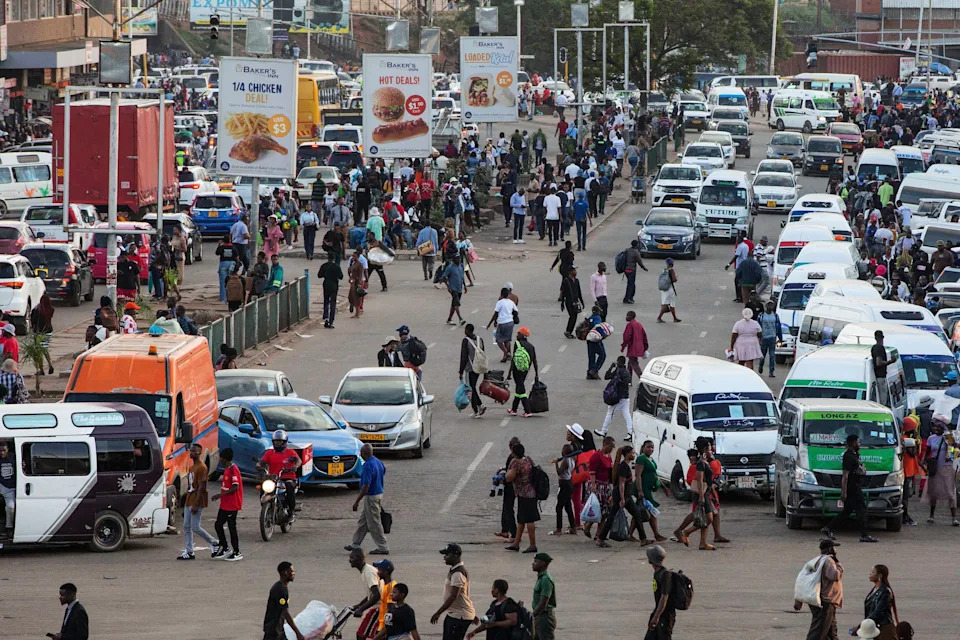
An overview of commuters at a minibus taxi area during rush hour in downtown Harare, Zimbabwe, Tuesday, Dec. 16, 2025.(AP Photo/Aaron Ufumeli)(ASSOCIATED PRESS)
Worst In The World
Despite accounting for roughly 3% of the world’s vehicles, Africa suffers the highest road fatality rate globally. The United Nations Economic Commission for Africa reports about 26 road deaths per 100,000 people on the continent, compared with a global average near 18 and under 10 in Europe. More than 300,000 people are killed in road crashes in Africa each year.
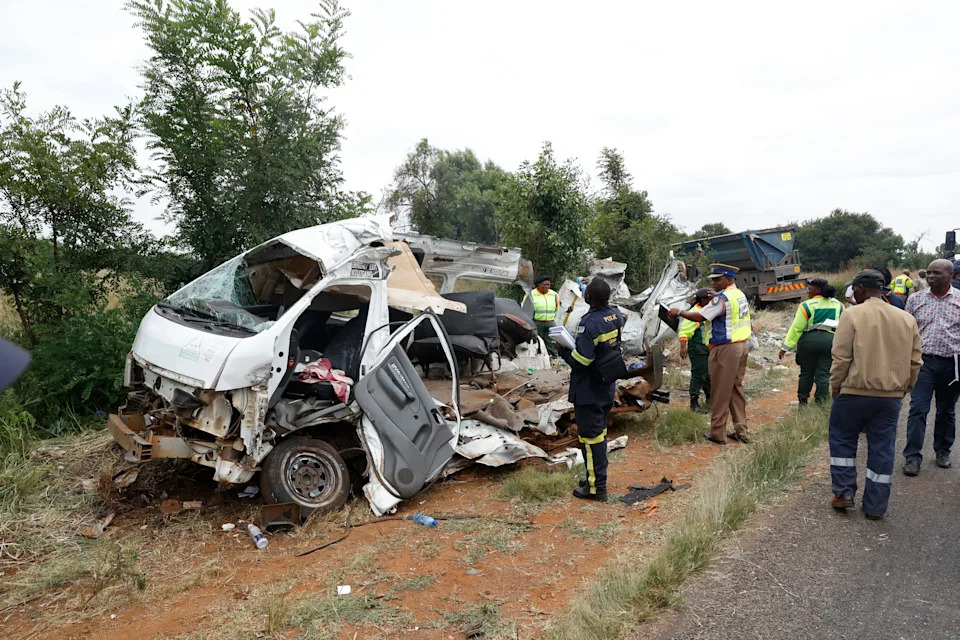
Police inspects the scene of a collision between a truck and a minibus carrying school children in Vanderbijlpark, South of Johannesburg, South Africa, Monday, Jan. 19, 2026. (AP Photo)(ASSOCIATED PRESS)
What the Data Shows
A 2024 World Health Organization report found that while road deaths fell in many regions, fatalities rose in Africa — home to about 1.5 billion people. The WHO called road traffic injuries “a serious public health concern for African countries, with hundreds of thousands of lives being lost unnecessarily.”
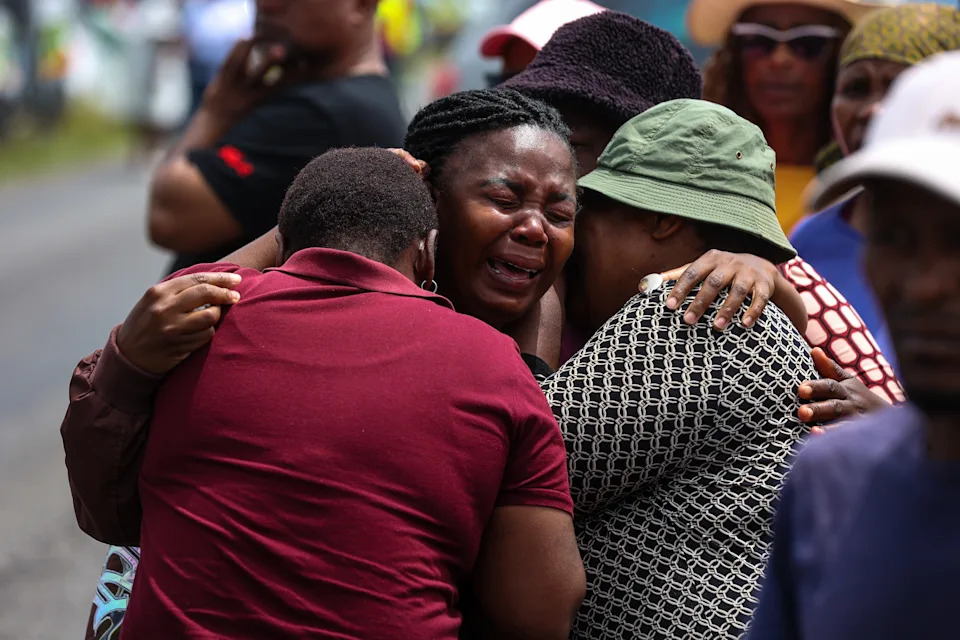
Relatives of school children who died when the minibus they were riding in collided with a truck, weep at the scene of the crash in Vanderbijlpark, South of Johannesburg, South Africa, Monday, Jan. 19, 2026. (AP Photo)(ASSOCIATED PRESS)
Vulnerable Road Users: Pedestrians, Cyclists And Motorcyclists
Lower car ownership and the need for cheaper travel options create crowded, often chaotic road conditions: pedestrians, cyclists and motorcyclists frequently share lanes with cars, buses and heavy trucks. Many countries lack dedicated sidewalks or protected cycle lanes. Around 40% of road deaths in Africa are pedestrians — roughly twice the global average — and in some countries that share approaches 50%.
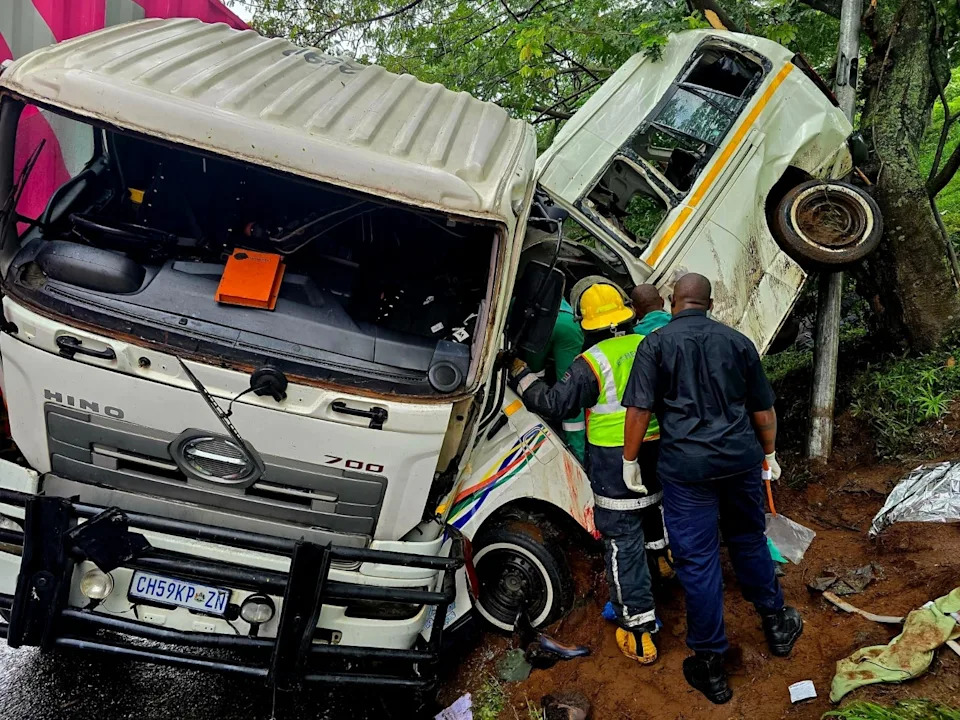
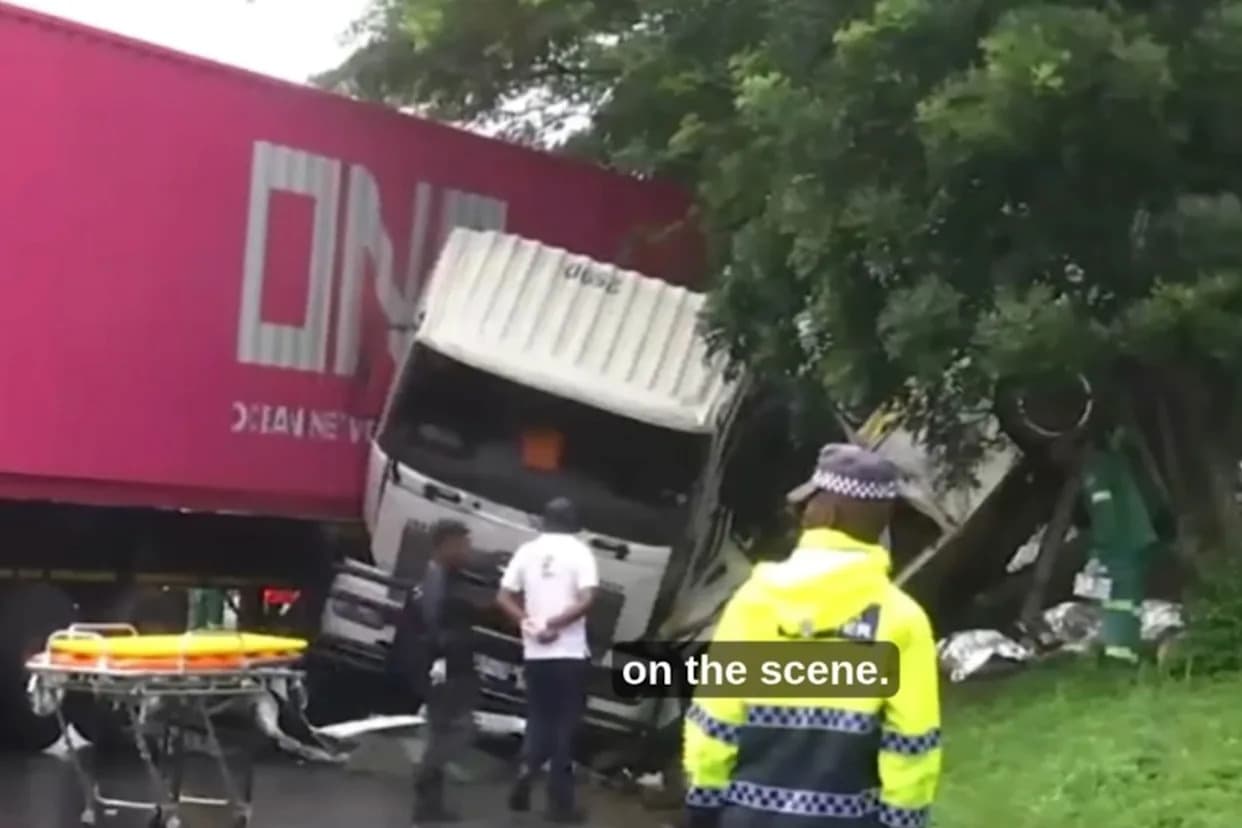
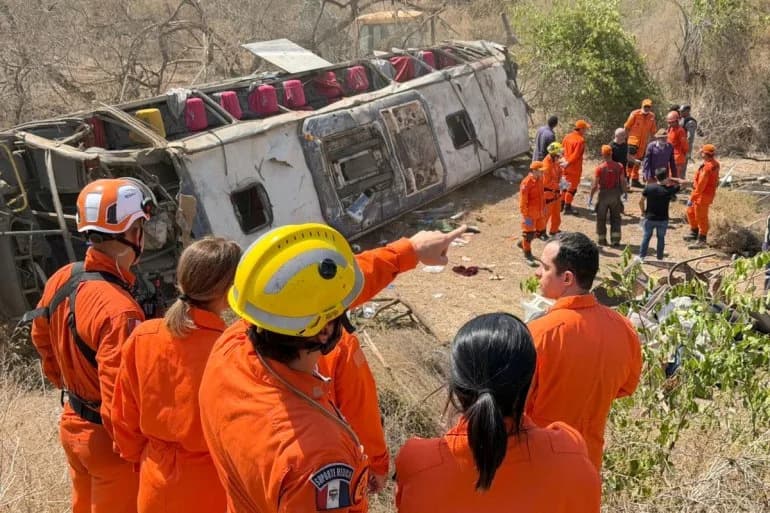
In this photo provided by ALS Paramedics on Thursday, Jan. 29, 2026, rescue personnel inspect the site of a collision involving a minibus taxi and a truck, near Durban, South Africa. (ALS Paramedics via AP Photo)(ASSOCIATED PRESS)
Systemic Causes: Transport, Enforcement And Infrastructure
Weak public-transport systems force millions to rely on overloaded minibuses or motorcycle taxis. In South Africa, for example, an estimated 70% of commuters use minibus taxis — more than 10 million trips daily in a population of about 62 million. Authorities often struggle to regulate these services, verify drivers' licences or ensure vehicles are roadworthy. Enforcement of traffic laws is generally weak, and WHO assessments show only a small share of Africa’s road network meets internationally accepted safety standards.
High-Risk Periods
Holiday travel periods — notably December–January — spike demand on already strained systems and are associated with higher crash rates. South African authorities reported a modest decline this season, but still recorded 1,427 road deaths between Dec. 1, 2025 and Jan. 11, 2026 — an average of more than 30 fatalities per day.
What Needs To Change
Addressing the crisis requires a mix of policies: safer road design (sidewalks, crossings and protected bike lanes), stronger vehicle inspections, better public transport, stricter enforcement of traffic laws and targeted road-safety education. Protecting vulnerable road users and improving regulation of high-use services such as minibus taxis could significantly reduce deaths.
Bottom line: The statistics point to a preventable public-health emergency. With targeted investment, improved enforcement and inclusive transport planning, many of these deaths could be avoided.
Help us improve.