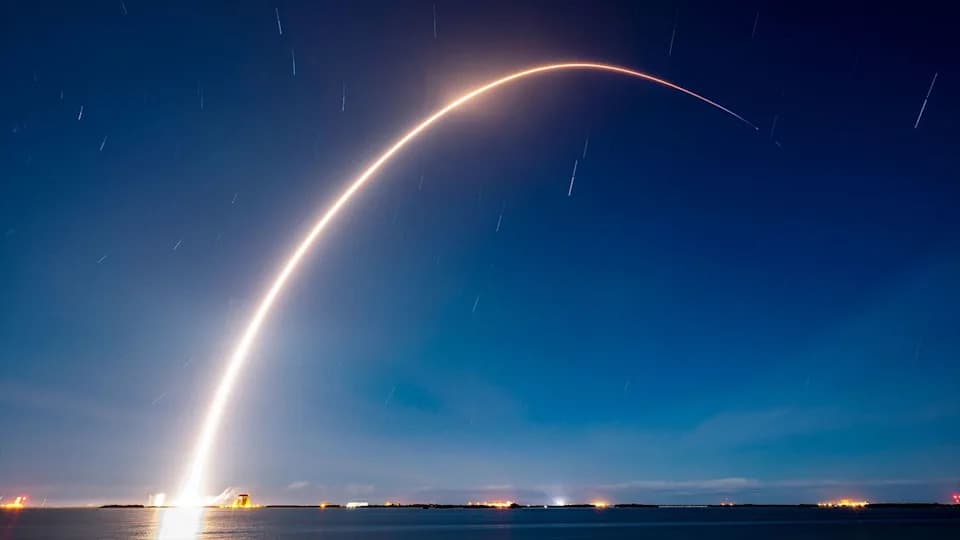
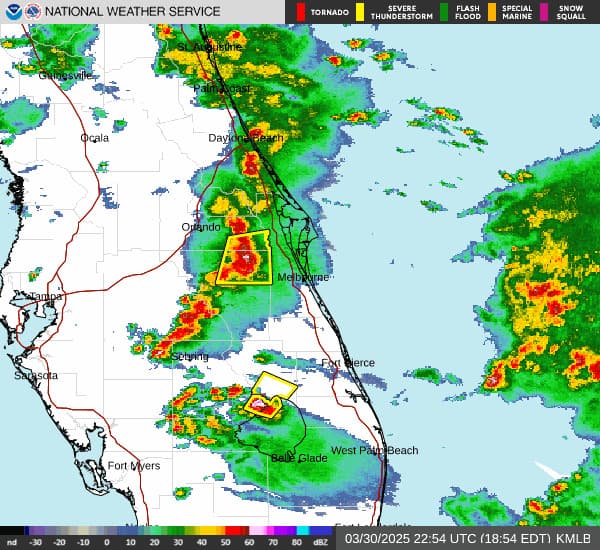
SpaceX will launch the Lockheed Martin‑built GPS III‑SV09 navigation satellite, named “Ellison Onizuka”, from Cape Canaveral during a 15‑minute window opening at 11:38 p.m. EST on Jan. 27. The mission was pushed back one day by bad weather; live coverage begins about 10 minutes before liftoff on SpaceX's website and X account. The Falcon 9 booster—on its fifth flight—will attempt a drone‑ship landing about 8.5 minutes after liftoff, and the upper stage is expected to deploy the satellite into medium‑Earth orbit ~90 minutes later.
Watch SpaceX Launch GPS III‑SV09 “Ellison Onizuka” for U.S. Space Force — Live Jan. 27
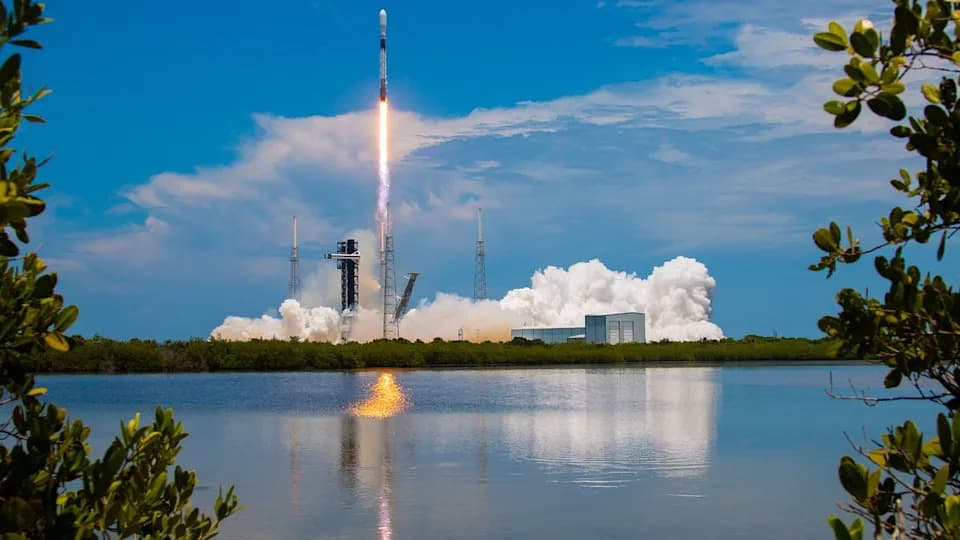
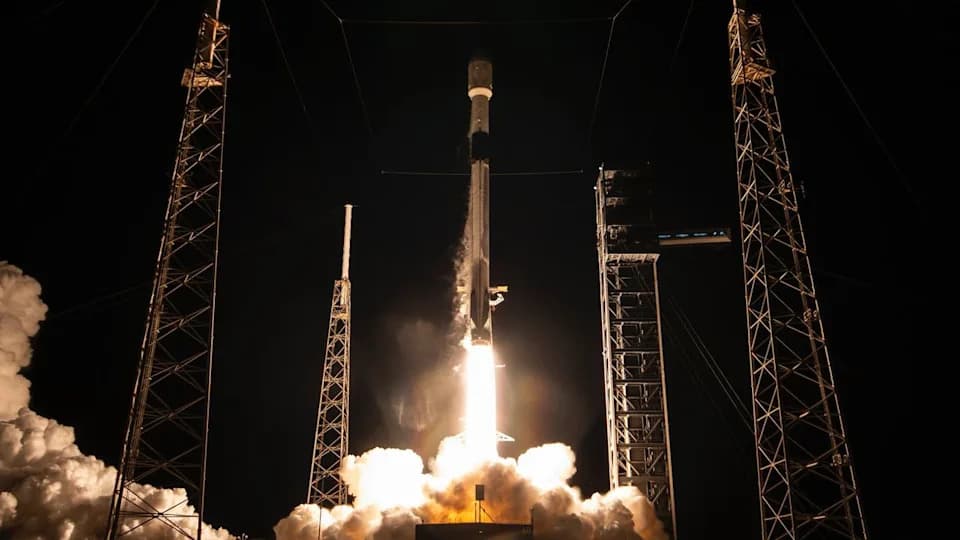
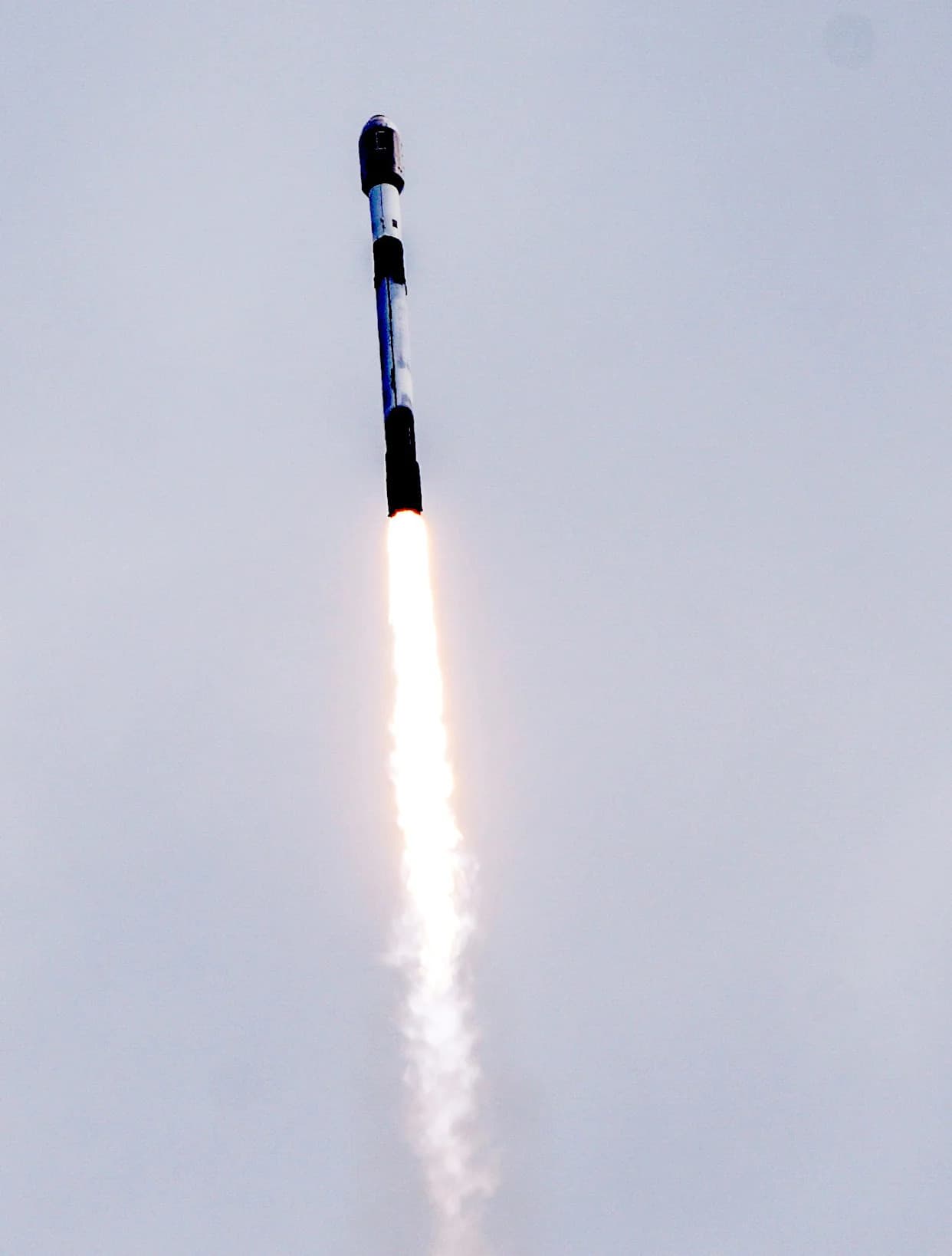
A SpaceX Falcon 9 rocket launches the GPS III-SV08 satellite for the U.S. Space Force from Florida on May 30, 2025. | Credit: SpaceX
SpaceX will launch an advanced GPS navigation satellite for the U.S. Space Force from Cape Canaveral during a 15-minute window that opens at 11:38 p.m. EST on Jan. 27 (04:38 GMT on Jan. 28). The launch was delayed one day due to poor weather; live coverage will stream on SpaceX's website and the company's X account beginning about 10 minutes before liftoff.
Mission And Where To Watch
A Falcon 9 rocket will carry the GPS III‑SV09 spacecraft into space from Cape Canaveral Space Force Station. Tune in to SpaceX's live stream or X for real-time coverage starting roughly 10 minutes before the scheduled launch.
About The Satellite
The GPS III family, built by Lockheed Martin, includes upgraded features such as “M‑Code” anti‑jamming capability to improve signal resilience for military users. GPS III‑SV09 is the ninth of a planned ten GPS III vehicles; the first GPS III satellite launched in December 2018, and the final GPS III in this series is expected to reach orbit later this year.
Launch Vehicle Changes
GPS III‑SV09 was originally slated to fly on United Launch Alliance's new Vulcan Centaur, but the U.S. Space Force moved the mission to a Falcon 9. In exchange, a later GPS IIIF mission will fly on Vulcan instead of Falcon Heavy.
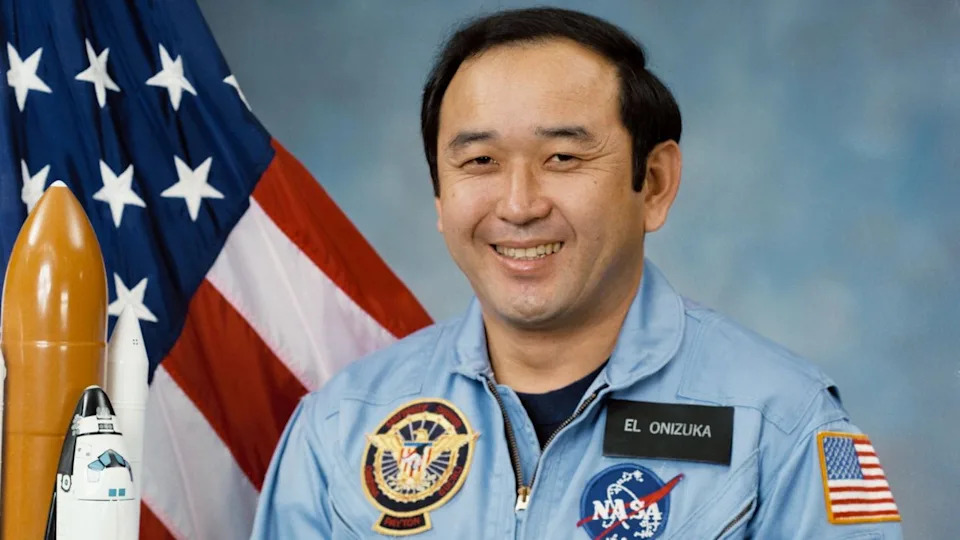
Official NASA portrait of astronaut Ellison Onizuka (1946-1986). | Credit: NASA
“For this launch, we traded a GPS III mission from a Vulcan to a Falcon 9, then exchanged a later GPS IIIF mission from a Falcon Heavy to a Vulcan,” said U.S. Space Force Col. Ryan Hiserote, SYD 80 Commander and National Security Space Launch program manager. “Our contractual and programmatic flexibility lets us pivot when circumstances change and shorten timelines for delivering critical capabilities to warfighters.”
Name And Context
The Space Force has named GPS III‑SV09 “Ellison Onizuka” in honor of former U.S. Air Force Col. Ellison Onizuka, one of seven astronauts who died in the space shuttle Challenger accident on Jan. 28, 1986. Other GPS III satellites have also been named for notable astronauts, including Neil Armstrong (GPS III‑SV05) and Sally Ride (GPS III‑SV07).
Launch Sequence And Recovery
This mission will be the fifth flight for the Falcon 9 booster assigned to this launch. If the countdown and ascent proceed as planned, the first stage will attempt a powered vertical landing on SpaceX's drone ship A Shortfall of Gravitas in the Atlantic about 8.5 minutes after liftoff. The Falcon 9 upper stage is expected to deploy the satellite into medium‑Earth orbit roughly 90 minutes after liftoff.
Mission Notes: GPS IIIF refers to the next follow‑on series of positioning, navigation and timing satellites; the first GPS IIIF spacecraft is currently expected to launch in Spring 2027.
Editor's note: This story was updated at 1 p.m. ET on Jan. 26 with the revised target launch date of Jan. 27.
Help us improve.