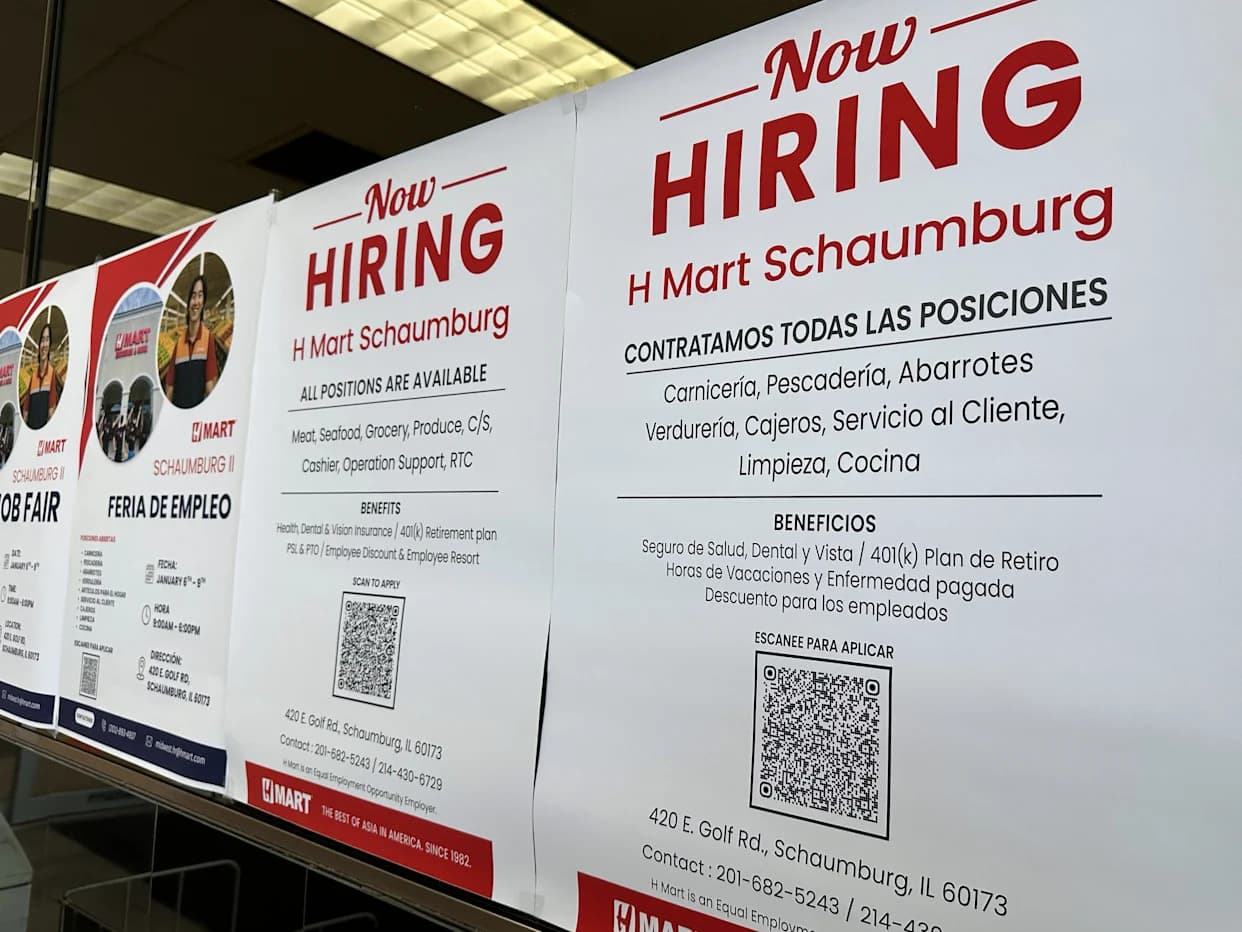
The hiring market is exceptionally tight: Greenhouse estimates an applicant’s chance of being hired at about 0.4 percent. Young workers, especially Gen Z women, face extra barriers as employers avoid recent graduates and hiring A.I. shows bias. Many candidates are "lowballing" salaries to stay competitive — a survival tactic that risks depressing wages and stalling careers. Structural fixes — honest pay transparency, entry-level training pathways, limits on unpaid trials, and addressing hiring bias — are needed to restore balance.
When Jobs Are Scarce, Applicants Start "Lowballing" Salaries — What That Means for Workers
If it feels nearly impossible to get hired right now, the data and firsthand experience back that up. Recruiting firm Greenhouse estimates an applicant’s chance of being hired is about 0.4 percent — a stark indicator of how competitive the market has become.
How Bad Is The Market?
The hiring process has grown longer and more unpredictable. Candidates report multiple interview rounds, conversations with chatbots, unpaid take-home tests and short unpaid "trial" shifts that shift the cost and risk of hiring onto workers. At the same time, union membership that once helped stabilize pay is weakening across many sectors, layoffs continue in fields that once felt secure, and employers are increasingly using A.I. to automate entry-level tasks.
Who’s Most Affected?
Young workers — particularly Gen Z and early-career women — are feeling the squeeze. Research from Intelligent.com found that 38 percent of employers avoid hiring recent graduates even when they appear technically qualified. Meanwhile, a Brookings study highlights troubling bias in some hiring algorithms: systems in that analysis favored names perceived as "white" 85.1 percent of the time versus 8.6 percent for names perceived as "Black." These structural pressures shrink opportunities for entry-level candidates and amplify existing inequalities.
Why Applicants Are "Lowballing"
As hiring becomes more competitive, many applicants have begun offering to accept less than the posted salary to stay in contention. For some, lowballing is a deliberate short-term tactic: signaling eagerness, offsetting employer costs (like visas), or acknowledging tight budgets at small employers. For others it’s a last-resort reaction after months of silence and rejections.
Real Experiences
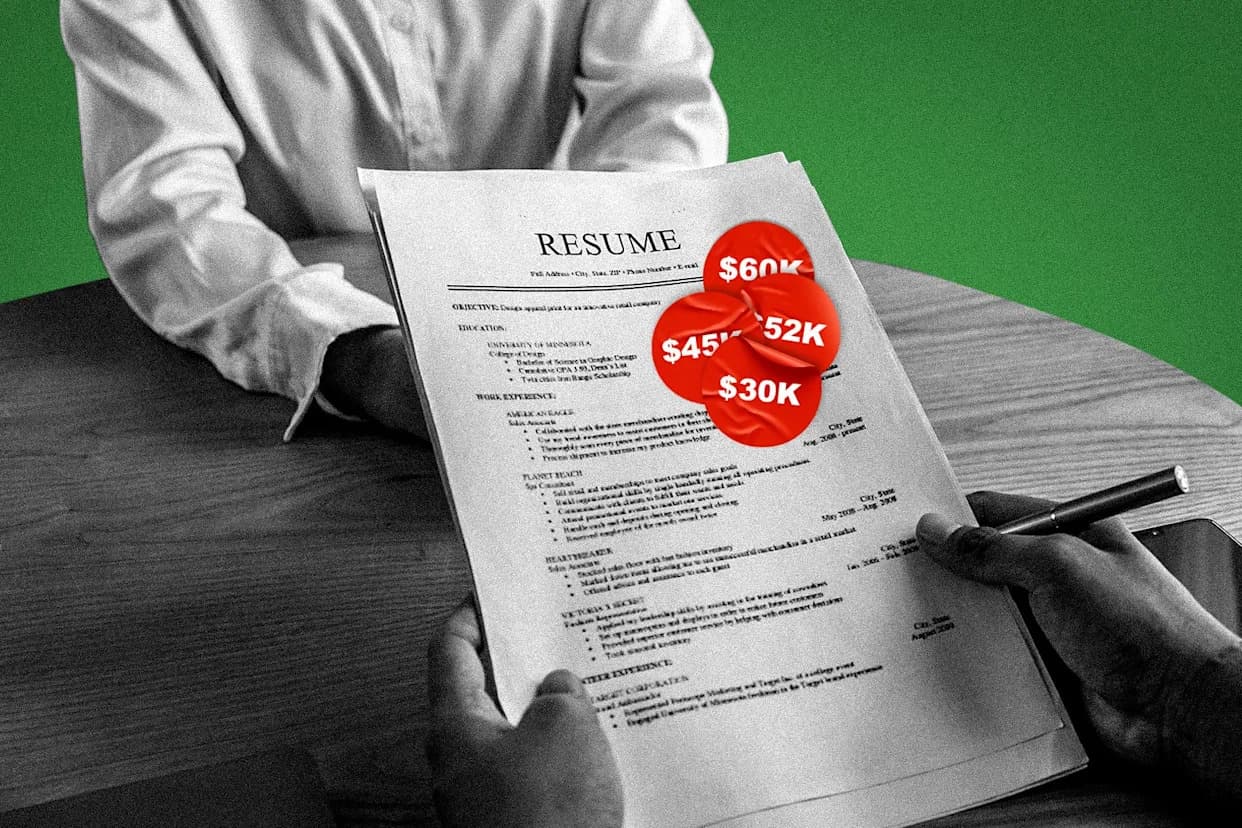
The trend is visible in individual stories. One candidate with strong academic credentials and extensive applications described how she offered $10,000 less than a posted $60,000 salary to remain under consideration for a small health-research role. She was kept through multiple rounds and a monthlong remote trial shift but was ultimately rejected for not meeting output expectations and because there was no training budget. On Reddit, users shared similar tactics — one commenter who had been unemployed for eight months admitted, "Yesterday I started lowballing my pay."
“They’ve internalized this scarcity mindset that any job is better than no job,” said Andrew Lokenauth, a former Wall Street executive and financial educator, describing a growing trend among young women to accept salaries below posted ranges.
Longer-Term Consequences
Individual pay cuts can quickly become collective problems. Handshake research on "reservation wages" — the minimum salary applicants will accept — shows that falling expectations tend to pull market benchmarks down. Gen Z women already expect to earn roughly $6,200 less on average than their male peers; a sustained pattern of lowballing risks cementing those gaps. Employers who list conservative salary ranges can further normalize lower pay, meaning applicants who undercut themselves may end up far below what employers were actually willing to offer.
Beyond pay, lowballing can stall careers. Some workers accept lower-paid roles and find, years later, that they are still behind in compensation while new hires receive higher starting salaries. The practice also risks depressing wages industrywide, particularly in creative and nonprofit sectors where "passion" has long been used to justify lower pay.
What Needs To Change
Fixing the problem requires structural solutions, not moralizing about desperate job seekers. Policy and practice changes that would help include:
- Restoring clear entry-level hiring pathways with real training and mentorship;
- Enforcing meaningful pay-transparency that reflects what employers actually pay, not a low anchor;
- Limiting unpaid trial labor and take-home assignments that shift hiring costs to candidates;
- Addressing bias in A.I. hiring tools and broader hiring practices to ensure fair access to opportunities.
Where There Is Hope
Some hopeful signs exist: small-business openings reached a record high in 2023 and stayed elevated through 2024, and more unemployed creators and writers are launching independent projects and Substacks that could create new income streams. Still, the risk remains that prolonged precarity will make people stop negotiating for better futures — costing not just wages but entire careers.
Author’s Note
After sending more than 1,000 applications with mostly silence in response, the author paused their job search. The experience left them frustrated and concerned about how market scarcity pushes young workers to undercut themselves — and what that means for the next generation of careers.
Help us improve.