
Senator Marco Rubio rejected the premise that U.S. forces would simply "secure" Venezuelan oil fields, but President Trump later told reporters he intended to "run everything" and extract "a tremendous amount of wealth out of the ground." Trump suggested proceeds could reimburse the U.S. and be sold globally, including to China. Experts warn, however, that legal, diplomatic and operational hurdles — plus the cost of rebuilding Venezuela’s oil industry — make any quick payoff unlikely.
Trump’s Venezuela Push: He Says It’s About Oil — Rubio Pushes Back

During an ABC News interview, George Stephanopoulos asked Senator Marco Rubio how the Trump administration would secure Venezuela’s oil fields in the event of Nicolás Maduro’s removal. Rubio, a Florida Republican, rejected the premise of the question and cautioned against assuming control of foreign resources was a given.
President’s Comments
Hours later, President Donald Trump told reporters aboard Air Force One,
"We’re gonna run everything."At a press conference at Mar-a-Lago he was even more explicit about his intentions:
"We’re going to be taking out a tremendous amount of wealth out of the ground."Trump said some of the proceeds would go to Venezuelans and that a portion would serve as reimbursement to the United States for alleged damages caused by Venezuela. He also asserted that any U.S. operations "won’t cost us anything, because the money coming out of the ground is very substantial."
On Selling Oil
When asked how such an offensive might affect relations with China, Russia and Iran, Trump replied,
"We’re in the oil business, we’re going to sell it to them. … In other words, we’ll be selling oil."He repeated similar remarks in a separate Fox News interview, adding, "Nobody can stop us."
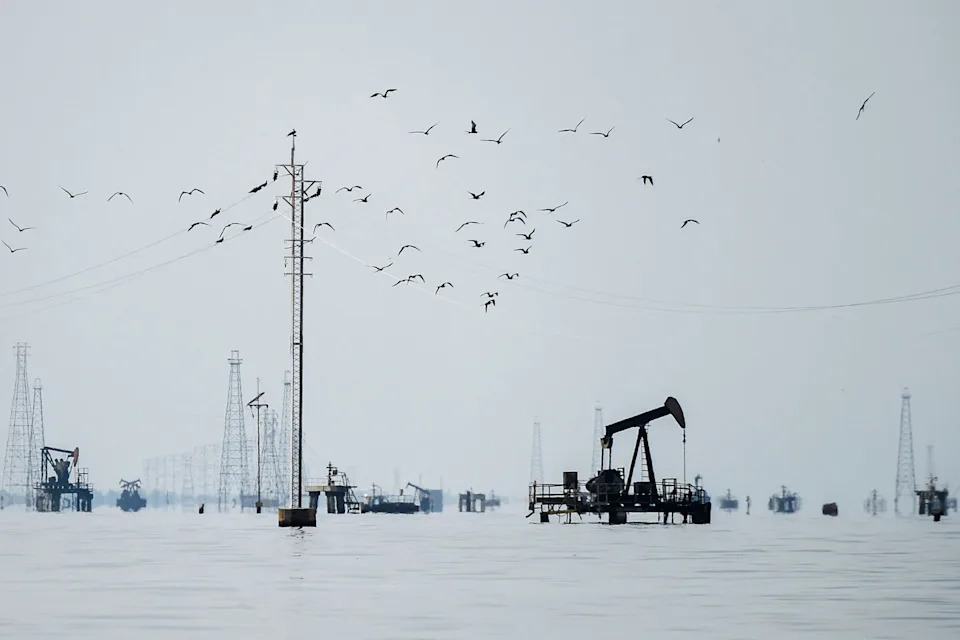
TOPSHOT - View of oil platforms in Maracaibo lake on May 2, 2018 in Maracaibo, Venezuela. - Amid blackouts, skyrocketing prices, shortage of food, medicine and transportation, Venezuelans go to elections next May 20 anguished to survive one of the worst crisis in the oil country. (Photo by Federico PARRA / AFP) (Photo by FEDERICO PARRA/AFP via Getty Images)(Federico Parra / AFP via Getty Images)
Obstacles From Rhetoric To Reality
While some White House officials frame interventions around drug trafficking and migration, the president’s public comments have emphasized Venezuelan energy resources. Translating rhetoric into policy faces multiple obstacles:
- Legal and diplomatic barriers: International law, sovereignty concerns and potential sanctions make outright seizure of foreign oil assets fraught.
- Operational complexity: Venezuela’s oil industry requires extensive investment and rehabilitation after years of underinvestment and mismanagement.
- Economic costs and timelines: Rebuilding production and managing assets would be expensive and slow, so the promised near-term windfall is uncertain.
Context
Observers note that Trump has long spoken about taking and retaining oil reserves overseas, and his recent comments indicate an administration more willing to discuss controlling foreign energy assets. Whether those comments reflect concrete, lawful policy plans or rhetorical positioning remains an open question.
Note: This article clarifies that Rubio is a U.S. Senator and frames questions about Venezuela’s oil fields as contingent on a possible removal of Nicolás Maduro, rather than asserting that Maduro has already been ousted.
Help us improve.


