
Russia warned on Jan. 8 that Western troops deployed to Ukraine would be treated as legitimate combat targets after Britain and France announced plans for a potential post‑ceasefire multinational force. France said thousands of troops could be involved, while the UK described creating a legal framework for allied forces to operate in Ukraine. Moscow called those plans dangerously militaristic and said any Western bases or depots in Ukraine would be considered foreign intervention. The U.S. has ruled out sending troops but signaled political support for deterrent security arrangements.
Russia Warns Western Forces Deployed To Ukraine Would Be 'Legitimate Combat Targets' After UK–France Post-Ceasefire Plan

Ukraine's President Volodymyr Zelenskiy, France's President Emmanuel Macron and Britain's Prime Minister Keir Starmer shake hands upon the signing of the declaration on deploying post-ceasefire force in Ukraine during the so-called 'Coalition of the Willing' summit, at the Elysee Palace in Paris, France, January 6, 2026. Ludovic Marin/Pool via REUTERS
MOSCOW — On Jan. 8, the Russian Foreign Ministry warned that any foreign troops sent to Ukraine by Western governments would be treated as "legitimate combat targets" should they be deployed following a ceasefire. The statement came after Britain and France outlined plans for a possible multinational force to help secure Ukraine and support its future defense capabilities.
The ministry described recent statements from a self-styled coalition of pro‑Ukraine states as increasingly militaristic and dangerous. Russia's comment followed a meeting in Paris where Britain and France signed a declaration of intent on the future deployment of allied forces to Ukrainian territory.
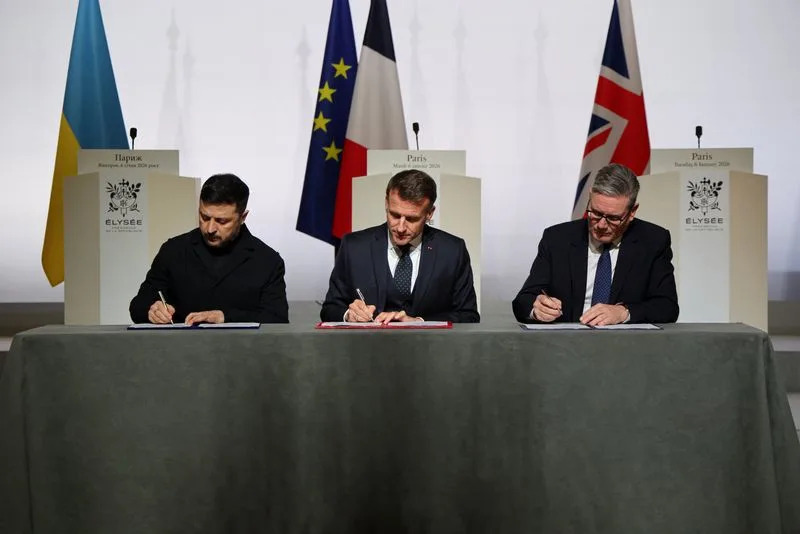
Ukraine's President Volodymyr Zelensky, France's President Emmanuel Macron and Britain's Prime Minister Keir Starmer sign the declaration on deploying post-ceasefire force in Ukraine during the so-called 'Coalition of the Willing' summit, at the Elysee Palace in Paris, France, January 6, 2026. Ludovic Marin/Pool via REUTERS
French President Emmanuel Macron said the plan could involve sending thousands of French troops. British Prime Minister Keir Starmer said the declaration aims to create a legal framework under which "British, French and partner forces could operate on Ukrainian soil, securing Ukraine's skies and seas and regenerating Ukraine's armed forces for the future."
"The deployment of Western military units, military facilities, depots and other infrastructure on Ukrainian territory will be classified as foreign intervention, posing a direct threat to the security of not only Russia but also other European countries," the Russian Foreign Ministry said. "All such units and facilities will be considered legitimate combat targets of the Russian Armed Forces."
The statement accused the so-called "coalition of the willing" and Kyiv of forming a veritable "axis of war," warning that their plans are becoming increasingly dangerous for the future of Europe and imposing financial burdens on Western taxpayers.
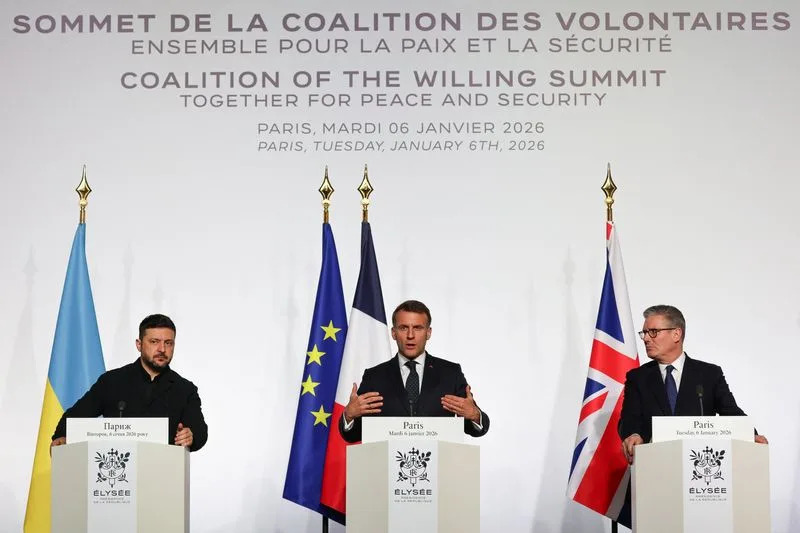
Ukraine's President Volodymyr Zelenskiy, France's President Emmanuel Macron and Britain's Prime Minister Keir Starmer deliver a press conference upon the signing of the declaration on deploying post-ceasefire force in Ukraine during the so-called 'Coalition of the Willing' summit, at the Elysee Palace in Paris, France, January 6, 2026. Ludovic Marin/Pool via REUTERS
Context and Reactions
Russia launched its full-scale invasion of Ukraine in February 2022 and has repeatedly argued it acted to prevent Ukraine's integration into NATO, which it views as a direct security threat. Kyiv and its Western backers reject Moscow's justification and describe the invasion as an imperial-style effort to seize Ukrainian territory — territory Russia now controls that Reuters and other sources estimate at roughly one-fifth of the country.
The United States has ruled out sending its own troops to Ukraine. However, U.S. special envoy Steve Witkoff told the Paris meeting that President Donald Trump "strongly stands behind" security protocols intended to deter future attacks on Ukraine.
What's At Stake
Any deployment of Western forces would be conditional on a ceasefire and appears intended to bolster Ukrainian security in the long term. Moscow's warning, however, raises the prospect of a direct confrontation with Western militaries if such deployments proceed — a development that would heighten tensions across Europe and complicate diplomatic efforts to reach a lasting settlement.
Help us improve.


