
Venezuelan President Nicolás Maduro says U.S. President Donald Trump exposed Washington’s intent to push for regime change and seize Venezuelan resources after Trump demanded the return of "oil, land and other assets." Maduro called the remarks a colonialist threat, urged Colombia to unite with Venezuela to defend sovereignty, and raised the issue with U.N. Secretary-General António Guterres. The U.N. urged restraint and said it is assessing relevant international law amid talk of a potential blockade.
Maduro: Trump’s 'Oil, Land' Remarks Reveal U.S. Motive to Seek Regime Change

Venezuela's President Nicolas Maduro gestures during a rally to mark the anniversary of the Battle of Santa Ines, in Caracas, on December 10, 2025. - Federico Parra/AFP/Getty Images
Venezuelan President Nicolás Maduro on Wednesday accused U.S. President Donald Trump of exposing Washington’s true intentions toward Venezuela after Trump said the country must return “oil, land and other assets” to the United States. Maduro said the comments make clear a U.S. objective of regime change and resource control, not the stated goal of combating drug trafficking.
Maduro Condemns Remarks
Speaking in Caracas, Maduro denounced Trump’s statements as “a warmongering and colonialist pretense.” He warned that the aim is to install a pliant government that would surrender Venezuela’s constitution, sovereignty and natural wealth.
“The aim in Venezuela is a regime change to impose a puppet government that wouldn’t last 47 hours, that would hand over the Constitution, sovereignty, and all the wealth, turning Venezuela into a colony. It will simply never happen,” Maduro said.
Trump’s Statements And U.S. Posture
On Tuesday, Trump posted on Truth Social that the military presence around Venezuela would increase “until the country returned to the U.S. ‘the oil, land, and other assets that they previously stole from us.’” Speaking to reporters, he said Venezuela had unlawfully taken energy rights and signaled the United States intended to reclaim them.
“We’re getting land, oil rights, whatever we had. They took it away because we had a president that maybe wasn’t watching... We want it back,” Trump said, adding that U.S. companies had been expelled from the country in the past.
Venezuela nationalized its oil industry in the mid-1970s (formally in 1976), placing the sector under state control. Before nationalization, U.S. companies had a larger presence in Venezuela’s oil fields.
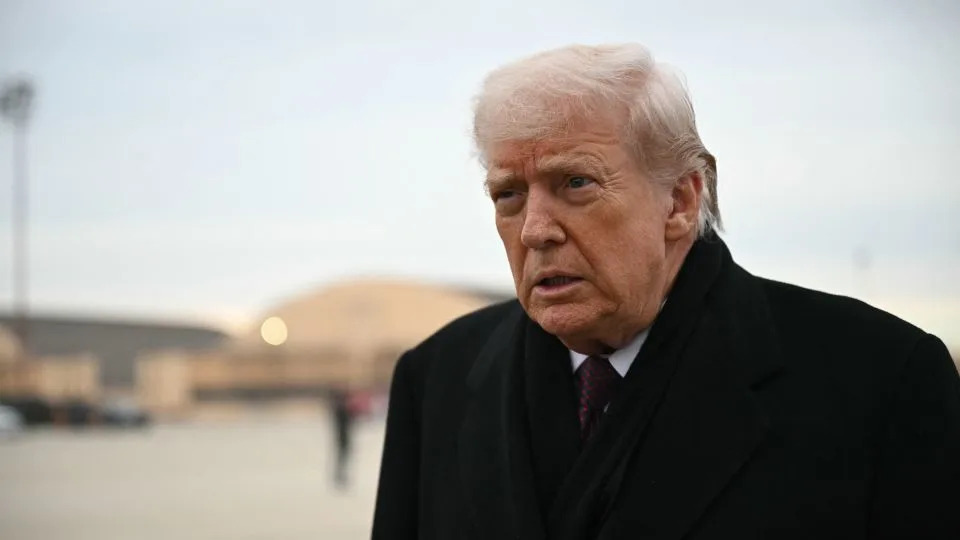
President Donald Trump speaks to reporters after stepping off Air Force One at Joint Base Andrews on December 17, 2025. - Andrew Caballero-Reynolds/AFP/Getty Images
Escalation Risks And International Reaction
Trump has repeatedly warned of possible strikes against Venezuela and has said countries trafficking drugs into the United States are “subject to attack,” comments that raised concerns about regional escalation and appeared to target neighbors like Colombia.
Maduro appealed directly to Colombia, urging unity to defend sovereignty. “I make my call … to the ordinary people of Colombia, to its social movements, to its political forces, to the Colombian military… I call upon them for a perfect union with Venezuela so that no one dares touch the sovereignty of our countries,” he said.
Maduro told U.N. Secretary-General António Guterres in a phone call that such statements should be rejected by the United Nations as threats to sovereignty, international law and peace, according to a Venezuelan government statement.
Guterres’ office confirmed the call and said the secretary-general reiterated the need for member states to respect international law, the U.N. Charter, exert restraint, and de-escalate tensions to preserve regional stability. U.N. spokesperson Farhan Haq added that the U.N. was reviewing legal implications, including whether a proposed blockade of sanctioned oil tankers would violate international law.
The exchanges followed Trump’s announcement that he would impose a blockade on sanctioned oil tankers transiting Venezuelan waters — a move legal experts and diplomats say requires careful international legal review.
CNN contributors to this report included Stefano Pozzebon and Hira Humayun.


