
NOAA warns that elevated solar activity could produce northern lights across parts of the U.S. through Sunday, Dec. 14, with the best odds Friday night, Dec. 12. Recent M-class flares launched coronal mass ejections that may raise geomagnetic activity; the Kp index is forecast near 4 on Friday. Peak viewing is roughly 10 p.m. to 2 a.m. local time — seek dark skies and use simple camera settings to capture the display.
Where to See the Northern Lights From 11 U.S. States This Weekend — Times, Tips, and What to Expect

GettyThe northern lights above northern Norway
An uptick in solar activity could produce visible auroras across parts of the United States through Sunday, Dec. 14, with the strongest chance Friday night, Dec. 12. NOAA's Space Weather Prediction Center is tracking recent solar eruptions that may boost geomagnetic activity and push the auroral oval farther south than usual if the particles arrive as forecast.
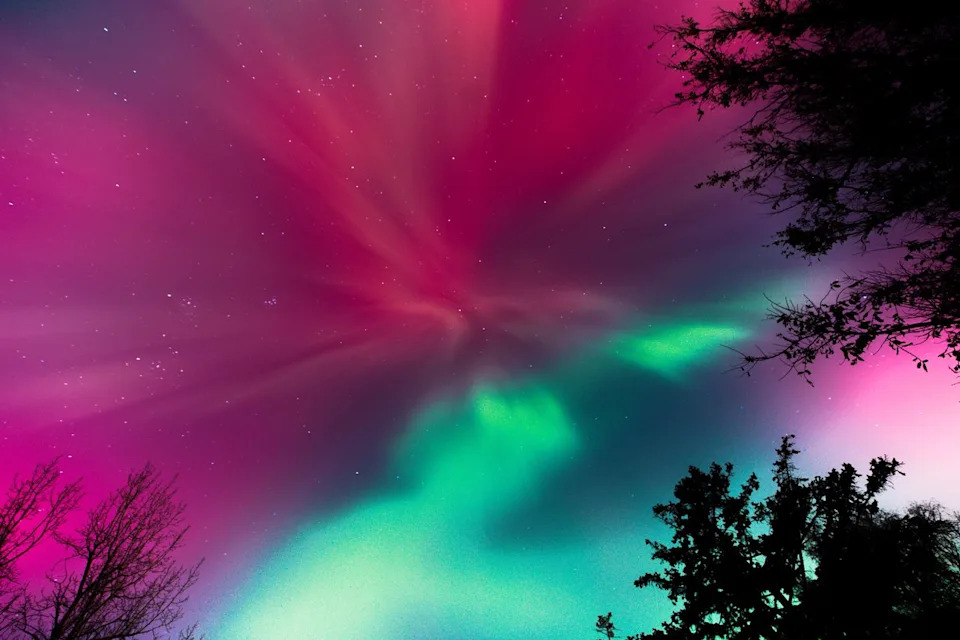
Steven Garcia/NurPhoto/ShutterstockAurora Borealis is visible over Minneapolis, Minnesota
What Happened At the Sun
On the morning of Dec. 12 the sun emitted an M2.0-class flare, followed less than an hour later by an M1.1 flare. Each flare launched a coronal mass ejection (CME) — a large cloud of charged particles that can trigger auroras when it interacts with Earth's magnetic field. Scientists are still confirming whether these CMEs are directly Earth-directed, but NOAA's three-day outlook suggests elevated activity at the start of the weekend.
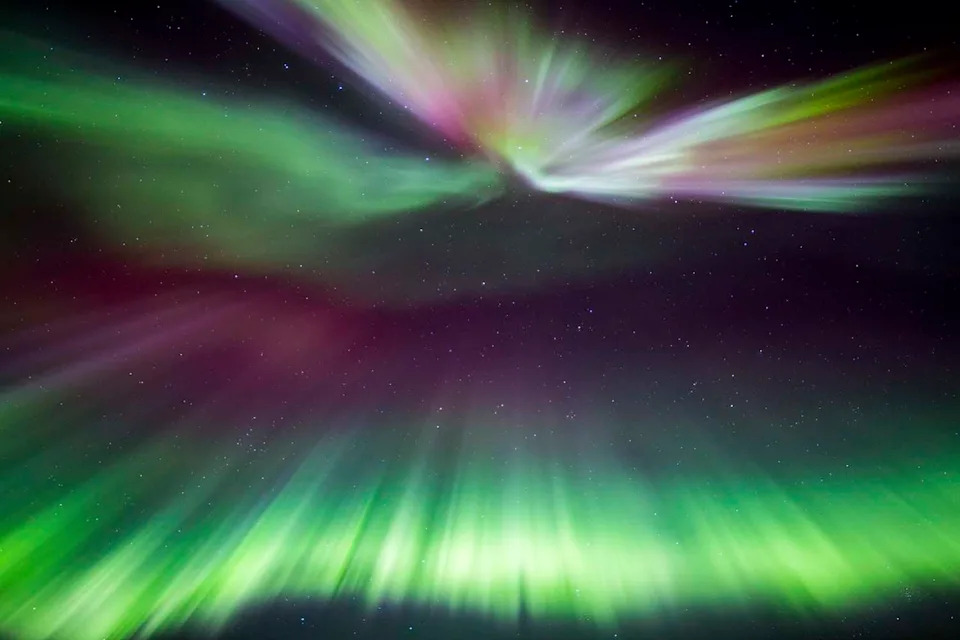
GettyAurora Borealis or Northern Lights, Iceland
Best Viewing Window
If conditions align, the prime viewing window opens Friday evening, Dec. 12, and stretches into early Sunday, Dec. 14. NOAA forecasts the Kp index — the standard scale for geomagnetic disturbance — could reach around Kp = 4 on Friday, which often produces brighter, more dynamic auroras farther south than usual. Forecasts call for a lower Kp (~3) on Saturday and ~2 on Sunday, so Friday night offers the best odds.
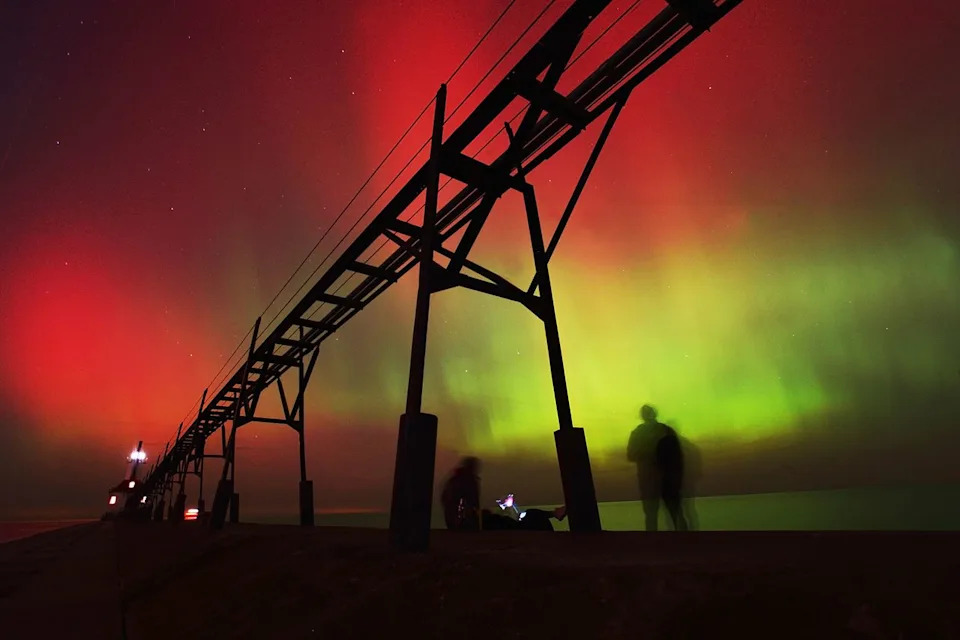
Don Campbell/The Herald-Palladium via APnorthern lights, lights up the night sky off Lake Michigan
Peak hours: Roughly 10 p.m. to 2 a.m. local time. Try to be in position before 10 p.m. so your eyes can adjust and you won’t miss early activity.
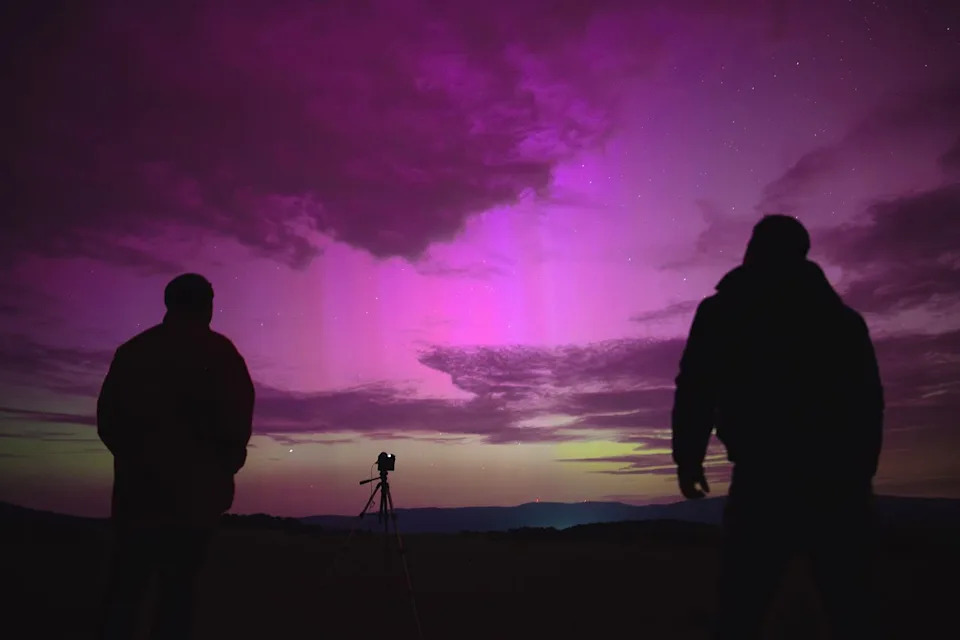
Robert Nemeti/Anadolu via GettyNorthern lights in Debrad, Slovakia
Where You Might See the Lights
Regions closest to the Magnetic North Pole have the highest probability, but parts of the northern continental U.S. could also see auroras if geomagnetic conditions intensify. States with a possible chance of visibility include:
- Alaska
- Washington
- Idaho
- Montana
- Wyoming
- North Dakota
- South Dakota
- Minnesota
- Wisconsin
- Michigan
- Maine
How To Improve Your Odds
- Go far from city lights and heavy air pollution — the darker the sky, the better.
- Choose open horizons to the north and higher elevations when possible.
- Allow at least 30 minutes for your eyes to adjust to the dark.
- Check local cloud cover and NOAA's real-time alerts before heading out.
Photography Tips
You don't need pro gear to capture the aurora. For smartphones, enable Night Mode (iPhone) or Pro/Manual Mode (Android), turn off the flash, and keep the phone steady — a tripod or stable surface helps. For DSLRs and mirrorless cameras, use a wide-angle lens, a high ISO appropriate for your camera's noise performance, and long exposures (start around 5–15 seconds and adjust as needed). Experiment with composition and keep exposures long enough to record the colors without overexposing foreground elements.
Final Notes
Auroras are inherently unpredictable: even with a favorable Kp index, cloud cover or local light pollution can ruin a viewing. Use reliable space weather resources (NOAA SWPC, local forecasts) and be prepared to travel to a dark site for the best chance of seeing this weekend's display.


