President Claudia Sheinbaum has turned her clothing into a political tool, commissioning local tailors and Indigenous embroiderers to highlight women’s labor and Mexico’s textile traditions. She has criticized major brands for alleged cultural appropriation and uses signature colors and handcrafted details to reinforce her message. Key pieces include a purple diplomatic dress fitted at the National Palace and an ivory swearing-in gown embroidered by a Zapotec artisan.
Dressing With Purpose: How President Claudia Sheinbaum Uses Fashion To Amplify Women's and Indigenous Voices
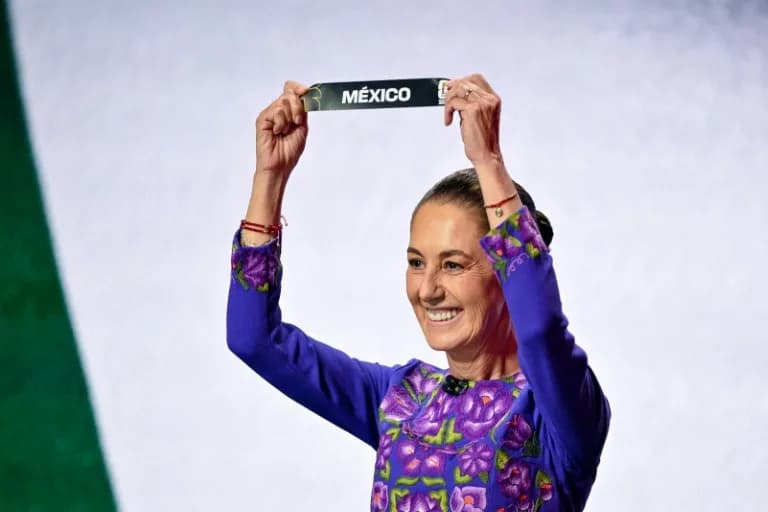
Mexico's President Claudia Sheinbaum wore purple -- a color denoting power and women's resistance -- for her first face-to-face meeting with her US and Canadian counterparts (Mandel NGAN)(Mandel NGAN/POOL/AFP)
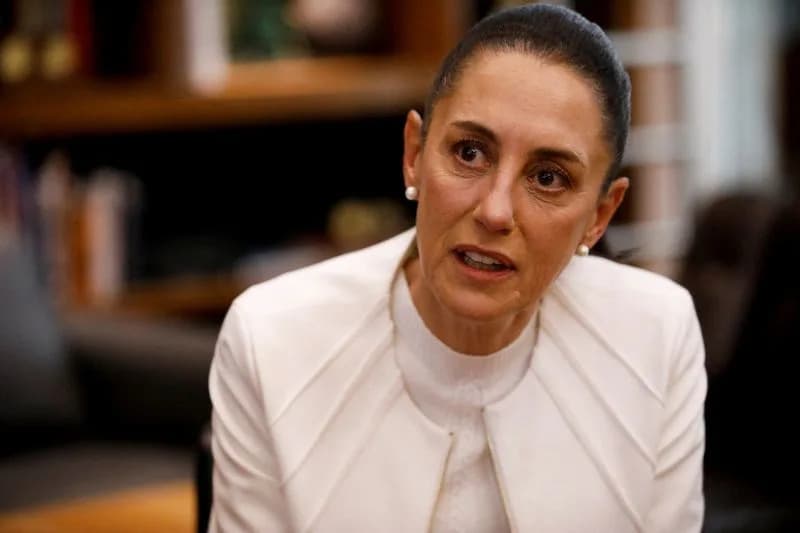
Mexican President Claudia Sheinbaum has turned her wardrobe into a deliberate platform for political expression, using clothes to highlight women's labor and Indigenous textile traditions. Rather than relying on global luxury labels, the left-leaning leader deliberately commissions small, local tailors and traditional embroiderers — an approach she says supports weavers and artisans who work on backstrap looms and are often women and a source of national pride.
Supporting Artisans, Rejecting Appropriation
Sheinbaum has publicly criticized major brands over alleged cultural appropriation of traditional designs and has made a point of crediting the craftspeople behind her garments. "I back the weavers, the embroiderers... mostly women," she told reporters, underscoring the political as well as cultural dimensions of her choices.
'Feminist Resistance' In Color And Craft
Her signature palette — notably purple and burgundy — and the artisanal techniques showcased in her outfits have become part of her public image. Tailor Olivia Trujillo, who operates a small workshop in San Pedro Mártir on Mexico City's outskirts, was summoned to the National Palace for the final fitting of a purple dress embroidered with delicate flowers that Sheinbaum wore in December to a diplomatic meeting with U.S. and Canadian counterparts in Washington.
“Her favorite colors, without a doubt, I would say are purple and burgundy,” Trujillo said amid her sewing machines and a mannequin where she pieces together items for the presidential wardrobe.
Signature Pieces And Their Makers
One emblematic outfit was the knee-length ivory dress Sheinbaum wore for her October 2024 swearing-in. The gown featured hand-embroidered wildflowers cascading down one side, with the bodice left plain so the presidential sash would stand out. The detailed floral work was sewn by Claudia Vázquez, a 43-year-old Zapotec artisan from Oaxaca who says the commission revived her career in embroidery.
In another instance, Virginia Arce, from the village of San Isidro Buen Progreso, spent two months embroidering the formal gown Sheinbaum wore when she became the first woman to deliver the Cry of Independence. Arce recalls the president chose the palette and a small bird motif — a swallow — and described seeing her handiwork on the presidential balcony as deeply satisfying.
Image, Gender And Authority
Analysts caution against reducing female leaders to their clothing, a scrutiny less often applied to men. Still, gender experts say Sheinbaum’s deliberate sartorial choices are part of a broader strategy: to communicate values, uplift overlooked artisans, and shape public perceptions of authority.
Whether through color, craft, or the choice of makers, Sheinbaum’s wardrobe has become an extension of her political message — a visual commitment to elevating women and Indigenous artisans in Mexico.
Help us improve.