Progressive politicians and grassroots movements are reframing climate policy as an affordability agenda, arguing that extreme weather, inefficient buildings and weakened transit systems are driving up household costs. Local leaders and labor groups are advancing measures such as free buses, green retrofits, public or consumer-owned utilities, and tenant protections. Activists are pushing “climate superfunds” in state legislatures to make polluters pay; Vermont and New York passed such laws this year. Critics say federal efforts like the Inflation Reduction Act advanced clean industry but did not deliver clear, visible economic benefits to many Americans.
From Rents to Bills: How Progressives Are Turning Climate Action Into an Affordability Agenda
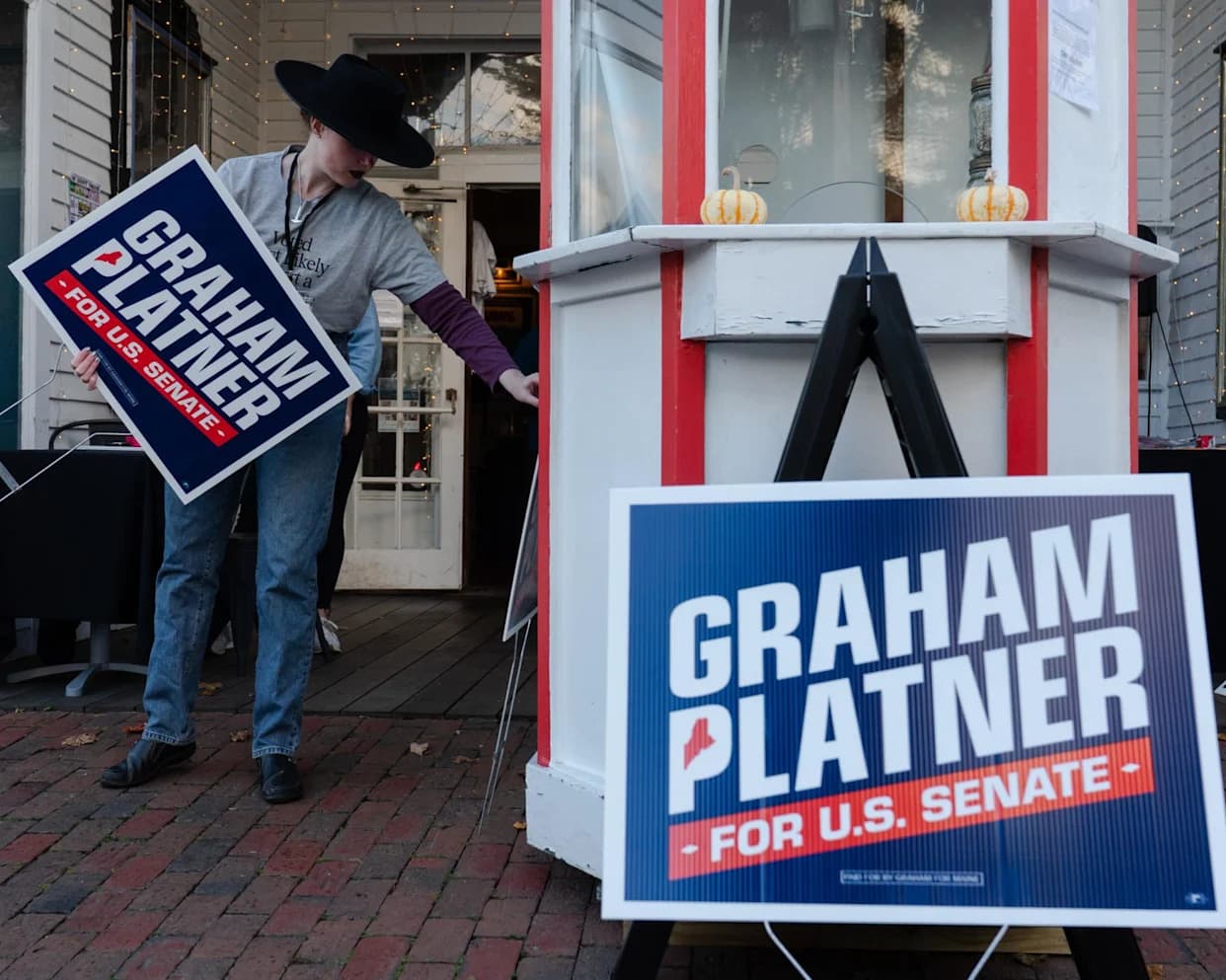
A volunteer sets up signs in support of US senatorial candidate from Maine Graham Platner in Ogunquit, Maine.Photograph: Sophie Park/Getty Images
Progressive politicians and grassroots advocates are reframing climate policy as an affordability and economic-populist project, arguing that emissions cuts can lower everyday costs for working people even as the Trump administration dismisses climate action and struggles to ease energy prices and inflation.
Where climate politics was once framed primarily as a moral test that asked people to accept higher costs to avert environmental collapse, activists now emphasize that rising temperatures and inefficient systems are driving up household expenses, said Stevie O’Hanlon, co-founder of the youth-led Sunrise Movement.
“People increasingly understand how climate and costs of living are tied together,” O’Hanlon said.
Extreme weather is raising utility and health-care bills, public transit systems crucial to emissions reductions have been weakened by federal funding cuts, and landlords are passing the costs of inefficient buildings, higher insurance and disaster repairs onto renters — effectively turning climate risk into a monthly surcharge. At the same time, wealth inequality has widened under an administration that accepted record donations from big oil.
“We need to connect climate change to the everyday economic reality we are all facing in this country,” O’Hanlon said.
Affordability-First Policies
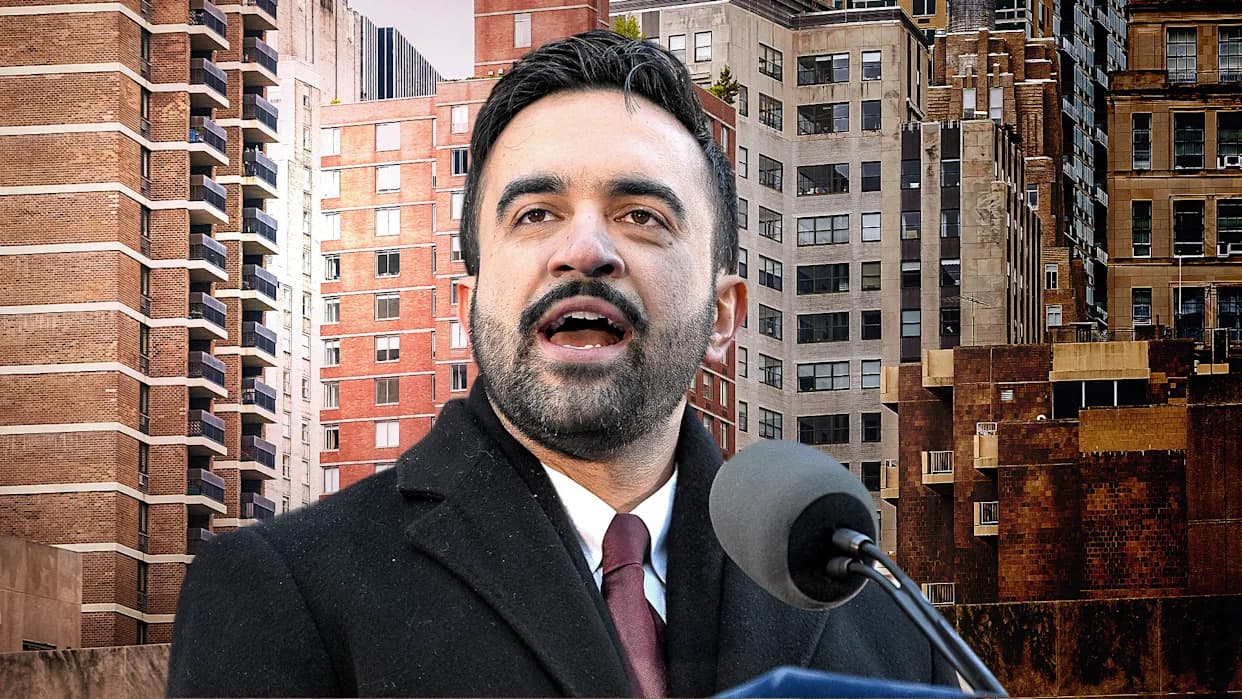
Across cities and campaigns, progressive leaders are marrying climate goals with affordability measures. New York City mayor-elect Zohran Mamdani has promoted free bus service to reduce car dependence and plans to climate-proof schools. Seattle mayor-elect Katie Wilson has pledged to expand social housing alongside green retrofits. Maine U.S. Senate hopeful Graham Platner links pollution controls and water protections with critiques of concentrated power, while Nebraska independent Dan Osborn backs right-to-repair laws that advocates say could reduce manufacturing emissions even if he frames them primarily as consumer-rights reforms.
Movement Power: Unions, Tenants, and Public Ownership
Organized labor and tenant groups are key players in this reframing. Chicago’s teachers’ union won contract language requiring solar panels on schools and creating clean-energy career pathways; educators’ unions in Los Angeles and Minneapolis are pursuing similar decarbonization measures. From Maine to Texas, unions are pushing for a unionized workforce to decarbonize energy systems and retrofit buildings. Tenant organizations from Connecticut to California are campaigning for eviction protections, climate-resilient upgrades, and renter-centered retrofits to prevent displacement after disasters.
Advocates are also promoting expanded public ownership of energy utilities to increase democratic control and reduce rates by removing shareholder profit incentives. In New York, a coalition won a 2023 policy directing the state-owned utility to build renewable energy with a unionized workforce. Campaigns are underway for a consumer-owned utility in Maine and a public takeover of a local utility in Baltimore.
Making Polluters Pay
To shift costs away from households and toward responsible parties, activists and lawmakers are advancing “climate superfund” proposals that would require polluters to help finance emissions reductions and resilience. Vermont and New York passed such laws this year, and additional measures are expected to come up for votes in New York and Maine. Legislators in other states plan to introduce similar bills in 2026, even as the federal administration seeks to roll back some rules.
“When insurance becomes unaffordable and states are constantly rebuilding after disasters, people don’t need some technical explanation to know that something is seriously wrong,” said Cassidy DiPaola, spokesperson for the Make Polluters Pay campaign. “Climate superfunds connect those costs to accountability by saying that the companies that caused the damage shouldn’t be shielded from paying for it.”
Lessons From Federal Policy
Linking economic concerns to climate action is not new: the Green New Deal popularized the approach in 2018 and helped shape elements of President Joe Biden’s Inflation Reduction Act (IRA), the largest U.S. climate investment to date. While the IRA accelerated clean manufacturing and is estimated to have supported roughly 400,000 jobs, critics say its benefits were uneven and often hard for ordinary people to see. Proposed investments in housing and public transit were scaled back, and many incentives flowed to private firms and wealthier households. A 2024 poll found only 24% of registered voters felt the IRA helped them personally.
“The IRA focused on creating incentives for capital, relying almost entirely on carrots with very few sticks,” said Rithika Ramamurthy, communications director at the Climate and Community Institute. Stevie O’Hanlon and other advocates also argue the administration missed opportunities to pair the law’s passage with messaging that acknowledged widespread economic strain.
As political debates over climate policy continue, advocates say emphasizing who pays and who profits from the status quo can broaden support for bold action that also improves everyday life.
Help us improve.