
The White House ordered U.S. Africa Command, with Nigerian cooperation, to strike ISIS-linked targets in Sokoto State on Christmas Day; U.S. officials say multiple ISIS fighters were killed. President Trump framed the action as retaliation for attacks on Christians, while U.S. and Nigerian authorities emphasize counterterrorism cooperation. Analysts note the strikes may also reflect strategic concerns over Nigeria’s record oil reserves and rising Russian influence in the Sahel.
U.S.-Backed Strikes in Sokoto: Retaliation, Counterterrorism and Geopolitical Stakes
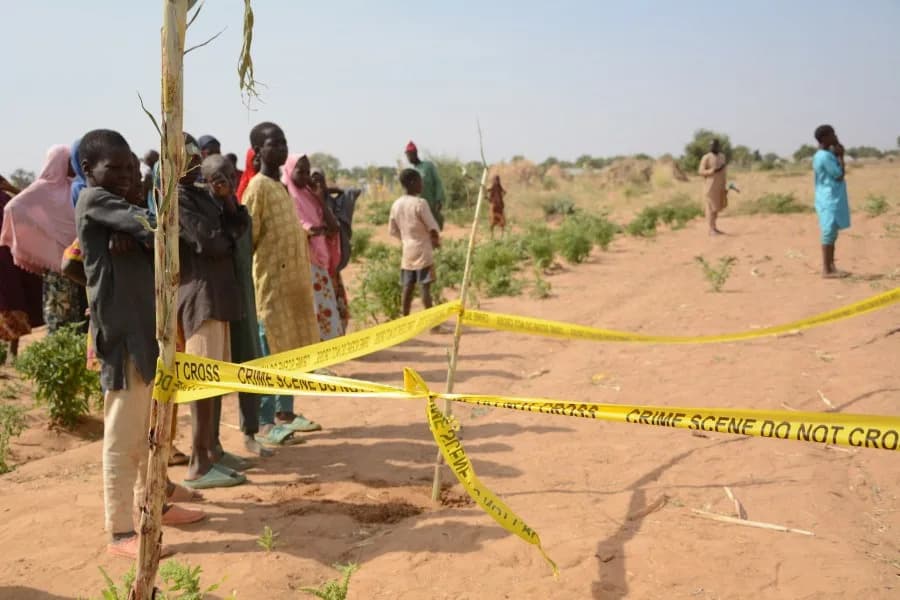
The White House directed U.S. Africa Command, in coordination with Nigerian authorities, to carry out strikes against Islamic State-affiliated fighters in Sokoto State on Christmas Day. U.S. Africa Command reported that "multiple ISIS terrorists were killed in the ISIS camps," while Nigerian officials described the action as a joint counterterrorism operation.
The Strikes and Official Statements
U.S. military leaders said the operation was intended to protect Americans and disrupt violent extremist organizations wherever they operate. Nigerian Foreign Minister Yusuf Maitama Tuggar called it a "joint operation" and asserted it was "nothing to do with a particular religion." President Trump, however, framed the strikes on social media as retaliation for militants' attacks on Christians — even calling the action a "Christmas present."
Broader Context: Syria And Operation Hawkeye Strike
Weeks earlier, two Iowa National Guard soldiers and a civilian U.S. interpreter were killed in an ambush in Palmyra, Syria, attributed to an ISIS gunman. In response, U.S. Central Command launched Operation Hawkeye Strike on December 19, striking more than 70 targets in central Syria with fighter jets, attack helicopters and artillery, using over 100 precision munitions against known ISIS infrastructure. Observers say the Nigerian strikes may be operationally and politically connected to that campaign.
Sahel Instability And External Influence
The Sahel region has faced mounting instability and growth of the Islamic State Sahel Province. Since 2020, coups in Mali, Burkina Faso and Niger pushed some leaders to seek Russian support, including from the Wagner Group. As France and the United States drew down forces from regional bases, Russian forces reportedly moved into former Western facilities in Niger, raising concerns about growing Kremlin influence in the region.
Strategic Interests: Nigeria's Resources
Nigeria holds substantial oil and gas reserves — the Nigerian Upstream Petroleum Regulatory Commission reported a record 37.24 billion barrels of crude oil and gas reserves — creating added strategic interest for outside powers. Analysts in the article argue that defending religious communities can coincide with geopolitical aims to secure access to natural resources and counter rival influence.
Humanitarian Claims And Political Rhetoric
Some U.S. politicians and commentators have described the violence against Christians in Nigeria in stark terms. For example, Sen. Ted Cruz posted on social media that "since 2009, over 50,000 Christians in Nigeria have been massacred," and that thousands of churches and schools have been destroyed. Such figures are cited politically and underscore ongoing debates over the scale and nature of communal violence in Nigeria.
What This Means
The strikes illustrate overlapping motivations: direct counterterrorism objectives, protection rhetoric for persecuted communities, and broader geopolitical competition with Russia and other actors for influence in Africa and control over resources and strategic access points. The authors argue that developments in Ukraine and other theaters will influence how effectively the U.S. can counter rival powers globally.
Authors
Col. (Ret.) Jonathan Sweet served 30 years as a military intelligence officer and led the U.S. European Command Intelligence Engagement Division from 2012 to 2014. Mark Toth writes on national security and foreign policy.
Copyright 2026 Nexstar Media, Inc. All rights reserved. This material may not be published, broadcast, rewritten, or redistributed.
Help us improve.





















