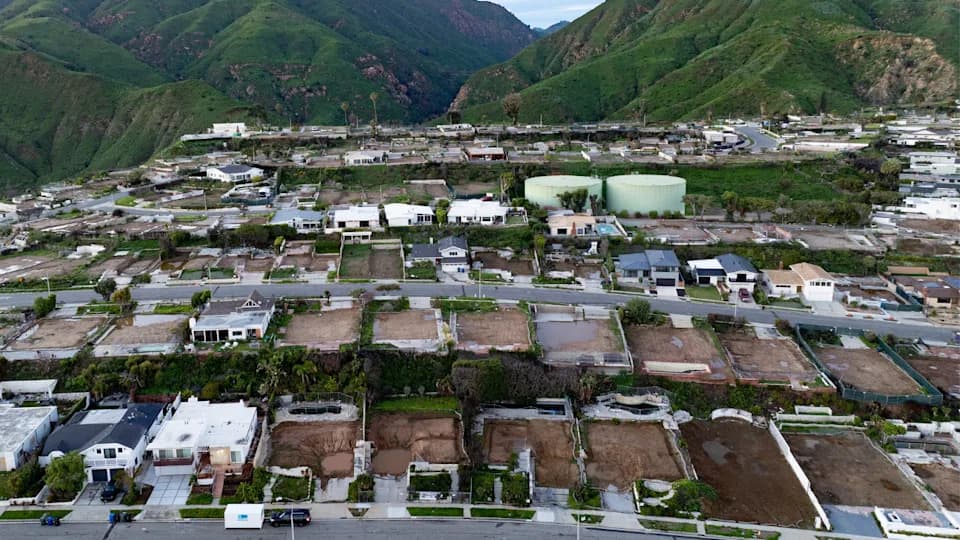
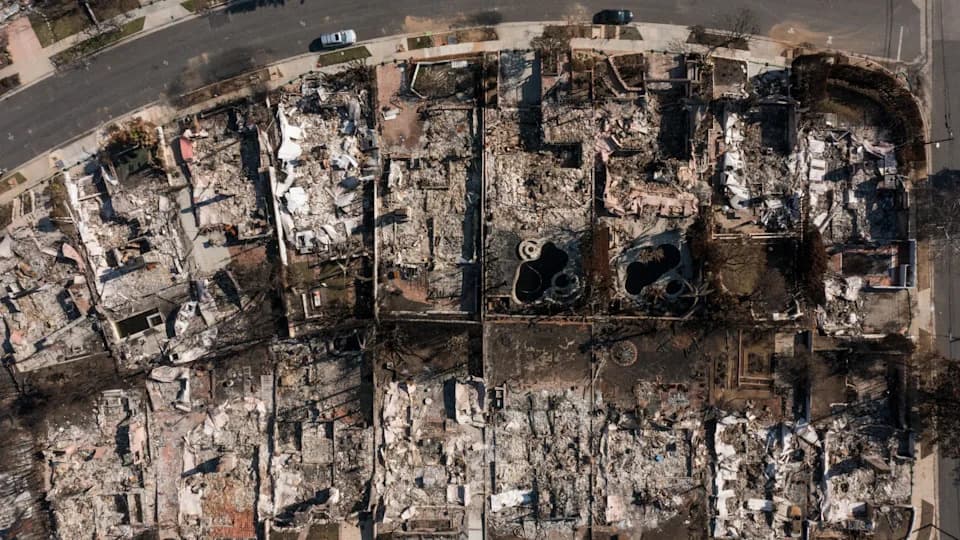
The owners of Palisades Bowl Mobile Home Estates told former residents on Dec. 23 that debris removal at the roughly 170‑unit, fire‑destroyed park could begin as soon as Jan. 2. FEMA declined to include the Bowl in a federal Army Corps cleanup, citing the site’s commercial status and doubts about the owners’ stewardship. The City of Los Angeles has declared the property a public nuisance but has not yet identified funds for a costly cleanup and rebuild. Residents remain skeptical of the owners and face a long process to restore foundations, utilities and shared amenities before any return.
Debris Removal Set To Start At Fire‑Ruined Palisades Mobile Home Park — Residents Remain Skeptical
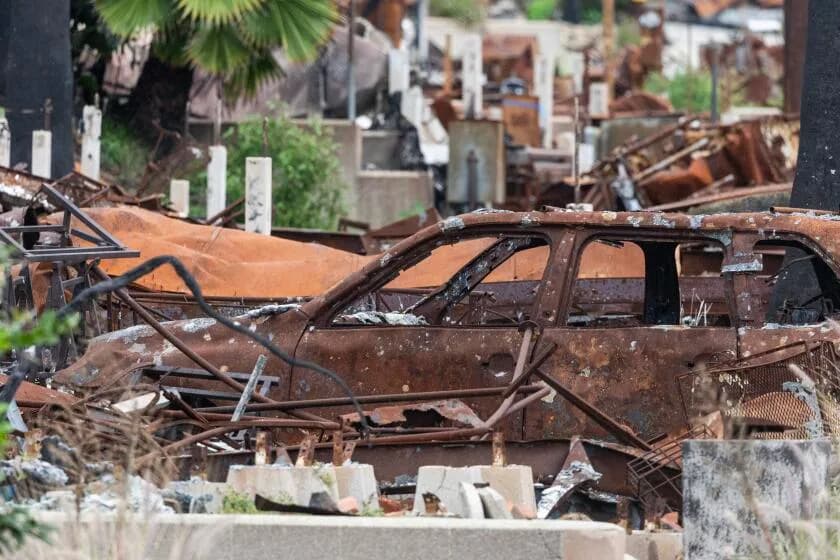
Nearly a year after the Palisades fire, owners of the Palisades Bowl Mobile Home Estates informed residents debris removal would begin as soon as Jan. 2.(Myung J. Chun/Los Angeles Times)
Owners of the Palisades Bowl Mobile Home Estates notified former residents on Dec. 23 that debris removal at the roughly 170‑unit park — destroyed in last year’s Palisades fire — could begin as early as Jan. 2. The notice, reviewed by The Times, asked residents to remove burned vehicles from lots because contractors cannot dispose of cars without the vehicle title. The message arrived after months of limited communication from the property owners.
What Residents Say
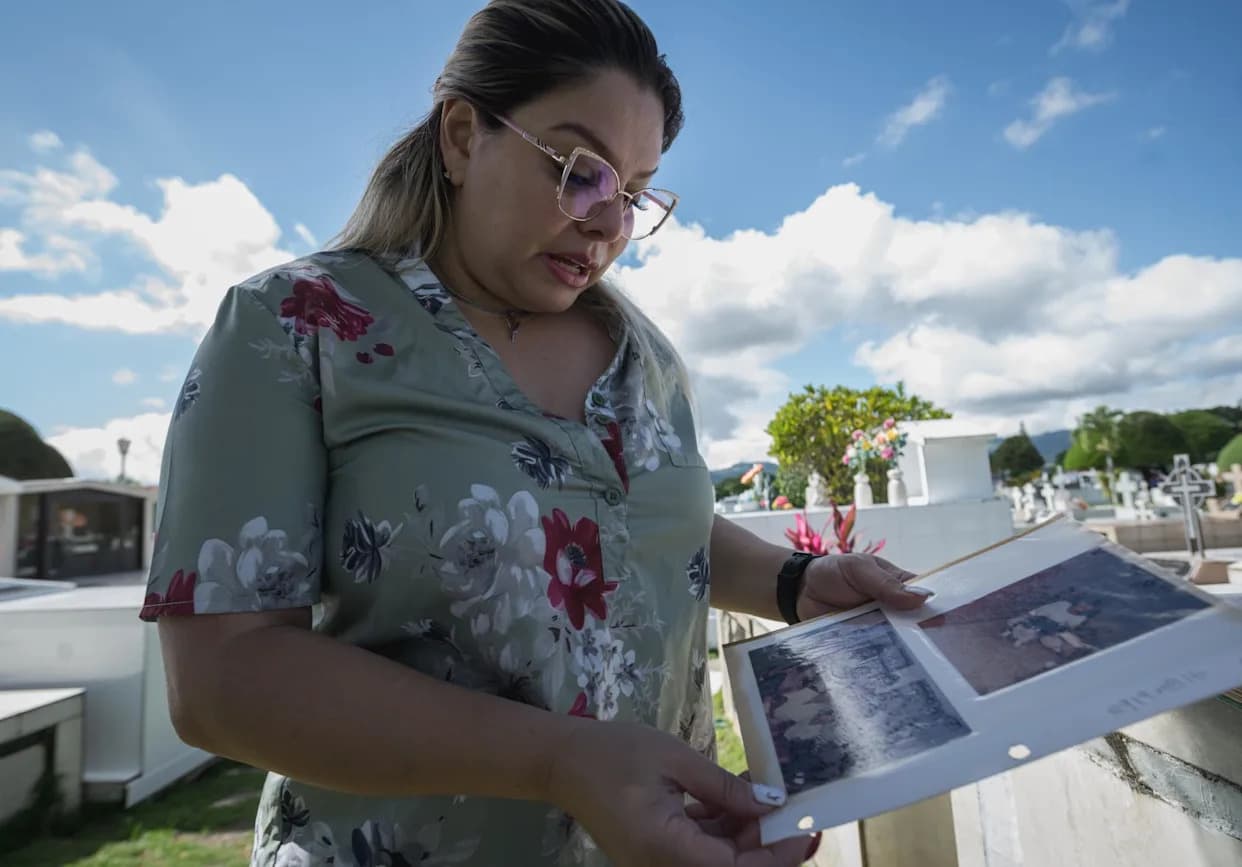
Many former residents — who once described the Bowl as a "slice of paradise" — told reporters the timing and tone of the notice were upsetting. Jon Brown, a 10‑year resident who now helps lead efforts for residents’ right to return, said the Dec. 23 message "triggers everybody and throws everybody upside down," adding:
"Am I liable if I can't get this done right now? Between Christmas and New Year's? It's just the most obnoxious, disgusting behavior."
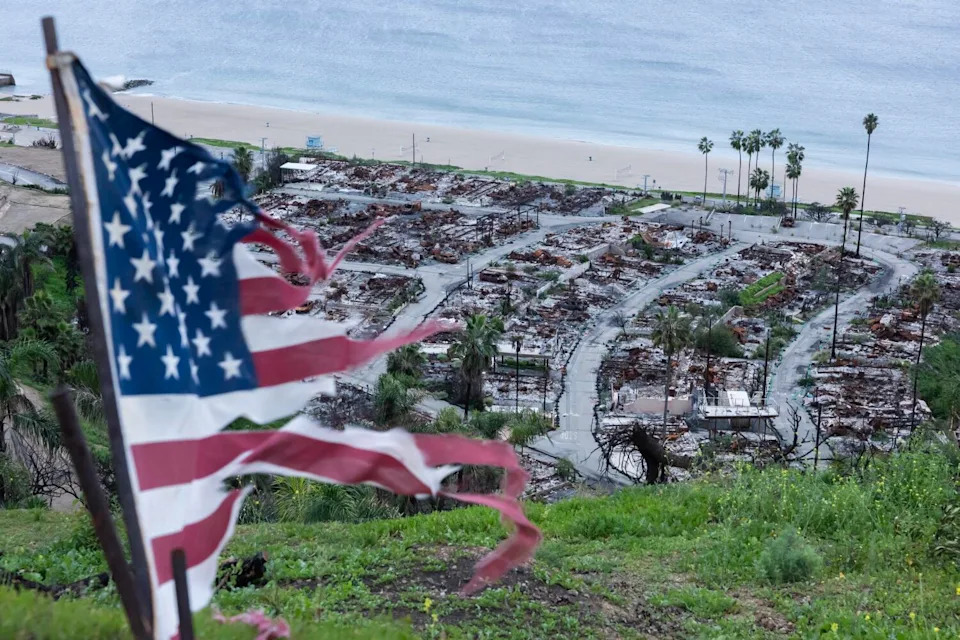
A tattered flag waves in the wind at Asilomar View Park overlooking the Pacific Palisades Bowl Mobile Estates.(Myung J. Chun/Los Angeles Times)
Why Federal Help Was Denied
Earlier this year the Federal Emergency Management Agency (FEMA) declined requests to include the Bowl in a U.S. Army Corps of Engineers cleanup program. FEMA said the Corps' work focused on residential lots rather than commercial properties and also expressed concern about whether the owners would preserve the beachfront site as affordable housing.
Local Government Steps — And Limits
After the owners missed the city's debris‑removal deadlines, the Los Angeles Board of Building and Safety Commissioners declared the Bowl a public nuisance in October, giving the city authority to do the cleanup and bill the owners. City officials, however, have not identified funds to advance the work, which is expected to cost millions. On Dec. 10, City Councilmember Traci Park filed a motion directing the city to estimate cleanup costs, find potential funding sources, and ask the City Attorney to explore criminal prosecution for uncleared properties.
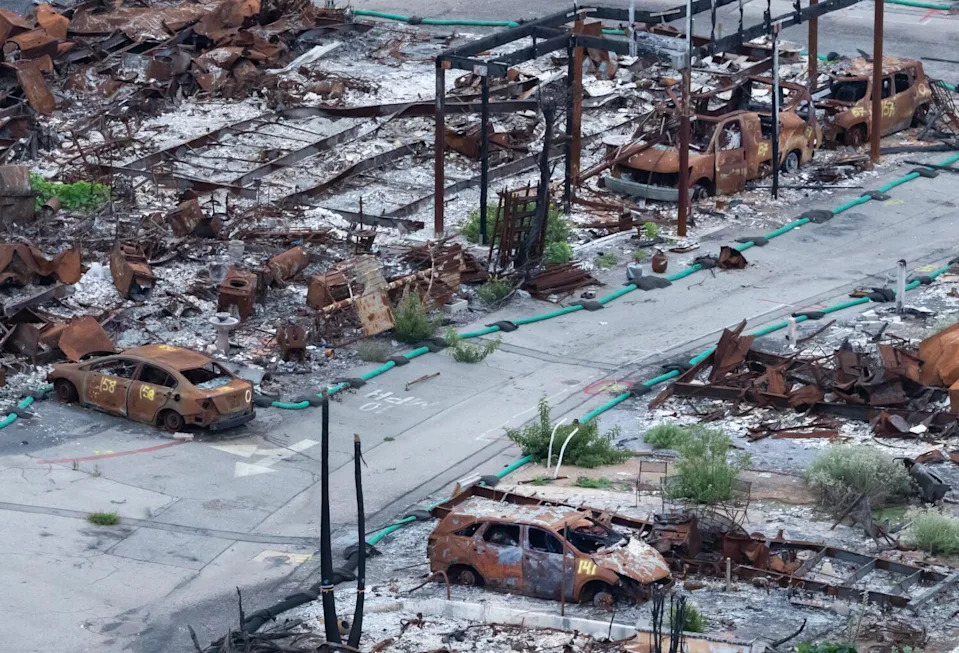
On Wednesday, numerous burnt out vehicles still remained at the Pacific Palisades Bowl Mobile Estates. The owners instructed residents they must get them removed as quickly as possible.(Myung J. Chun/Los Angeles Times)
Who Owns The Land — And What They Say
The Bowl, which began as a Methodist camp in the 1890s, was purchased by real estate investor Edward Biggs in 2005 and after his death was split among family members. Residents and advocates say the family has a history of neglecting maintenance while pursuing redevelopment plans. In February, Colby Biggs, Edward Biggs's grandson, told CalMatters:
"If we have to go invest $100 million to rebuild the park and we’re not able to recoup that in some fashion, then it’s not likely we will rebuild the park."The owners did not respond to multiple requests for comment for this story.
Long Road To Recovery
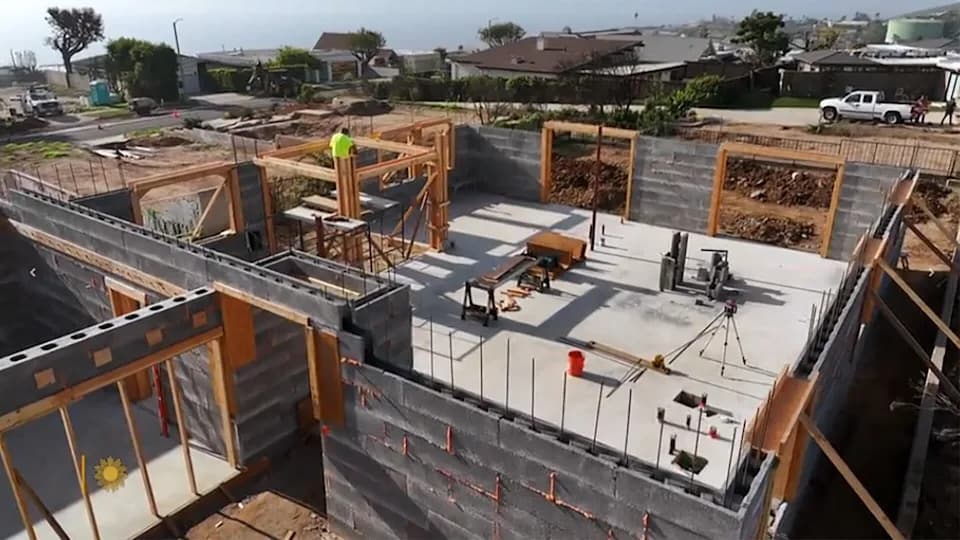
Rebuilding a mobile home park involves more than clearing debris. Tenants typically own their homes but lease the lots, meaning the owners must repair or replace foundations, roads, utilities and retaining walls, and restore shared facilities such as the community center and pool before residents can return. Legal experts and many residents doubt the Biggs family could lawfully convert the rent‑controlled park to a different use under existing law; the most realistic alternatives would be a sale to a new owner or a sale directly to residents — an option they are actively pursuing.
Many displaced residents are running out of insurance money for temporary housing and remain unsure whether they will ever be able to move back. The prolonged silence and uneven action by the owners have left the Bowl's once‑eclectic community of artists, teachers, surfers, first responders and retirees in limbo.
This report originally appeared in the Los Angeles Times.
Help us improve.