Rashi Kaslow now lives on a $1 houseboat in Marina del Rey after losing his uninsured home in the Palisades Bowl fire. The blaze destroyed treasured possessions and strained his relationships and livelihood as a boat rigger. Residents blame agencies and landowners for failures in firefighting, debris removal and site remediation. Limited legal payouts and temporary grants offered brief relief, but rebuilding remains uncertain amid contamination and financial barriers. Still, Kaslow finds small moments of hope and gratitude.
From Mobile Home to $1 Houseboat: One Man’s Fight to Rebuild After the Palisades Fire

Rashi Kaslow on the docks in Marina del Rey near where he lives on a boat after he lost his home in the Palisades fire.
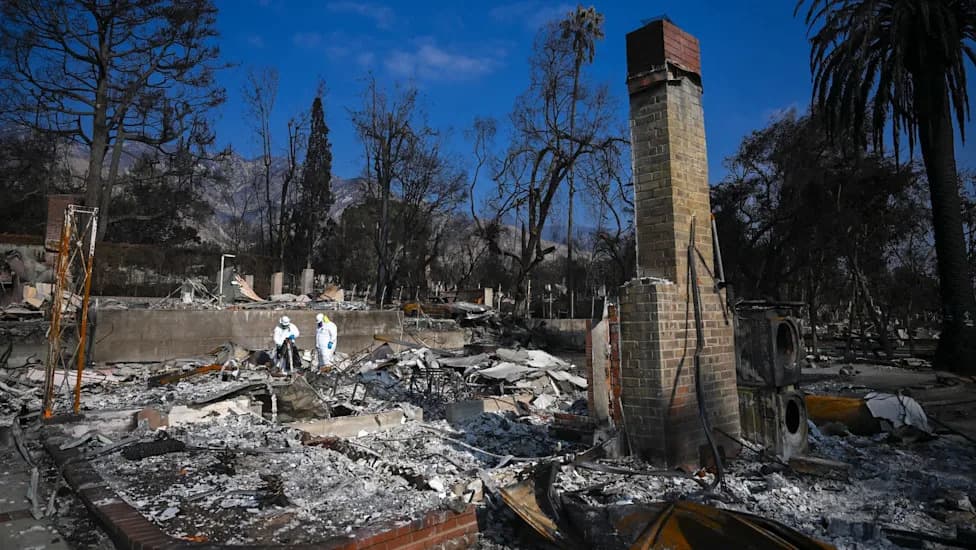
Rashi Kaslow sits on the deck of a small houseboat he bought from a friend for $1 before the wildfire swept through the Palisades Bowl mobile home park. His uninsured home was destroyed in the blaze, and the owners of the park have not cleared the burned debris. Docked in Marina del Rey, the boat has become Kaslow’s temporary home as he works to piece his life back together.
Lives and Memories Lost
“You either rise from the ashes or you get consumed by them,” Kaslow said, taking a drag from a joint as the sun set and his chihuahua burrowed into his tan Patagonia jacket. He described how disasters ripple outward: some people turn to alcohol, and, tragically, some die by suicide — a reality he recalled after hearing how a friend of his mother lost their life after Hurricane Katrina.
The fire did more than destroy a structure; it erased routines, community ties and treasured memories. Among the few items Kaslow salvaged were journals belonging to his late mother, who helped launch the New Orleans Jazz & Heritage Festival in the 1970s. “The flames burn not only your house, but also your most sacred memories,” he said.
Work, Relationships and Small Rituals
The emotional toll strained Kaslow’s long-term relationship and forced him to step away from boat rigging, the careful, high-stakes trade he practiced for a decade. He described the recovery process as uneven: “Some days, I feel kind of all right. Other days, it’s like I’m drowning in grief. You try to get back on that horse and do this recovery thing — the recovery dance.”
Daily rituals tied to life on the water keep him afloat: visiting the boathouse for basic needs, walking his dog around the marina and riding an electric skateboard into nearby neighborhoods for a change of scene.
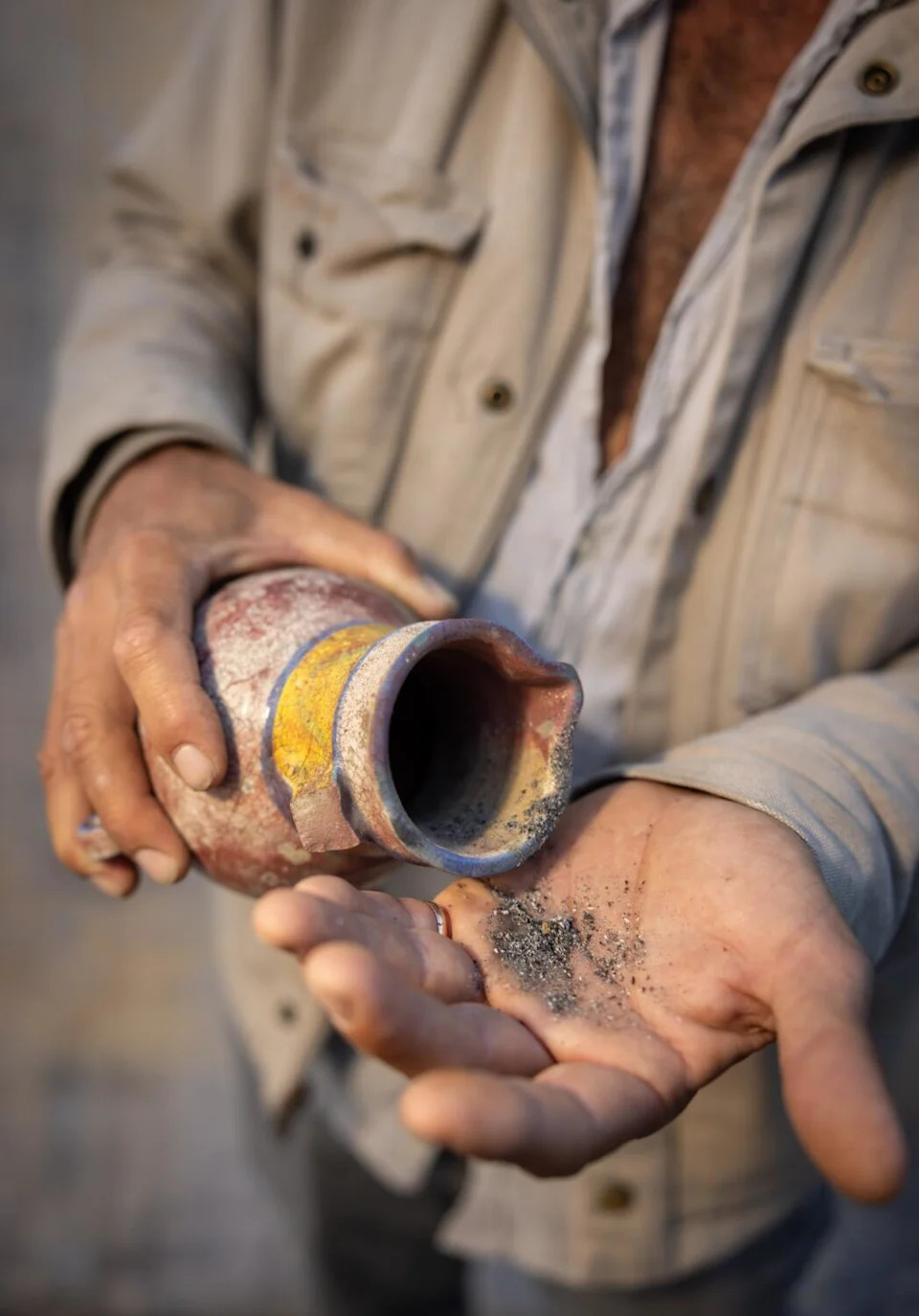
Kaslow holds a ceramic vase he recovered from the rubble of his home.
Blame, Accountability and Barriers to Rebuilding
Kaslow and many former residents say local agencies and leaders failed to act before, during and after the fire. He pointed to shortcomings by the Los Angeles Fire Department during the Lachman fire, state park officials for not monitoring the burn scar for hotspots, and the Los Angeles Department of Water and Power for not filling the Santa Ynez Reservoir — a reservoir intended to help protect the Pacific Palisades. He also said police did not prevent looters from accessing his burned lot and that Mayor Karen Bass has not compelled the Palisades Bowl owners to remove dangerous debris.
“There should be some accountability. I just want to look them in the eyes and ask them, ‘What the f— really happened?’”
Kaslow calls the displaced residents the fire’s “great underdogs.” Many are effectively blocked from rebuilding by a combination of limited finances, lingering contamination at the site and uncooperative landowners — with insurance companies offering little help for cleanup.
Small Relief, Lingering Uncertainty
Kaslow received a modest sum from one of several resident lawsuits and a temporary housing grant from Neighborhood Housing Services that paid for his marina berth for a time. But the nonprofit’s funding soon ran out, and a federal loan that could enable a more permanent recovery remains distant.
Under the November beaver supermoon, when the tide rose and silvered the water, Kaslow felt a rare flicker of hope. “I don’t want to be a victim for the rest of my life,” he said. “I don’t want to let this destroy me anymore than it already has.”
Perspective and Gratitude
Despite his losses, Kaslow feels gratitude for small things. He thinks of elderly neighbors whose final years were upended, students at nearby Pali High who saw their school burn after surviving the pandemic, and countless others quietly enduring personal tragedies. “You start to appreciate things more, I think, when your whole life is shaken up,” he said, watching the moonlight glimmer across the marina. “That is a blessing.”
This report originally appeared in the Los Angeles Times.
Help us improve.