The Department of Homeland Security has asked for emergency authority to demolish 17 historic buildings on St. Elizabeths’ 176-acre West Campus in Washington, D.C., citing security and safety risks in a Dec. 19 memo. A DHS security assessment warns vacant structures could be exploited by unauthorized individuals, active shooters or "malicious insiders." Four buildings have been approved; preservation groups say DHS is using an emergency designation to fast-track demolition of the other 13 and are challenging the timing and legal basis. The campus is a National Historic Landmark founded in 1855 and has been redeveloped into DHS’s fortified headquarters over the past 15 years.
DHS Seeks Emergency Demolition of 17 Historic Buildings at St. Elizabeths Citing ‘Unacceptable’ Security Risks
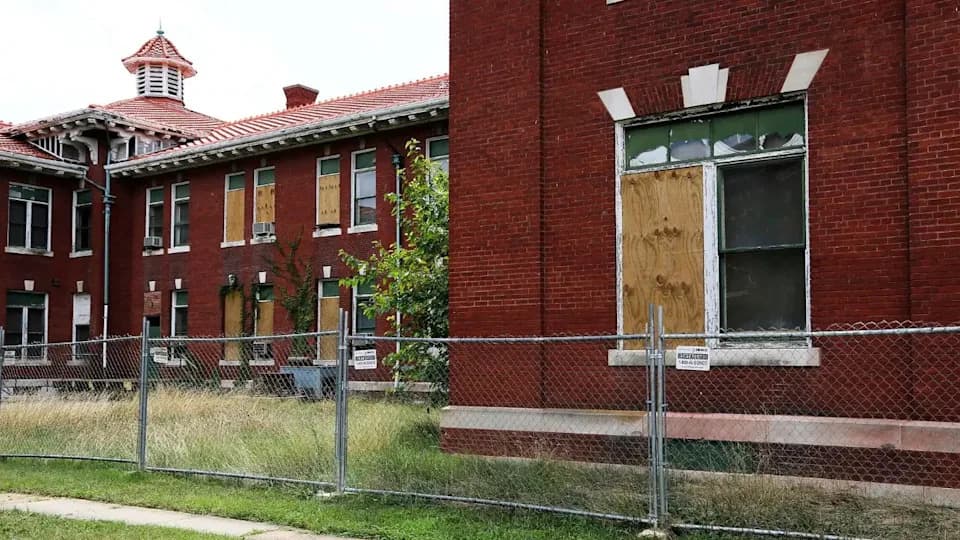
File photo shows a vacant historic building at St. Elizabeths West Campus in Washington, D.C., part of a former psychiatric hospital complex now slated for redevelopment as the Department of Homeland Security’s headquarters.
The Department of Homeland Security (DHS) has requested emergency authority to demolish 17 historic buildings on the 176-acre West Campus of St. Elizabeths in Washington, D.C., saying the vacant structures pose unacceptable safety and security risks as the site is redeveloped into DHS headquarters.
What DHS Says
In a Dec. 19 memo to the General Services Administration (GSA), Secretary Kristi Noem wrote that the buildings "present a risk to life and property" and that "demolition is the only permanent measure that resolves the emergency conditions." DHS attached a security assessment that warns vacant buildings could be accessed by unauthorized individuals and might offer tactical advantages in small-arms or active-shooter scenarios. The assessment also flagged threats from so-called "malicious insiders" — employees or contractors with legitimate access who could exploit vacant structures to target executives, disrupt operations, or compromise sensitive information.
"DHS security and safety assessments have determined these dilapidated, vacant buildings pose unacceptable safety, security and emergency-response risks," said DHS Assistant Secretary Tricia McLaughlin. "Demolition is the only permanent corrective action."
Scope, Timeline and Process
DHS is seeking permission to tear down 17 buildings in total. Four structures have already received approval from federal planning bodies; the remaining 13 had not been reviewed or authorized and, according to preservation officials, are being advanced under an emergency demolition designation. DHS declared the emergency on Dec. 19, but GSA did not notify D.C. officials until the evening of Dec. 23, shortly before the Christmas holiday, a timing preservationists say compressed the review window.
Historic and Legal Context
Founded in 1855 as the nation’s first federally operated psychiatric hospital, St. Elizabeths’ West Campus is a National Historic Landmark listed on the National Register of Historic Places. The site contains dozens of 19th- and early-20th-century buildings. The West Campus was declared "excess property" in 2001 and later transferred to GSA; over the past 15 years it has been redeveloped into a fortified DHS complex, according to the GSA.
Preservation groups, including the National Trust for Historic Preservation and the D.C. Preservation League, have criticized DHS’s emergency designation. They argue DHS has not demonstrated an actual emergency that justifies bypassing required historic-preservation review procedures for a National Historic Landmark, and they say the timing limited opportunities to challenge the proposed demolitions.
"A unilateral declaration like this is problematic because it bypasses the procedural safeguards designed to ensure stability, legitimacy and fairness," wrote Elizabeth Merritt, general counsel for the National Trust, and Rebecca Miller, executive director of the Preservation League, in a letter to officials.
Separately, the National Trust has previously filed legal challenges related to other high-profile demolition proposals, underscoring the organization’s broader role in protecting historic sites.
Where This Stands
GSA confirmed it was notified of a security risk and said it is "following all applicable laws and regulations." Preservation groups continue to push back and may pursue legal avenues to challenge the emergency designation. As the dispute unfolds, key questions remain about the evidence supporting the emergency claim, the timeline for review, and the balance between security needs and historic preservation.
Help us improve.