Skovsporet in Holstebro, Denmark, is being built as Europe’s largest 3D‑printed student housing project, delivering 36 apartments across six buildings. Structural shells were printed on site with a COBOD large‑format printer; the final building’s print phase took only five days and was run by a crew of three. Walls use D.fab concrete with lower‑carbon FUTURECEM, and about 95% of trees on site were preserved. Human teams are finishing interiors and landscaping, with occupancy expected by August 2026.
Europe’s Largest 3D‑Printed Student Village Rises in Denmark — 36 Apartments Built Faster Than Many Houses

3D-printed housing project for student apartments takes shape
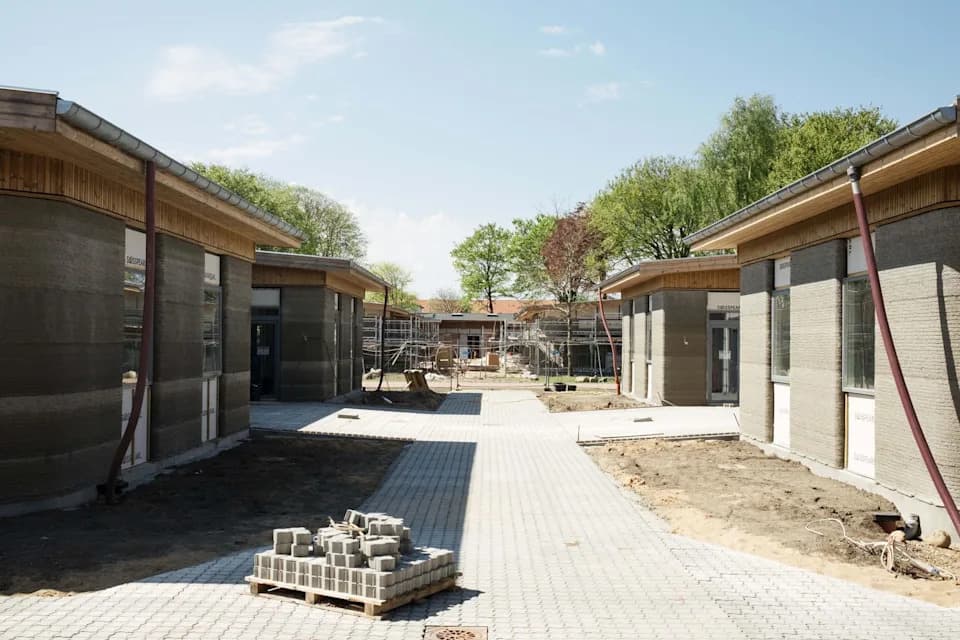
Skovsporet, billed as Europe’s largest 3D‑printed student housing project, is taking shape in Holstebro, western Denmark. The development will deliver 36 ground‑level student apartments across six low-rise buildings and is being closely watched as a practical test of how automation and low‑carbon materials can speed up housing delivery.

The six buildings are arranged around shared outdoor areas, creating a village-style layout designed for student life.
Fast, Repeatable Construction
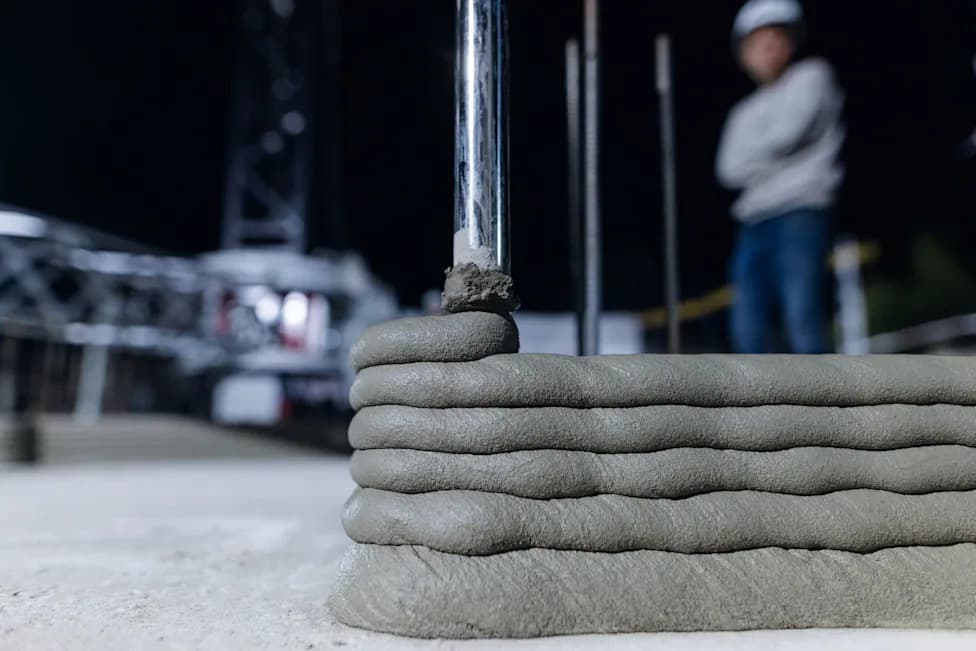
The structural shells were printed on site using a COBOD large‑format construction printer (BOD3/BOD33D). The machine extrudes a cement‑like mix layer by layer to follow a digital model with millimetre‑level accuracy. Early blocks required several weeks to print; by the final building the team completed the print phase in just five days — a pace that averages more than one apartment printed per day.
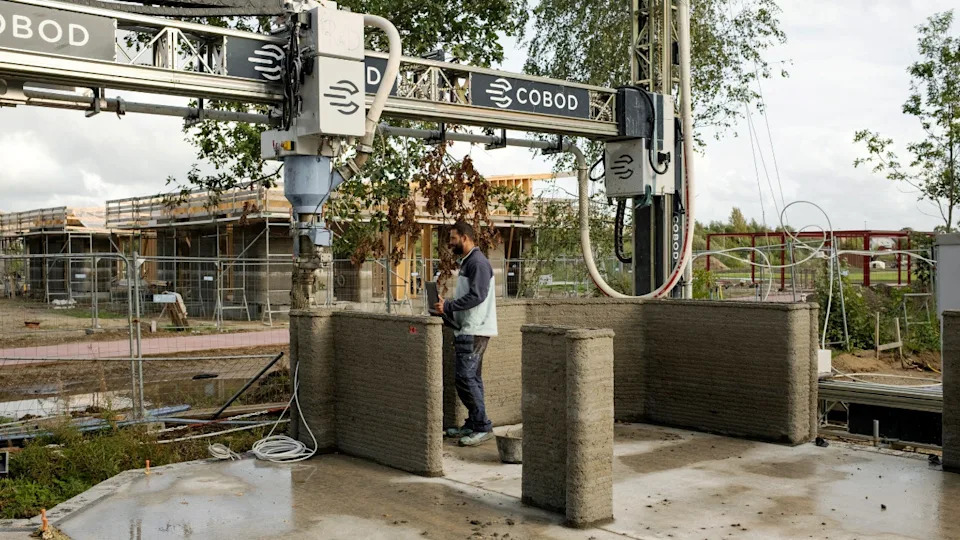
A COBOD BOD3 printer extrudes concrete layer-by-layer on site, forming the structural walls of Skovsporet’s student apartments with millimeter precision.
Small Crew, Big Automation
Remarkably, only three operators ran the printer on site. Automation handled the physically demanding tasks while the crew focused on oversight, quality control and precision work. The COBOD printer runs on a ground‑mounted track system that enables continuous printing of long wall sections, helping to maintain consistency and making it easier to scale multi‑unit builds.
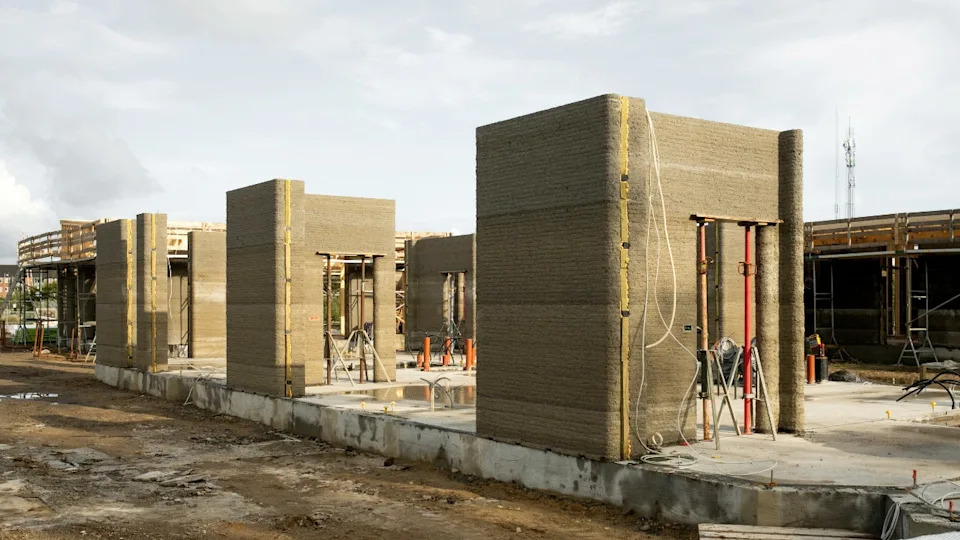
Printed concrete walls rise quickly across six buildings, showing how automation helped crews complete more than one apartment per day.
Comfortable, Compact Living
Each apartment measures about 431–538 sq ft (40–50 m²) and is designed for practical student living. Every unit includes a full kitchen, a study area, a lounge, a bathroom with shower and a bedroom with a double bed. Large roof windows and sloped ceilings bring daylight deep into the spaces, while coated plywood panels and glass inserts add warmth and contrast to the concrete shell.
Lower Carbon, Less Waste
The walls were printed using D.fab concrete mixed with FUTURECEM, a lower‑carbon cement formulation from Aalborg Portland. Because the printer deposits material only where it is structurally needed, material waste is substantially reduced compared with many traditional methods. The site layout preserved roughly 95% of existing trees by carefully locating print beds between them, demonstrating that faster construction did not come at the expense of environmental care.
Next Steps and Community Design
The 3D‑printing phase is complete. Human crews are now installing roofs, windows, interiors, fixtures and building services, and adding landscaping, pedestrian paths and bicycle parking to foster a village‑like atmosphere. The project remains on schedule, with residents expected to move in by August 2026.
Why it matters: Skovsporet demonstrates that combining digital design, automated construction and low‑carbon materials can produce repeatable, high‑quality housing quickly and with fewer workers and less waste — an approach that could help ease housing pressure in dense cities and expand affordable options for students.
Help us improve.