
Thousands gathered at Stonehenge over the weekend to mark the winter solstice, with many attendees dressed as druids and pagans and some singing or beating drums as the sun rose. English Heritage said about 8,500 people attended events on Salisbury Plain and its livestream drew more than 242,000 views worldwide. Visitors described the morning as a spiritual moment of renewal, while experts noted the monument's ancient alignment with solstice sun movements.
Sunrise and Celebration: Thousands Gather at Stonehenge to Mark the Winter Solstice

Visitors enjoy the sunrise at Stonehenge during the Winter Solstice ritual, which stands as a timeless tradition to witness the sunrise at this sacred site on the shortest day of the year. / Credit: Finnbarr Webster / Getty Images
Thousands of people cheered, danced and observed a hushed sunrise at Stonehenge as the winter solstice was marked over the prehistoric stone circle on the weekend.
Scenes From Salisbury Plain
Crowds — many dressed as druids and pagans — assembled before dawn in the cold, dark fields of southwest England. Some participants sang and beat drums, while others stood in quiet reflection among the towering stones, describing the experience as deeply spiritual.
English Heritage, the charity that manages Stonehenge, said around 8,500 people celebrated at the monument on Salisbury Plain during the weekend, and its livestream attracted more than 242,000 views from around the world. Organizers and visitors gathered at sunrise on Sunday for the solstice ceremony, with festivities and vigils taking place across the weekend.
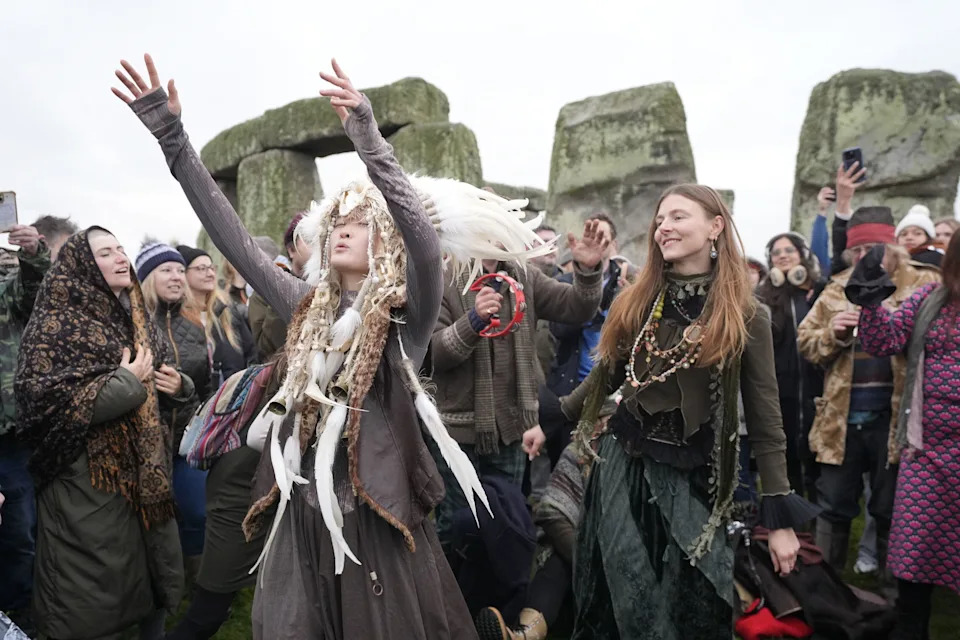
People take part in the winter solstice celebrations during sunrise at the Stonehenge prehistoric monument on Salisbury Plain in Wiltshire, England, Sunday, Dec. 21, 2025. / Credit: Andrew Matthews / AP
'This is the time of the year that people in prehistory really revered and it was really important to them,' said Win Scutt, a curator at English Heritage, speaking to the BBC.
Visitors traveling long distances described a sense of renewal. 'The winter solstice is all about life returning, the sun has been born anew,' said Sophie McCarthy, who came from Scotland with a costume and drums. 'There's lots of intention, new life and hope in the air. It's been beautiful.'
Ancient Alignment and Modern Meaning
Stonehenge was constructed between roughly 5,000 and 3,500 years ago and is widely believed to have been aligned to mark the movements of the sun at the solstices — events that would have been critical for ancient farming calendars. The winter solstice is the shortest day and the sun's lowest arc of the year in the Northern Hemisphere; many communities celebrate it as a time of renewal because daylight lengthens after the solstice.
The weekend's gatherings combined centuries-old tradition and contemporary festival atmosphere, drawing pilgrims, curious visitors and global online audiences to witness one of the UK's most iconic seasonal rituals.


