The Islamic University of Gaza has partially resumed on-site classes for the first time in two years, though the campus now shelters roughly 500 displaced families and shows extensive war damage. UNESCO estimates over 95% of Gaza’s higher-education campuses have been damaged or destroyed; Al Mezan reports more than 750,000 students deprived of schooling for two academic years. With only four classrooms operational, faculty are improvising amid power cuts, equipment shortages and damaged facilities.
Amid Ruins and Displacement, Islamic University of Gaza Reopens On-Site Classes

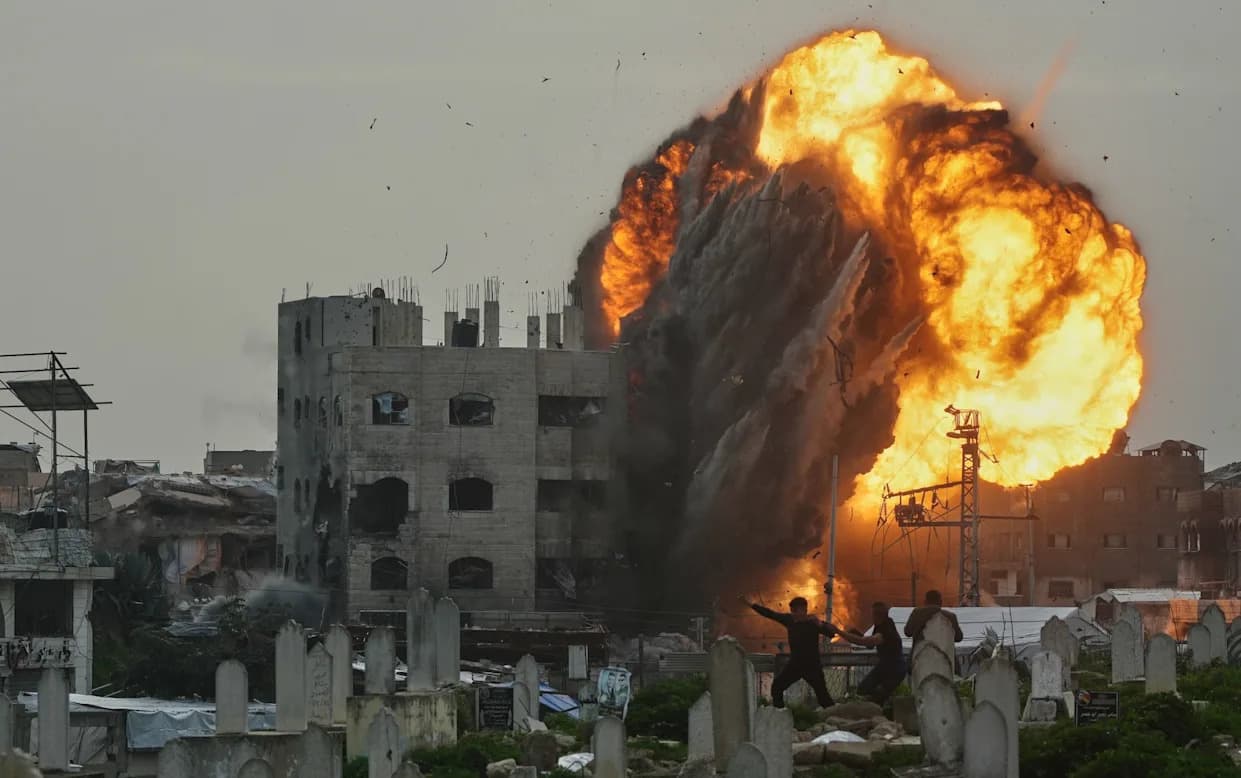
Buildings across Gaza have been destroyed by Israel’s bombardment [Al Jazeera Screengrab]
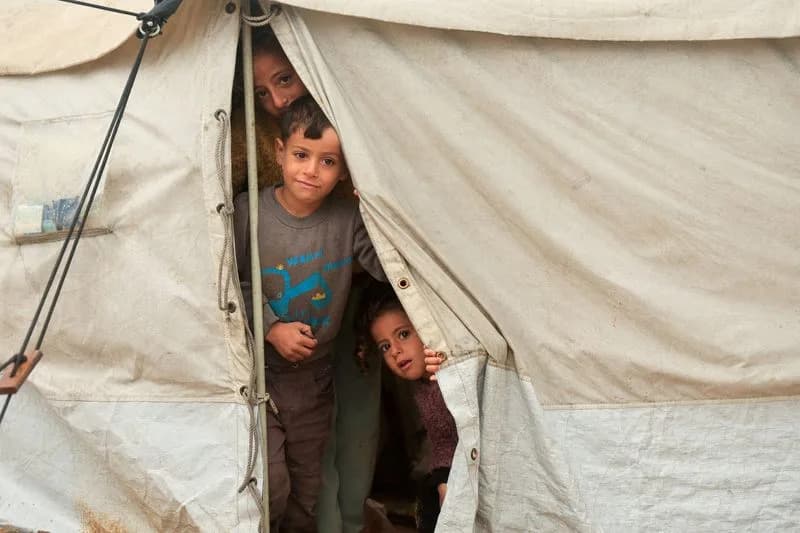
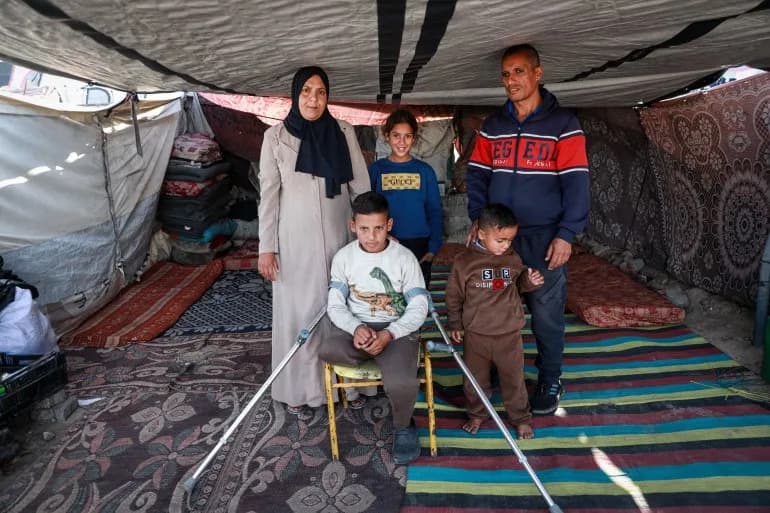
Students at the Islamic University of Gaza have resumed face-to-face classes for the first time in two years on a campus drastically altered by conflict and mass displacement. The university reopened after the October ceasefire but now shelters roughly 500 displaced families in buildings reduced to hollow shells, while tents occupy lawns and former lecture halls.
Campus Reopening Under Strain
Although reopening has renewed hope for many students, the campus bears little resemblance to a functioning academic institution. Faculty and staff are operating amid power cuts, shortages of equipment and heavily damaged facilities. Only four classrooms are reportedly operational, forcing professors and students to rely on makeshift solutions to continue lessons.
Improvised Teaching and Daily Hardships
Professors are adapting wherever possible: covering exposed walls with plastic sheeting, borrowing generators to run essential equipment, and rearranging sparse spaces to accommodate lectures. "We’ve borrowed motors to generate electricity to operate the university equipment," said Dr. Adel Awadallah. Students and staff describe the campus as a place of both refuge and study, a dual purpose that underscores the severity of Gaza’s humanitarian and educational crises.
“We came here after being displaced from Jabalia because we had nowhere else to go. But this place is for education. It’s not meant to be a shelter—it's a place for our children to study.” — Atta Siam, displaced person sheltering on campus
First-year medical student Youmna Albaba said she had dreamed of a fully equipped university. "I need a place where I can focus, that is fully qualified in every way," she said. "But I haven’t found what I imagined here. Still, I have hope because we are building everything from scratch." Her words reflect many students’ determination to continue education despite enormous obstacles.
Scale of Damage and Wider Impact
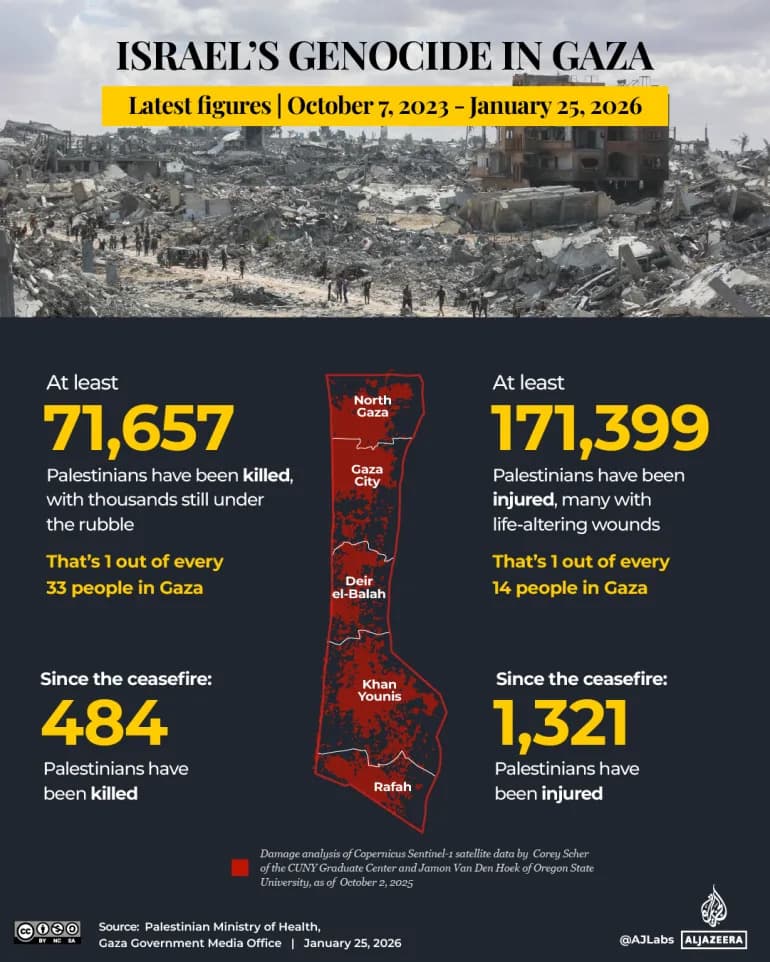
UNESCO estimates that more than 95% of higher-education campuses across Gaza have been severely damaged or destroyed since the fighting began in October 2023. The Gaza-based Al Mezan Center for Human Rights reports that more than 750,000 Palestinian students have been deprived of schooling for two consecutive academic years, and that 494 schools and universities have been partially or completely destroyed, with 137 reduced to rubble.
Al Mezan’s January report also cited heavy civilian losses in the education sector, including thousands of students and scores of teachers and academics. Isra University, previously described as Gaza’s last functioning university, was demolished by Israeli forces in January 2024.
Calls by UN Experts and Human Rights Groups
United Nations experts and human rights organizations have warned that the scale and pattern of destruction to educational infrastructure could amount to a deliberate effort to dismantle the foundations of Palestinian society. "When schools are destroyed, so too are hopes and dreams," a UN statement said in April 2024, describing the attacks on education as systematic.
The challenges to learning extend beyond physical damage: families struggling to secure food, water and medicine find it nearly impossible to prioritise education. Remote-learning initiatives by the Ministry of Education and UNRWA have been undermined by electricity blackouts, internet outages and ongoing displacement.
Despite the trauma, loss and daily hardships, many students continue to prioritise returning to school as a way to reclaim normalcy and protect future opportunities. As Youmna Albaba put it, "Despite all this, I am happy because I attend lectures in person. We are building everything from scratch."
Help us improve.