
At his lengthy year‑end press conference, Vladimir Putin claimed Russian advances "across the whole of the front line," denied starting the war, and signaled conditional openness to peace talks if Moscow’s stated "root causes" demands are met. The event followed the EU’s approval of a $105 billion interest‑free loan to Ukraine. Diplomatic contacts — including a planned meeting between US envoy Steve Witkoff and Kirill Dmitriev — aim to explore ceasefire proposals, but Moscow’s core demands on NATO and territorial withdrawals remain major obstacles.
Putin’s Year‑End Press Conference: Claims Of Battlefield Gains, Conditional Peace Offer And NATO Grievances

Journalists hold papers with their questions to Russian President Vladimir Putin, center, during his annual news conference in Moscow on Friday. - Pavel Bednyakov/AP
Russian President Vladimir Putin’s lengthy year‑end press conference combined sweeping geopolitical declarations with mundane local queries, producing a spectacle that felt part municipal board meeting, part international policy forum.
Context
The event came days after the European Union approved a $105 billion interest‑free loan to Ukraine — a move that stopped short of redirecting frozen Russian assets but gives Kyiv time and resources as the war launched by Russia in February 2022 nears its fourth year.
Battlefield Claims
Against this backdrop, Putin catalogued what he described as Moscow’s steady gains on the battlefield, saying Russian forces were “advancing across the whole of the front line” and naming towns and villages Moscow now claims to hold, in full or in part.
Conditional Offer Of Negotiations
Putin repeatedly denied that the Kremlin “started this war,” while also leaving the door open to talks. He said Russia was “ready and willing to end this conflict peacefully, based on the principles I outlined last June at the Russian Ministry of Foreign Affairs, and by addressing the root causes that led to this crisis.”
That reference to “the root causes” echoes pre‑invasion Russian demands: Kyiv’s withdrawal from the Donbas, a halt to NATO expansion, and changes in Ukraine’s political orientation — conditions Kyiv and the West have rejected as foreclosure of Ukrainian sovereignty.
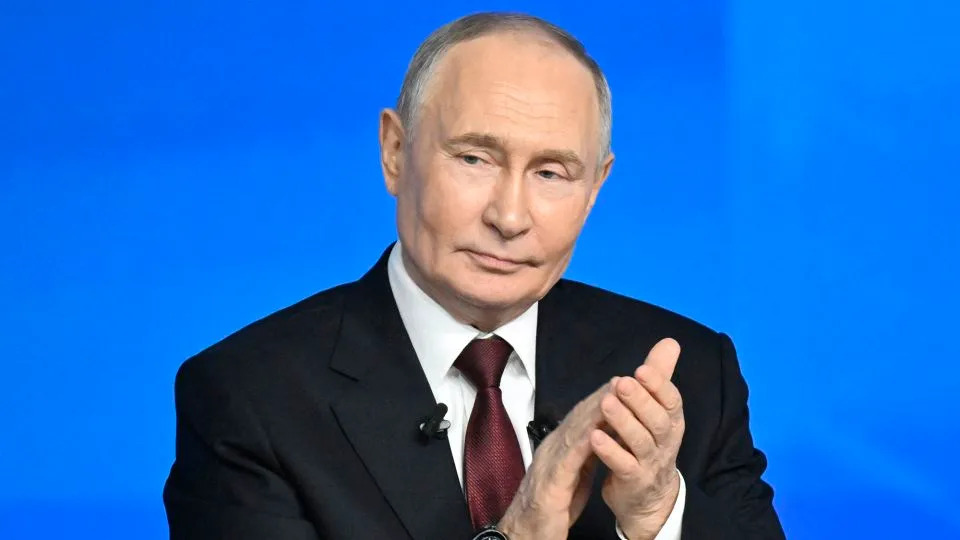
Putin's press conference lasted more than four hours. - Alexander Nemenov/AFP/Getty Images
NATO, Resentment And Contradictions
Putin framed the conflict in terms of long‑standing grievances over post–Cold War security arrangements. Responding to a BBC question, he said there would not have been more “special military operations” — referring to the 2022 full‑scale invasion — “if you treat us with respect,” adding bluntly that “they simply screwed us over.”
Ironically, the 2022 invasion accelerated NATO enlargement in the Nordic region, undermining the justification Putin repeats.
Diplomatic Moves
Against the background of an unconventional diplomatic push from Washington, US President Donald Trump’s special envoy, Steve Witkoff, was expected to meet Kirill Dmitriev, head of Russia’s sovereign wealth fund and a close Putin aide, in Miami to discuss a new proposal to end the fighting. Putin publicly praised Trump’s efforts, saying the US president was “making serious efforts to end the conflict,” though Moscow’s core demands remain unchanged and questions persist about its sincerity.
What This Means
Putin’s remarks reinforced a familiar pattern: a mix of battlefield boasts, hedged openness to talks, and insistence on preconditions that Kyiv and Western partners view as unacceptable. The EU loan to Ukraine gives Kyiv breathing room, while Moscow’s reiterated red lines suggest negotiations will remain difficult unless positions shift.
Reporting: CNN’s Anna Chernova, Christian Edwards, Katharina Krebs and Alejandra Jaramillo contributed reporting.


