
Blue Origin's NS-37 New Shepard flight is tentatively scheduled for Dec. 18 at 9:30 a.m. ET from Launch Site One in West Texas. ESA engineer Michaela (Michi) Benthaus, who has used a wheelchair since a 2018 spinal injury, is aboard and could become the first wheelchair user to reach space. The suborbital flight will last about 11 minutes, cross the Kármán Line for several minutes of microgravity and be livestreamed starting roughly 40 minutes before liftoff. The six-person crew includes Jeff Bezos and a mix of engineers, entrepreneurs and space enthusiasts.
Blue Origin NS-37: First Wheelchair User Could Reach Space — How to Watch the Launch

Blue Origin's "barn" is where rocket boosters merge with the capsules that will take passengers into space.
Blue Origin is preparing to fly its New Shepard suborbital vehicle on mission NS-37 from Launch Site One in West Texas. The flight, targeted for Dec. 18 at 9:30 a.m. ET, carries six passengers and could make history if ESA aerospace engineer Michaela (Michi) Benthaus becomes the first person who uses a wheelchair to travel to space.
Who Is Onboard?
The six-person NS-37 crew blends space veterans, industry figures and private citizens. Passengers include:
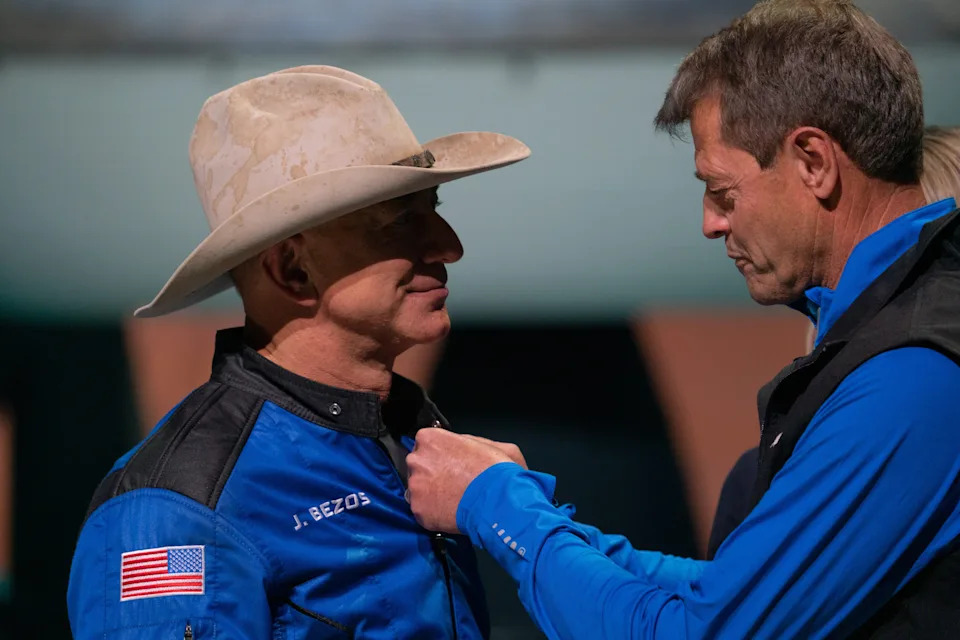
Jeff Bezos receives his official astronaut wings after launching on Blue Origin's New Shepard rocket on Tuesday, July 20, 2021.
- Michaela (Michi) Benthaus — An aerospace engineer at the European Space Agency. Benthaus has used a wheelchair since a 2018 mountain-biking accident and says the flight could help open doors for people with disabilities in the space industry.
- Jeff Bezos — Blue Origin's founder and an early passenger on New Shepard.
- Joey Hyde — Physicist and hedge fund investor from Florida.
- Hans Koenigsmann — German-American aerospace engineer and former SpaceX executive.
- Neal Milch — Business executive who chairs the board of the Jackson Laboratory.
- Adonis Pouroulis — Entrepreneur and investor in natural resources and energy.
- Jason Stansell — West Texas adventurer with an interest in rocketry.
When And Where To Watch
Blue Origin has announced a tentative liftoff for Thursday, Dec. 18 at 9:30 a.m. ET. The company typically begins a public webcast about 40 minutes before liftoff on its website and social channels. The Federal Aviation Administration has listed a backup window the following day in case of delay.
What Is New Shepard?
New Shepard is a 60-foot reusable suborbital rocket and crew capsule system designed for short, tourist-style flights to the edge of space. Each crewed New Shepard flight lasts roughly 11 minutes from liftoff to touchdown. During ascent the vehicle exceeds Mach 1 and speeds above 2,000 mph before booster separation. The capsule coasts past the Kármán Line (about 62 miles high), allowing passengers several minutes of microgravity and panoramic views of Earth through large windows.
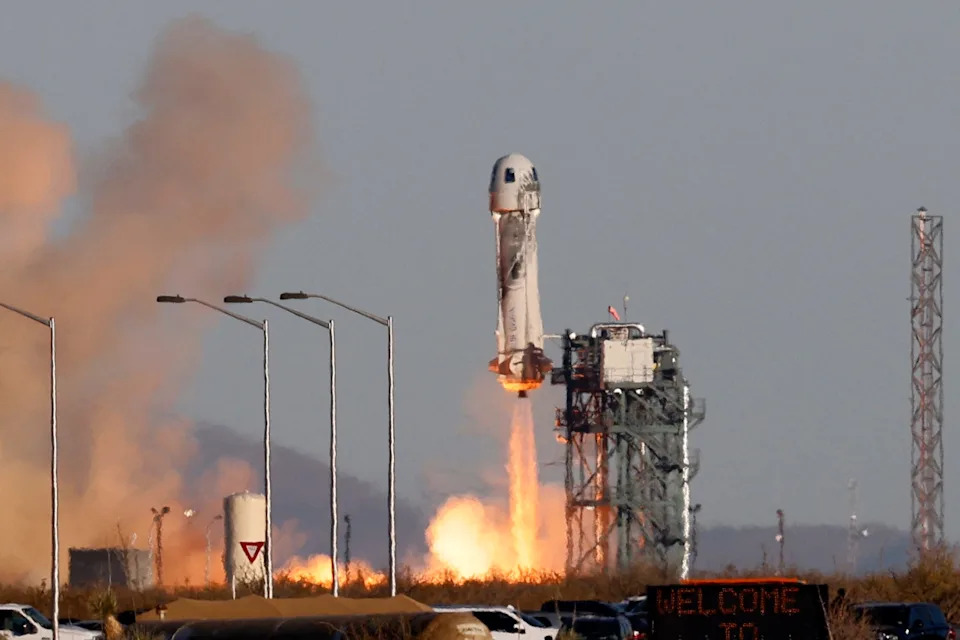
A Blue Origin New Shepard rocket lifts off with a crew of six on Dec. 11, 2021.
Launch And Landing Sequence
After booster separation, the crew capsule experiences weightlessness while reaching its peak altitude. The booster performs a powered, controlled descent and returns for a vertical landing downrange; the capsule descends under three parachutes and makes a soft touchdown in the desert.
New Shepard vs. New Glenn
New Shepard is a suborbital vehicle and should not be confused with Blue Origin's New Glenn, a much larger, 322-foot orbital rocket intended for satellite and interplanetary missions. New Glenn recently completed an uncrewed mission from Florida as Blue Origin advances its orbital-capable hardware.
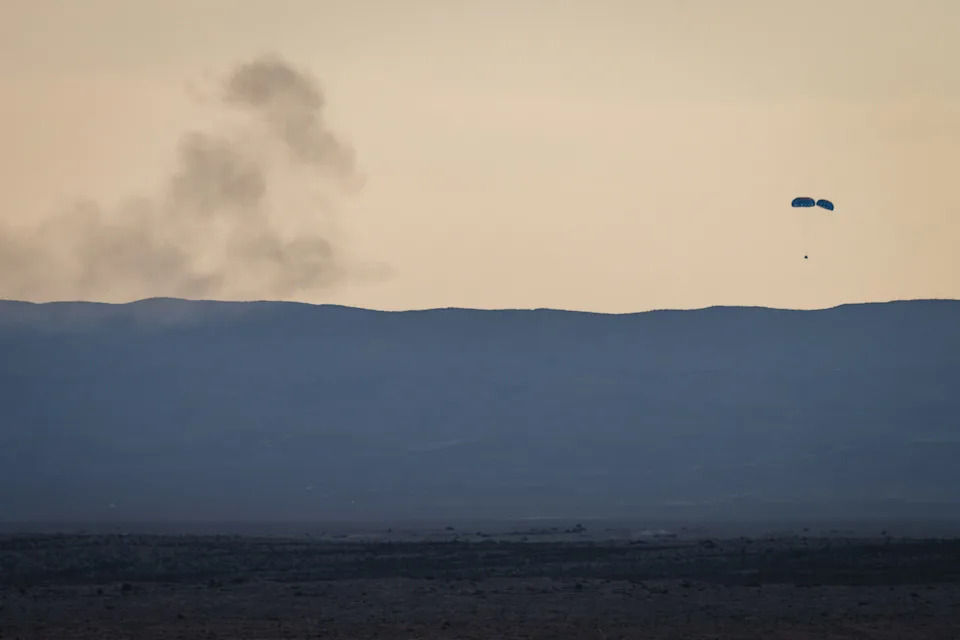
Blue Origin's New Shepard crew capsule returns to Earth April 14 following a launch from Launch Site One in Van Horn, Texas. Blue Origin's Mission NS-31 carried Aisha Bowe, Amanda Nguyn, Kerianne Flynn, Gayle King, Katy Perry, and Lauren Sanchez, is the first all-female astronaut crew since 1963.
Cost And Accessibility
Blue Origin does not publish standard ticket prices. Reservations require a $150,000 deposit, and the best-known public auction sale for a seat in 2021 fetched about $28 million. Some passengers have flown with seats funded by grants or institutional sponsorships. Benthaus' selection has prompted discussion about widening access and designing more inclusive flight accommodations.
Context And Notable Flights
New Shepard has carried a range of public figures and private citizens, including William Shatner (who became the oldest person to fly in 2021), Michael Strahan, Katy Perry and Gayle King. NS-37 will join roughly 80 people who have experienced New Shepard on previous crewed missions, including several repeat flyers.
“I thought my dream of going to space had ended forever when I had my accident,” Benthaus wrote on social media. “I’m so thankful and hope it inspires a change in mindset across the space industry, creating more opportunities for people like me.”
Blue Origin's webcast and social channels will provide live coverage of the launch window. If you plan to watch, tune in about 40 minutes before the scheduled 9:30 a.m. ET liftoff to catch prelaunch briefings and countdown coverage.


