
In Doral, Fla., a vibrant Venezuelan community is watching intensified U.S. pressure on Nicolás Maduro with a mix of hope and fear. Residents say toppling Maduro could mean returning home, even as recent U.S. immigration policy changes have raised deportation concerns. The U.S. has increased military assets in the Caribbean, struck vessels accused of drug trafficking and seized a tanker — developments that locals track closely via social media and flight apps.
In Doral, Venezuelan Community Pins Hopes on U.S. Pressure to Oust Maduro

Venezuelan President Nicolás Maduro in Caracas on Aug. 22. (Juan Barreto / AFP - Getty Images file)
DORAL, Fla. — On a recent rainy afternoon near Miami, Maria Alejandra Barroso kept to her routine: she stopped at Our Lady of Guadalupe Catholic Church before heading to her restaurant shift and prayed for the Trump administration’s efforts to remove Venezuelan President Nicolás Maduro to succeed.
“Every day I pray for it to be peaceful and for innocent people to not get hurt,” Barroso, 44, said. She emigrated from Venezuela in 2022 and has a pending asylum case. Recent changes to U.S. immigration policy have reduced some protections for Venezuelan migrants and increased fear of deportation for many. Still, Barroso said toppling Maduro and restoring democracy in Venezuela would mean she could eventually return home.
“I’m not here because I want to be. It was necessary. I have friends in prison just for thinking differently,” she said. “We want democracy and peace. I believe the U.S. is taking action to make that possible.”
Hope and Anxiety in a Close-Knit Enclave
In Doral — a Miami-Dade city with one of the largest concentrations of Venezuelans in the United States — conversations revolve around how far the United States should go to pressure Maduro and the implications of recent U.S. strikes on vessels accused of smuggling drugs. Residents describe a mixture of hope that Maduro might be forced from power and fear about what U.S. immigration changes mean for their families here.
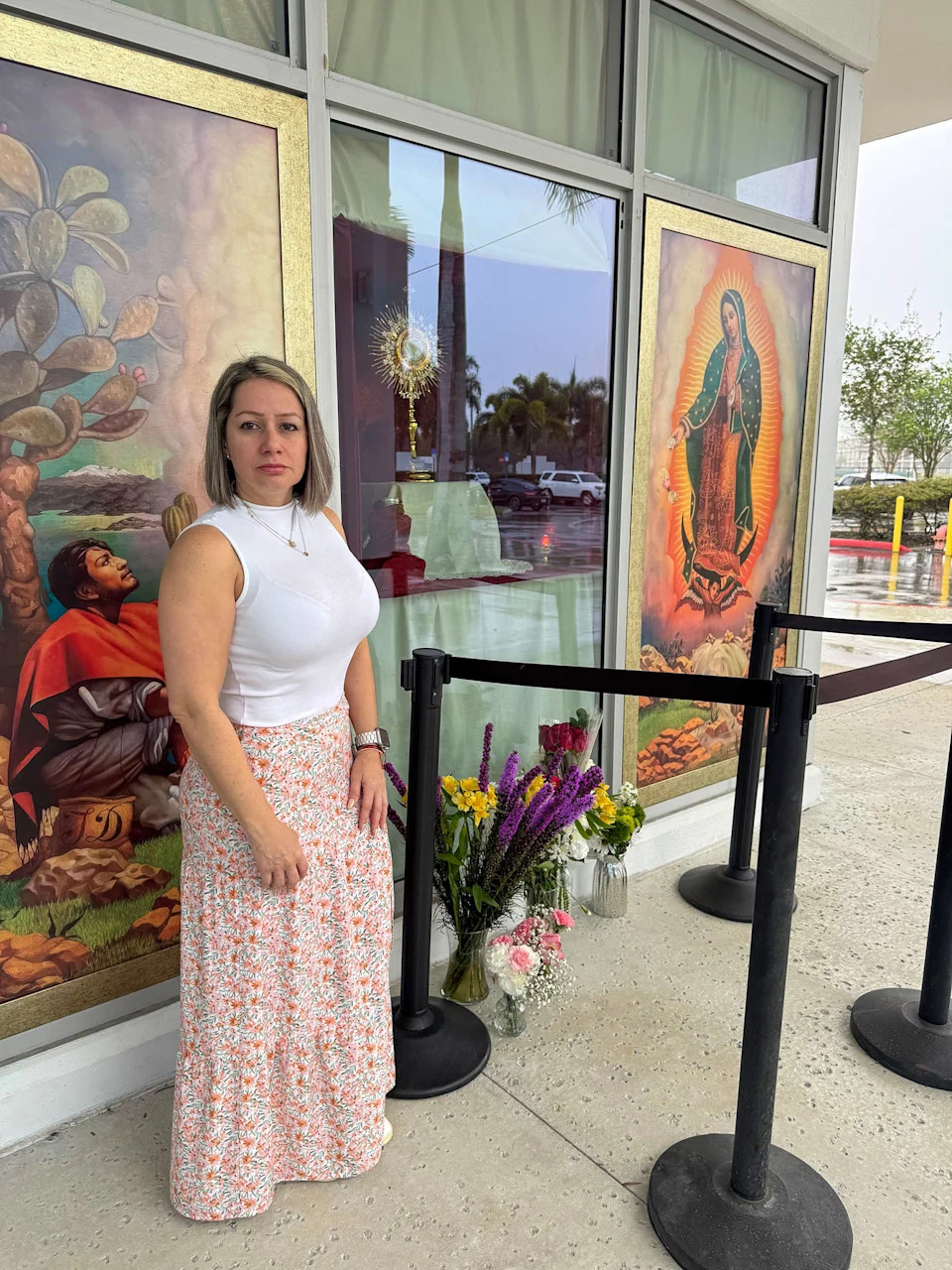
Maria Alejandra Barroso outside Our Lady of Guadalupe Catholic Church in Doral, Fla., on Tuesday. (Carmen Sesin / NBC News)
“Everyone is glued to social media,” said Rosangel Patiño, an employee at El Arepazo, a busy cafeteria-style Venezuelan restaurant. Business has softened somewhat as customers who fear immigration enforcement sometimes stay home, but talk about Venezuela fills the room when patrons arrive.
“I feel the same way as all Venezuelans. It gives me so much happiness to know that at any moment, it can all end,” said Victor Montero, who left Venezuela 22 years ago. “The family in Venezuela is going through a very difficult time.”
U.S. Actions and Local Reaction
The Trump administration has taken a tougher stance toward Venezuela in recent months: deploying thousands of troops and a carrier strike group to the Caribbean, conducting strikes on vessels alleged to be involved in narcotics trafficking, and seizing an oil tanker off Venezuela’s coast. In a recent interview, President Trump said Maduro’s “days are numbered” and did not rule out a ground invasion.
Some U.S. politicians and analysts characterize these moves as aimed at forcing regime change, while others say they are targeted actions against criminal activity and corruption. U.S. Senator Marco Rubio rejected the characterization that the administration’s actions are solely about regime change.
Locals in Doral track developments obsessively — checking social media and WhatsApp threads, monitoring flight-tracking apps for unusual movements, and sharing tips and rumors. Some, like Alejandro Márquez, a U.S. citizen and former sub-secretary of defense and security in Zulia, say they would return immediately to help rebuild if Maduro falls.
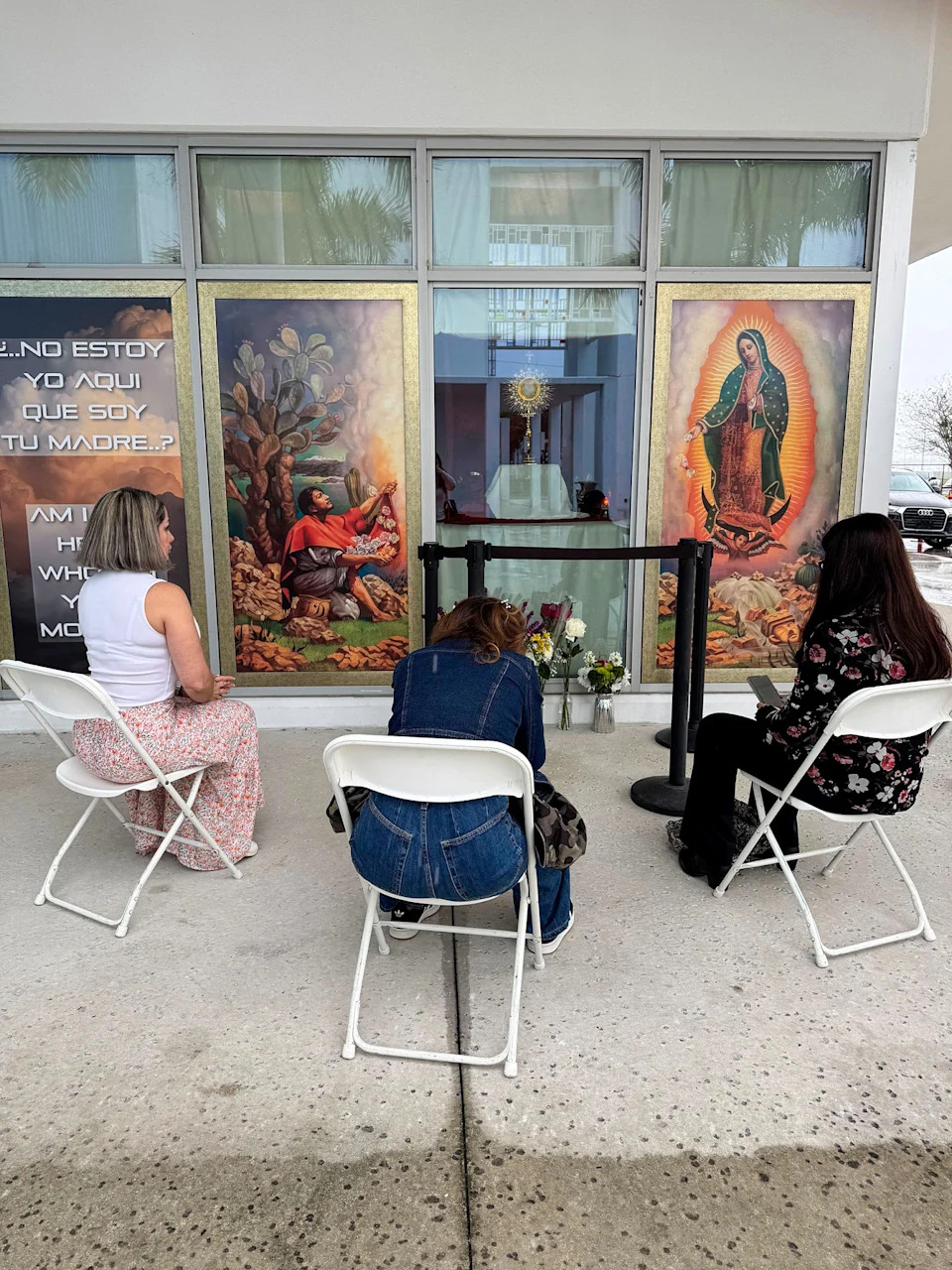
Maria Alejandra Barroso and two other women pray in front of the altar outside Our Lady of Guadalupe Catholic Church on Tuesday. (Carmen Sesin / NBC News)
Longer-Term Context
Large-scale migration from Venezuela to Florida began in the early 2000s after Hugo Chávez rose to power. Early arrivals were often middle- and upper-class professionals; later waves included many who fled dire economic and political collapse under Nicolás Maduro, who took power in 2013 following Chávez’s death.
Under Maduro, Venezuela’s oil-driven economy has suffered a decade-long decline amid mismanagement and corruption, contributing to widespread poverty. Human rights organizations and foreign governments have documented repression, arbitrary arrests, and erosion of democratic institutions. An estimated 8 million Venezuelans have left the country during this period.
Venezuelans in Doral say their priorities are simple: a free, safe Venezuela and the ability to return without fear. But for many who lack secure legal status in the United States, anxiety about deportation and the immediate consequences of any conflict or political upheaval at home remain constant.
Reporting Note: This story reflects interviews with Doral residents and local experts and summarizes public developments related to U.S.-Venezuela tensions. Names, quotes and details were verified where possible with interview subjects and public records.


