Winter storms have worsened Gaza's humanitarian crisis, damaging shelters and leaving displaced people exposed to deadly cold. The UN says tents and blankets are ready, but access remains restricted at border crossings. Qatar's prime minister pressed US officials in Washington for unconditional aid access and discussed a possible impartial international stabilisation force and the next phase of a ceasefire plan. Violence and casualties continue despite the truce.
Winter Storms Deepen Gaza Humanitarian Crisis as UN Says Aid Remains Blocked

A woman gestures as a girl walks through a pool of water at a makeshift camp housing displaced Palestinians in Deir el-Balah, in the central Gaza Strip [File: AFP]
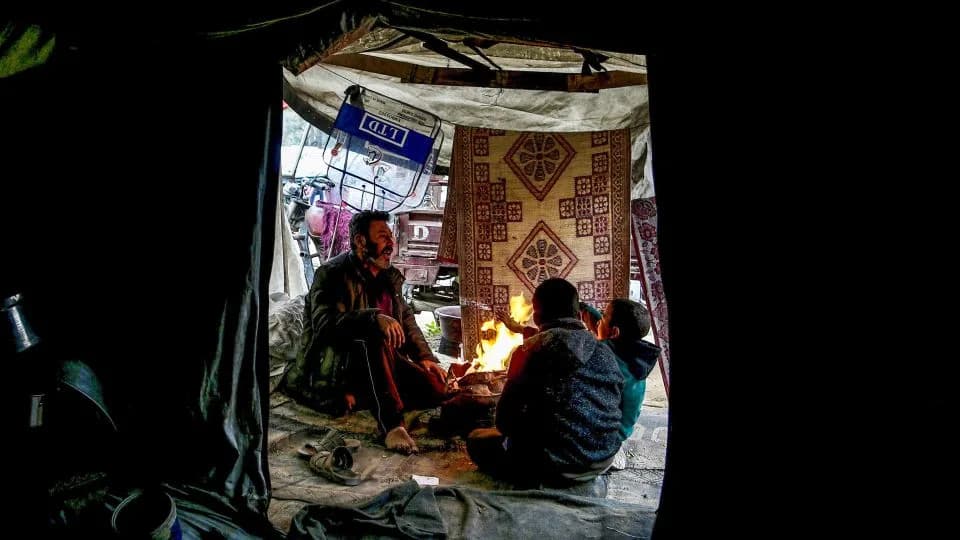
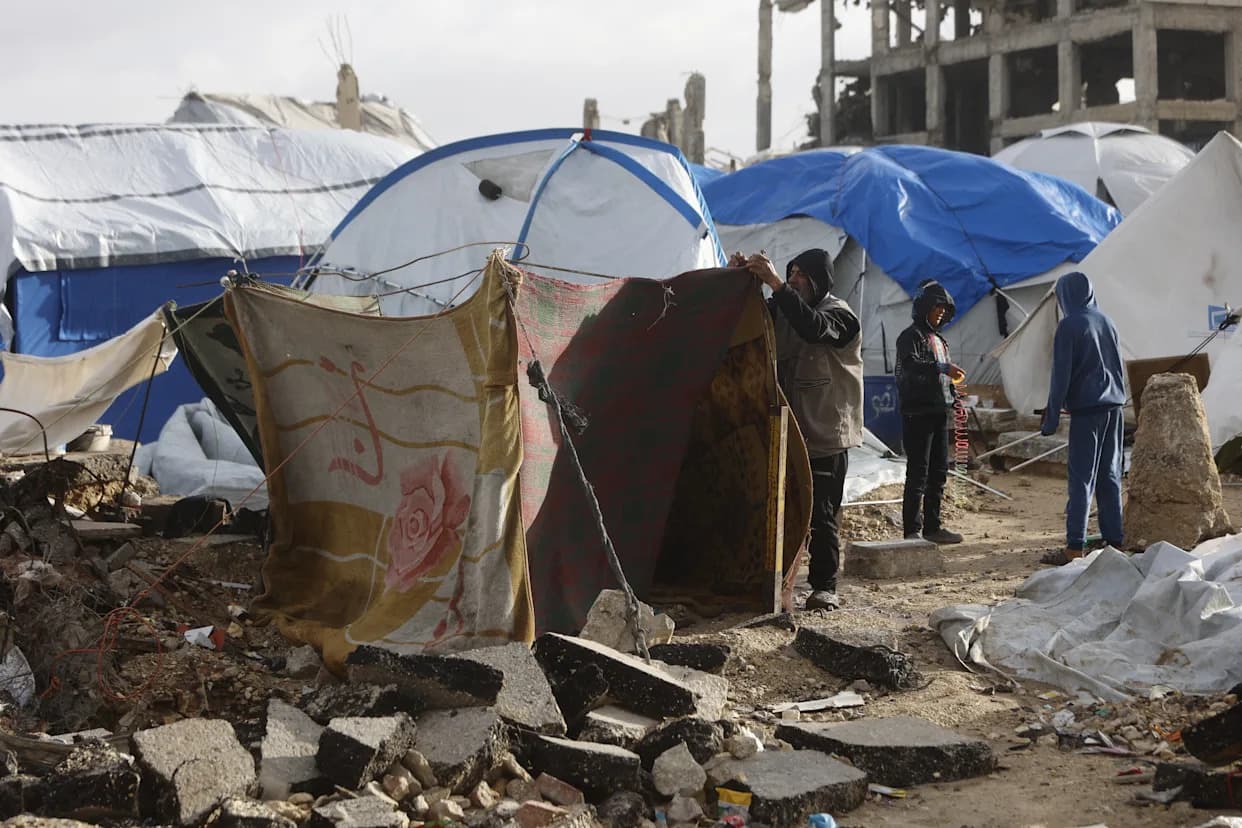
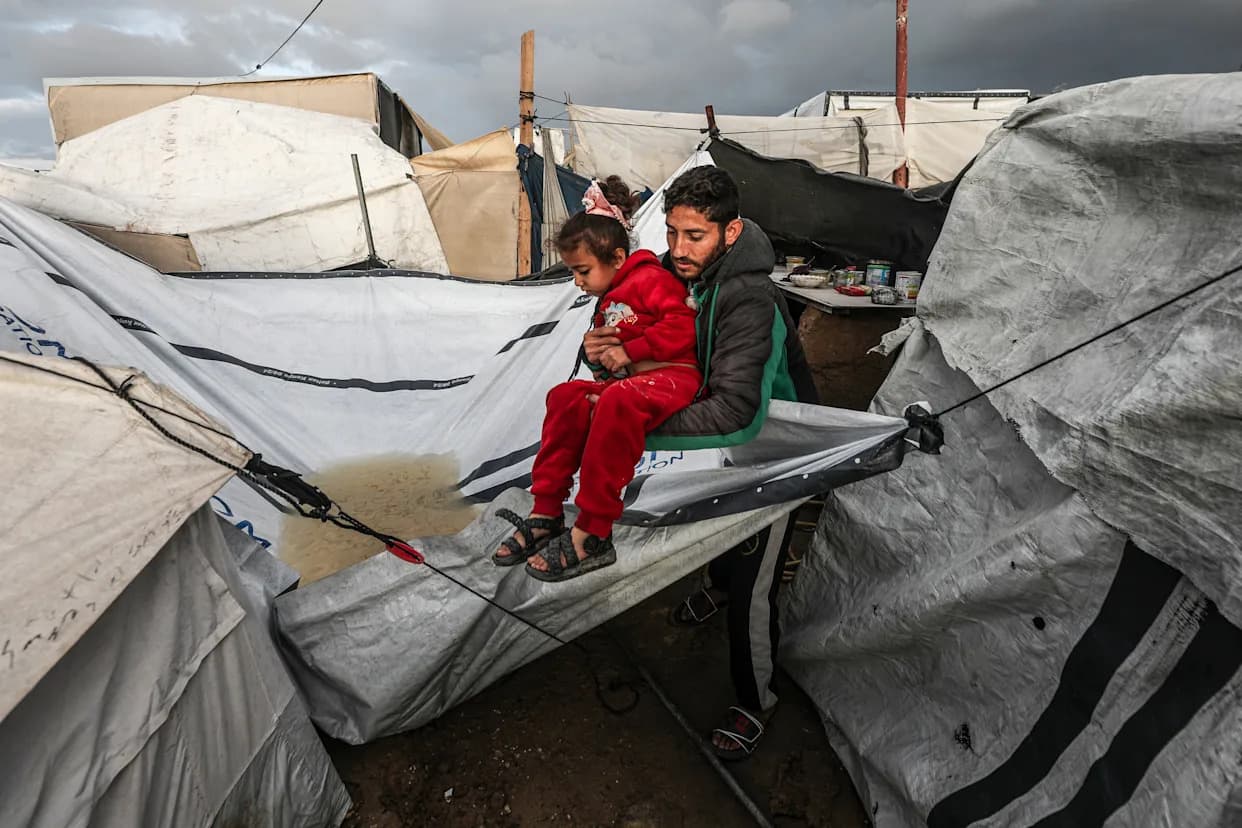
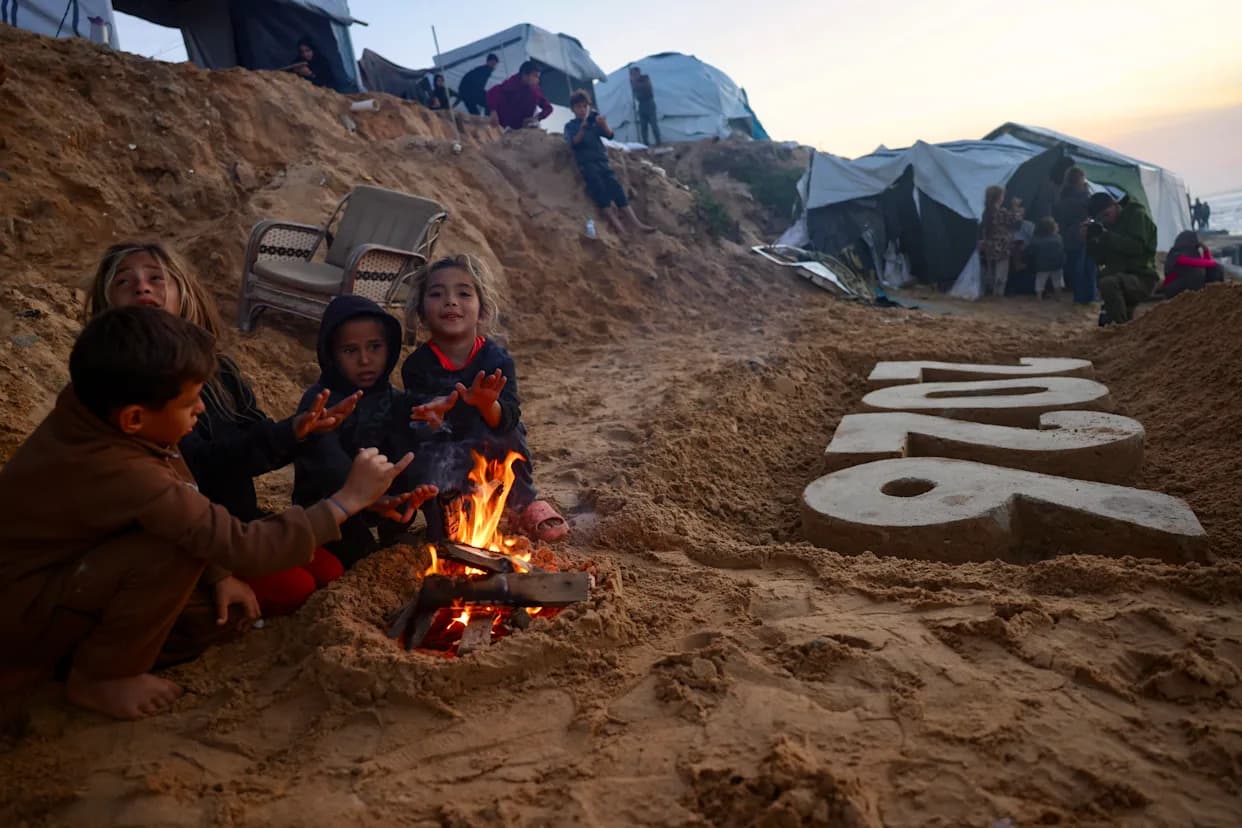
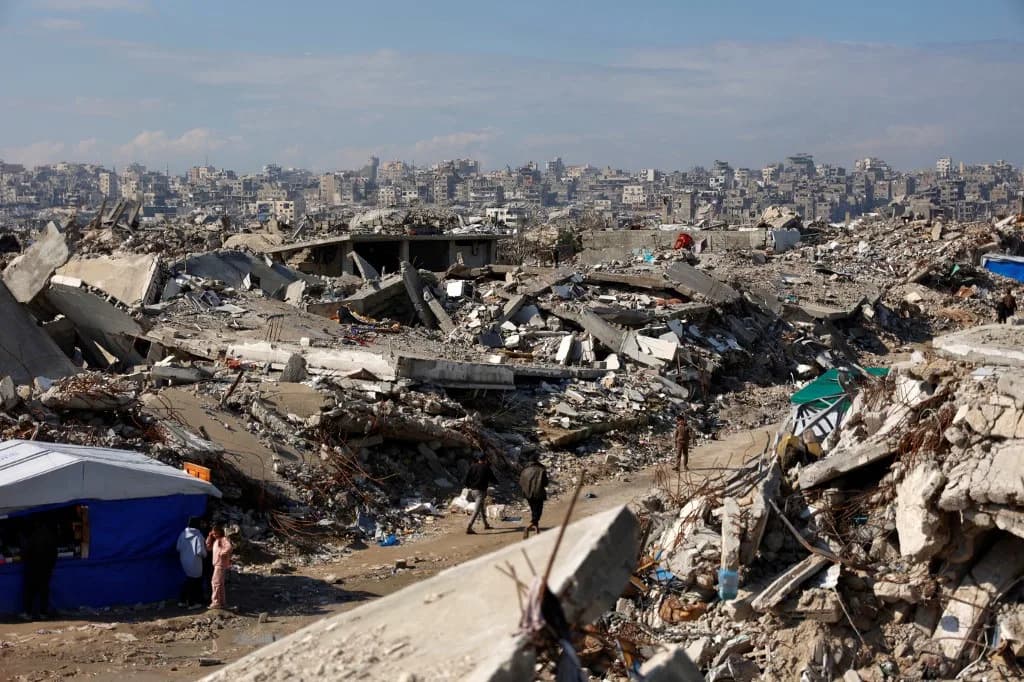
Winter storms have intensified the humanitarian emergency in Gaza, worsening conditions for hundreds of thousands of displaced people and damaging makeshift shelters across the territory. Aid agencies warn that restrictions at border crossings are preventing life-saving shelter assistance from reaching many of the most vulnerable.
Storm Damage and Casualties
In Gaza City’s Shati refugee camp, rescuers reported on Wednesday that the roof of a war-damaged family home collapsed during the storm. Six Palestinians, including two children, were pulled alive from the rubble.
Gaza’s Ministry of Health said a two-week-old infant froze to death, underscoring the acute risks that cold weather poses to babies, the elderly and others living in inadequate shelters.
UN Supplies Ready But Access Restricted
The United Nations says it has tents, blankets and other essential supplies prepared for Gaza, but that Israeli authorities continue to block or place restrictions on access through some border crossings.
Farhan Haq, a spokesperson for UN Secretary-General António Guterres, said:
"The disruption has affected approximately 30,000 children across Gaza. Urgent repairs are needed to ensure these activities can resume without delay."
The Palestinian Civil Defence called the situation "a true humanitarian catastrophe," saying the storms have damaged or destroyed shelters and personal belongings across the strip.
Diplomacy: Aid Access and Stabilisation Plans
In Washington, Qatar’s Prime Minister Sheikh Mohammed bin Abdulrahman bin Jassim Al Thani held talks with US officials about stabilizing the fragile ceasefire and accelerating the flow of humanitarian aid into Gaza. Qatari officials said discussions focused on Qatar’s mediating role, urgent humanitarian access, and advancing negotiations toward a second phase of a US-backed plan to end the conflict — a plan Qatari statements described as aiming to halt what they called a devastating campaign in Gaza.
Al Jazeera’s Alan Fisher reported that Sheikh Mohammed insisted humanitarian assistance must be allowed into Gaza "unconditionally," and that he raised the possibility of an impartial international stabilisation force to be deployed after the fighting.
US officials have discussed how such a force might operate and whether contributing countries could be announced in the coming weeks.
Violence Continues Despite Truce
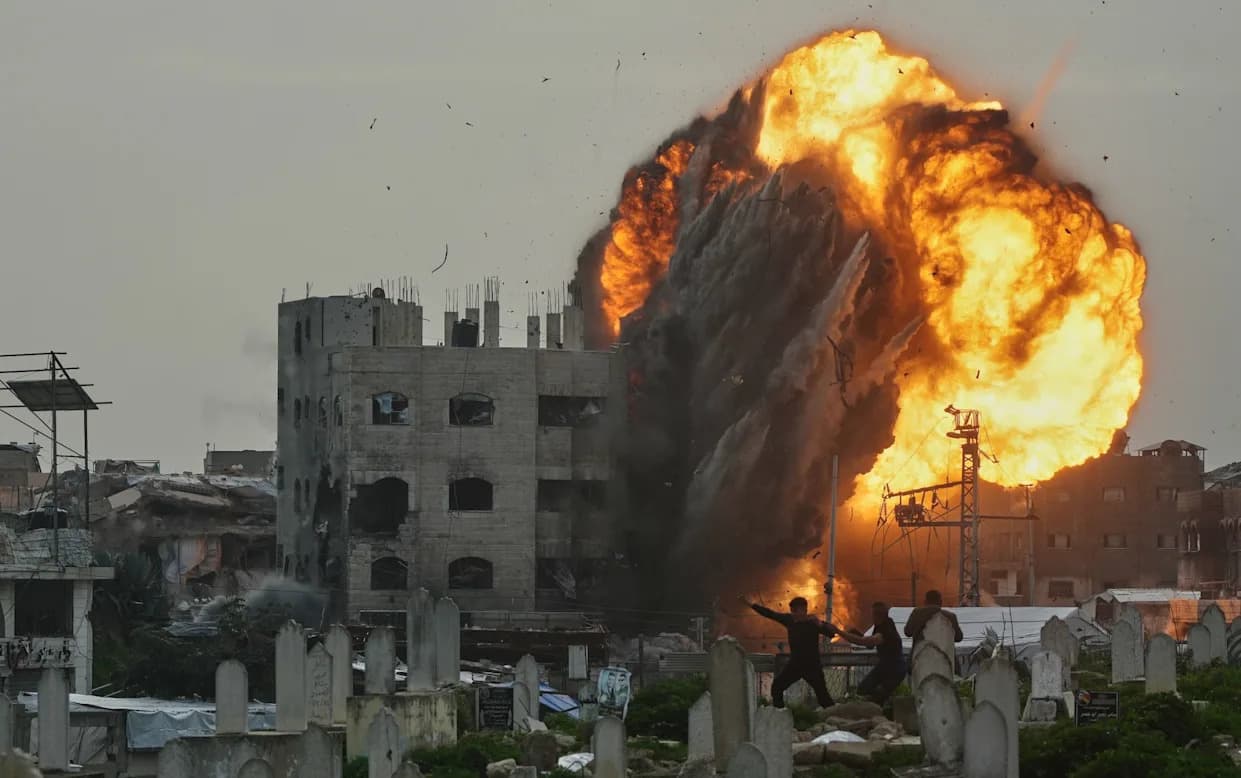
Despite the ceasefire framework, violence persisted in parts of Gaza. Medical sources said at least 11 Palestinians were wounded in Israeli strikes in central Gaza City. The Israeli army said it was investigating after a mortar shell fired near Gaza’s so-called "yellow line" "missed its target."
Al Jazeera journalists reported Israeli artillery east of Khan Younis in the south, and medical sources said two people were wounded by gunfire in the Tuffah neighbourhood of eastern Gaza City.
In the occupied West Bank, where Israeli military and settler incidents have risen recently, the Palestinian news agency Wafa reported an Israeli troops' shooting in Qalqilya that wounded a man in his 20s in the foot; he was taken to hospital and reported in stable condition.
Human Cost
Palestinian health authorities report that, since October 2023, at least 70,668 Palestinians have been killed and 171,152 wounded in attacks on Gaza. Israeli authorities reported 1,139 people were killed during the Hamas-led October 7 attack, and more than 200 people were taken captive.
The combination of ongoing hostilities, restricted aid access and severe winter weather has left many displaced people in Gaza exposed to life-threatening conditions and has increased calls from international and regional actors for unfettered humanitarian access and rapid shelter repairs.
Help us improve.