
The Southern Transitional Council (STC) says it now controls all eight southern governorates and is offering to partner with the U.S. against Iran-backed Houthis, al-Qaeda affiliates and Muslim Brotherhood-linked factions. STC representative Ahmed Atef urged expanded military, diplomatic and economic cooperation and invited American companies to develop southern oil and other sectors. UN Secretary-General António Guterres warned that the STC's eastward advances risk deeper fragmentation and regional spillover. Analysts say U.S. collaboration on counterterrorism could be possible but may complicate ties with Yemen's internationally recognized government.
STC Claims Control Of Southern Yemen's Oil Region, Seeks U.S. Partnership Against Iran-Backed Houthis

Yemen separatist forces seize key oil region, urge US to partner against Iran-backed Houthis
The Southern Transitional Council (STC), a separatist movement in southern Yemen, says its forces now control territory across all eight southern governorates and are offering to serve as Washington's frontline partner against Iran-backed Houthi forces, al-Qaeda-linked groups and factions tied to the Muslim Brotherhood.
STC Appeal to Washington
In an interview with Fox News Digital, Ahmed Atef, the STC's representative to the United States and the United Nations, urged expanded cooperation with the United States on military, diplomatic and economic fronts. "All kinds of support are welcome," Atef said, praising former President Donald Trump and saying the council looks forward to U.S. backing.
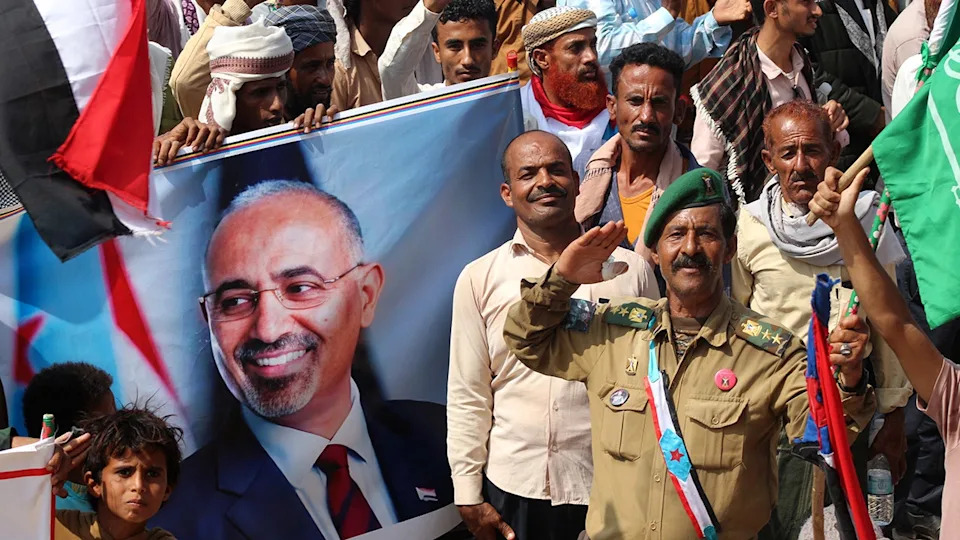
Yemenis who live along the strip between the south and north of the country and support the Southern Transitional Council (STC) hold an image of STC leader Aidarous Al-Zubaidi during a rally in Khormaksar Square, in Aden, the temporary capital of the Republic of Yemen, on Dec. 14, 2025.
Territorial Gains and External Support
The STC has emerged as the dominant actor in southern Yemen and is widely reported to receive substantial Emirati funding and military assistance. Formed in April 2017, the movement unites groups that seek to revive an independent South Yemen, the state that existed from 1967 until unification in 1990.
International Concerns and Local Tensions
United Nations Secretary-General António Guterres warned that recent STC advances in the eastern governorates of Hadramawt and al-Mahra risk a dangerous escalation. He cautioned that unilateral moves could deepen divisions, harden positions and accelerate fragmentation with possible spillovers affecting security in the Red Sea, the Gulf of Aden and the Horn of Africa.
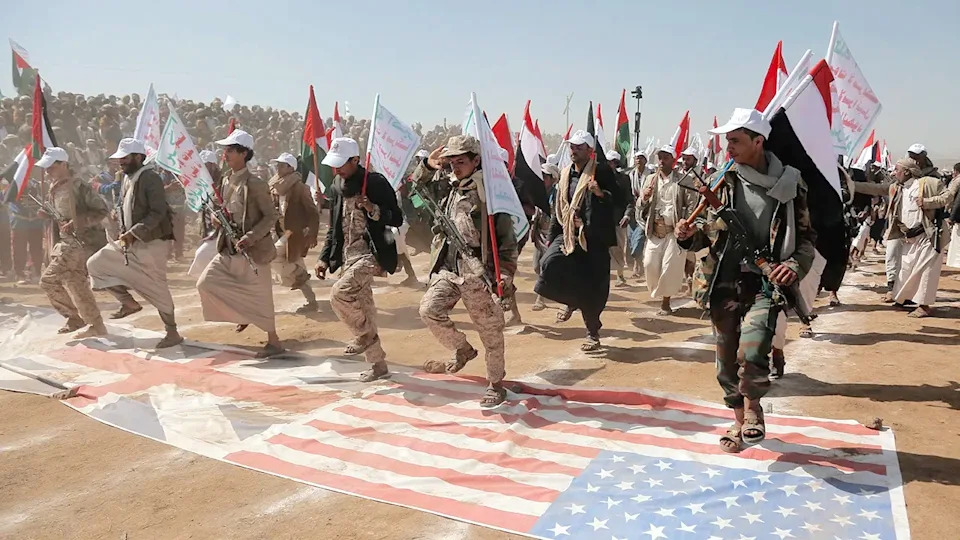
Houthi terrorists walk over British and U.S. flags at a rally in support of Palestinians in the Gaza Strip and Houthi strikes on shipping in the Red Sea and Gulf of Aden on Feb. 4, 2024, on the outskirts of Sana'a, Yemen.
The internationally recognized Yemeni government — which the United States continues to support and which is formally based in Aden — urged the STC to withdraw from territories it recently captured. Officials warned unilateral expansion could undermine the political process and destabilize a fragile balance among anti-Houthi factions.
Analyst Views and Political Complications
Bridget Toomey, a researcher at the Foundation for Defense of Democracies, noted that direct U.S. support for southern secession would conflict with the stated policy of backing Yemen's internationally recognized government. However, she added that cooperation with the STC on counterterrorism efforts and actions against the Houthis may not be incompatible with working through existing governing frameworks, since STC leaders participate in those structures.

Houthi terrorists march in support of Palestinians in the Gaza Strip and against the U.S. strikes on Yemen outside Sanaa on Jan. 22, 2024.
STC Position on the Houthis
"They have this slogan of 'death to America, death to Israel,' which is really very unacceptable,"
Atef described the Houthis as a regional destabilizing force, warning they threaten maritime traffic in the Red Sea and security across the Gulf and the Arabian Peninsula. He also accused the Houthis of receiving training and support from Iran and Hezbollah and of cooperating with outside extremist groups such as Somalia's al-Shabab.
Economic Pitch to U.S. Firms
Atef said the STC intends to open southern Yemen's oil, agriculture, fisheries and tourism sectors to American companies as a route to economic self-sufficiency. "We invite U.S. companies to come and explore the oil fields and help us in getting revenues to develop our people," he said, describing economic ties as part of the council's vision for a pro-Western, secure South Yemen.
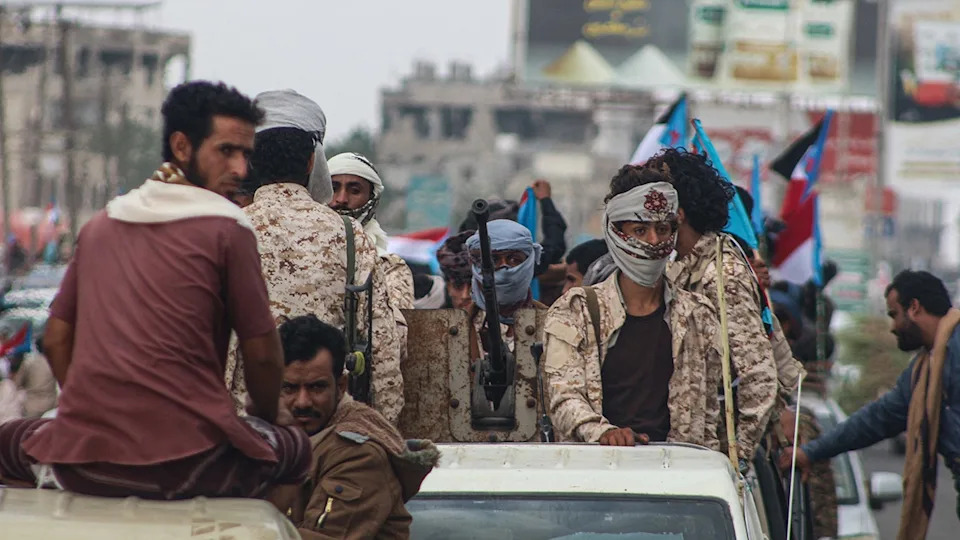
Yemenis rally in support of the Southern Transitional Council (STC), which wants to revive an independent South Yemen, in Aden, the temporary capital of the Republic of Yemen on Dec. 14, 2025.
Outlook
The STC presents itself as a potential U.S. partner on counterterrorism and regional stability, arguing that strengthened international support could help push back against Houthi influence. But analysts and Yemeni officials warn that backing the STC — especially if it advances toward formal secession — could complicate U.S. policy toward the internationally recognized government and risk further fragmentation in an already fragile country.
Reporting note: This article is based primarily on a Fox News Digital interview and includes reporting by The Associated Press.


