
Michaela Benthaus, an ESA aerospace engineer who uses a wheelchair after a 2018 spinal cord injury, will fly on Blue Origin’s NS-37 suborbital mission and become the first wheelchair user to travel to space. The trip followed a chance meeting with former SpaceX executive Hans Koenigsmann, who helped secure Blue Origin’s support and will accompany her. The roughly 10-minute New Shepard flight was delayed for checks and rescheduled for Saturday at 8:15 a.m. CT (9:15 a.m. ET). The mission highlights procedural, cultural and financial hurdles to broader inclusion even as it demonstrates achievable accommodations for disabled flyers.
From SpaceX Veteran to History-Maker: First Wheelchair User Set to Fly on Blue Origin’s NS-37

European Space Agency engineer Michi Benthaus and Hans Koenigsmann, former executive at SpaceX, are pictured during training at Blue Origin. - Blue Origin
Michaela Benthaus, an aerospace and mechatronics engineer at the European Space Agency, is set to become the first wheelchair user to travel to space aboard Blue Origin’s suborbital mission NS-37. The flight — organized after a chance conversation with former SpaceX executive Hans Koenigsmann — underscores both the technical possibilities and the remaining procedural, cultural and financial barriers to inclusive space travel.
How the Opportunity Came Together
Benthaus met Koenigsmann at an event in Munich last year and mentioned her long-held dream of going to space despite a 2018 spinal cord injury. Koenigsmann, who spent nearly 20 years at SpaceX developing avionics and later leading build and flight reliability, quietly helped arrange the flight by working with Blue Origin. He will travel on NS-37 as Benthaus’s companion and assistant.
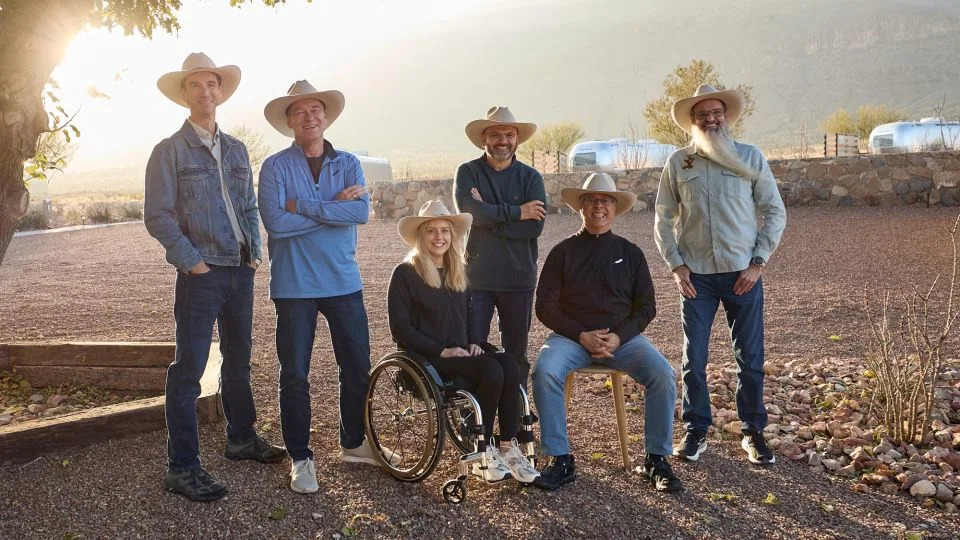
The crew of Blue Origin's NS-37 flight includes former hedge fund partner Joey Hyde, former SpaceX executive Hans Koenigsmann, European Space Agency engineer Michaela Benthaus, entrepreneur Adonis Pouroulis, business executive Neal Milch, and local space enthusiast Jason Stansell. - Blue Origin
The Flight
The crew will fly on Blue Origin’s New Shepard rocket, a roughly 10-minute suborbital mission that reaches beyond the Kármán Line (100 km / 62 miles). The mission originally targeted a Thursday launch from Blue Origin’s West Texas site near Van Horn but was postponed for additional built-in checks. The company set a new launch window for Saturday at 8:15 a.m. CT (9:15 a.m. ET).
Accommodations, Safety and On-Board Plans
Benthaus and Koenigsmann worked with Blue Origin in advance to adapt procedures and hardware. Benthaus can enter and exit the 15-foot-wide New Shepard capsule independently using a small bench and plans to use a strap to secure her legs during the brief period of weightlessness to prevent uncontrolled movement. Blue Origin typically offers three to four minutes of zero gravity at the peak of the flight. Koenigsmann will be on hand to assist with routine operations and to help in an emergency requiring a rapid egress.

Elon Musk and Hans Koenigsmann embrace during a post-flight news conference following the successful launch of SpaceX's CRS-8 mission to resupply the International Space Station in 2016. - Kim Shiflett/NASA
Significance and Broader Context
Disability advocates have long noted that microgravity offers unique mobility opportunities for people with limited mobility. While no person who uses a wheelchair has yet flown to space, several notable milestones have occurred in recent years: Hayley Arceneaux, a pediatric cancer survivor with a titanium prosthesis, spent three days in orbit on a civilian mission in 2021, and John McFall, a Paralympian with a prosthetic leg, was this year medically cleared to travel to the International Space Station.
Benthaus said she hopes her flight will dispel doubts among people with severe mobility impairments and encourage the space industry to rethink procedures for broader inclusion. She also acknowledged the limits: Blue Origin adapted full procedures for her case, and similar accommodations may not be feasible for every mission or provider. Cost remains a major barrier — commercial space tourism seats typically cost hundreds of thousands of dollars — and Blue Origin does not publicly disclose ticket prices.
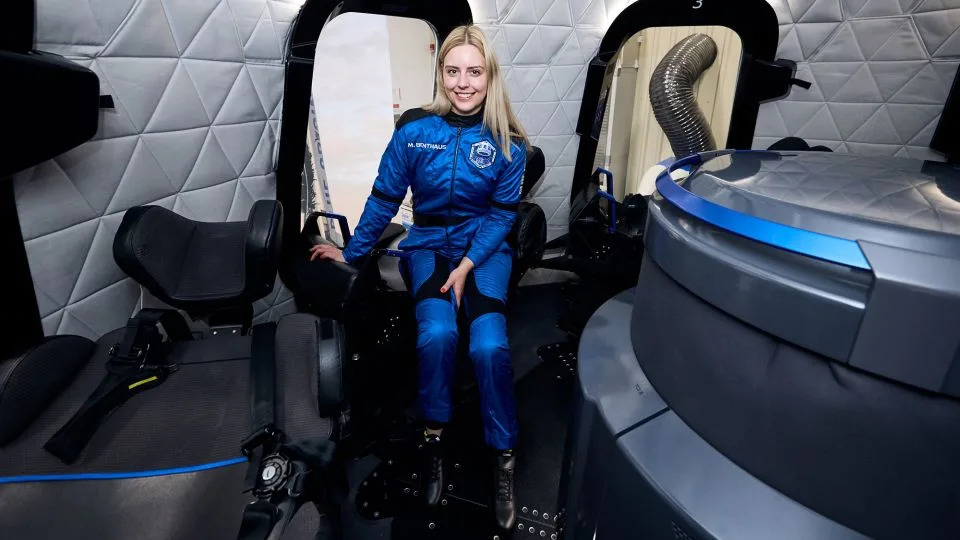
Michaela Benthaus is pictured inside a New Shepard capsule during training. - Blue Origin
Koenigsmann’s Role and Reception
Koenigsmann, a prominent former SpaceX engineer, left that company in 2021 after a dispute over an internal safety report relating to a 2020 prototype test flight. He says he still admires SpaceX and sees this mission as transcending competitive rivalries. Public reaction to Benthaus’s flight has been largely positive, though a small number of critics question adapting flights for people with disabilities. Benthaus responds that long-duration missions (e.g., to Mars) will require planning for disabilities that arise in space, and that disabled crew members can bring valuable resilience and perspective to teams.
Charitable Efforts
As part of the mission, Benthaus is raising funds for Wings for Life, a nonprofit that supports spinal cord injury research. Koenigsmann and Blue Origin are supporting the flight logistics.
“Blue Origin Is Super Well Prepared,” Benthaus said after participating in advance planning and testing at the company’s Texas facilities.
This mission — if successful — would be both a symbolic and practical step toward more inclusive space access, while also highlighting how much work remains to make spaceflight broadly accessible.


