Theaster Gates will create a two-part, aluminum-printed frieze for the Obama Presidential Center that celebrates Black life, with special homage to Black women. Sourced from the Johnson Publishing Company archives (including images from Ebony and Jet) and portraits by Howard Simmons, the work will hang in the Forum Building’s Hadiya Pendleton atrium and be visible from Stony Island Avenue. The commission furthers Gates’s role as a steward of cultural collections and joins major sitewide works by artists such as Nick Cave, Jenny Holzer and Julie Mehretu.
Theaster Gates to Install Monumental Frieze Honoring Black Life and Women at Obama Presidential Center

Studies for Theaster Gates’ installation, shown at his studio in Chicago. Gates will create a massive collage of images of Black life and beauty, printed on aluminum, for the Obama Presidential Center. - Courtesy Theaster Gates Studio
When the Obama Presidential Center opens next spring on Chicago’s South Side, visitors will be greeted by a sweeping array of large-scale works by leading contemporary artists. Among the newest commissions, Chicago-born artist Theaster Gates will install a two-part monumental frieze celebrating Black life — with a particular homage to Black women — inside the center’s Forum Building.
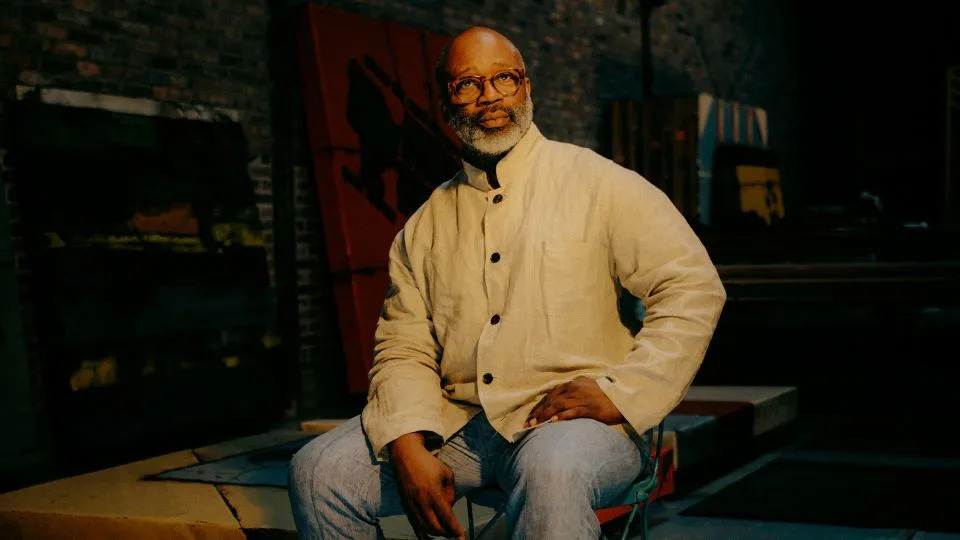
Theaster Gates in his studio. - Akilah Townsend/Courtesy The Obama Foundation
Archive-Based Portraits Recast at Monumental Scale
The elongated frieze, printed on aluminum alloy, draws from two vast photographic archives of vintage editorial images from Ebony and Jet magazines and includes portraits by pioneering photographer Howard Simmons. The work will hang in the Forum Building’s atrium, named for Hadiya Pendleton, the teenage majorette who marched in President Obama’s second inaugural parade and was killed by gun violence days later in 2013. It will also be visible from Stony Island Avenue, the South Side thoroughfare that is home to Gates’s Stony Island Arts Bank and has a deep cultural history.
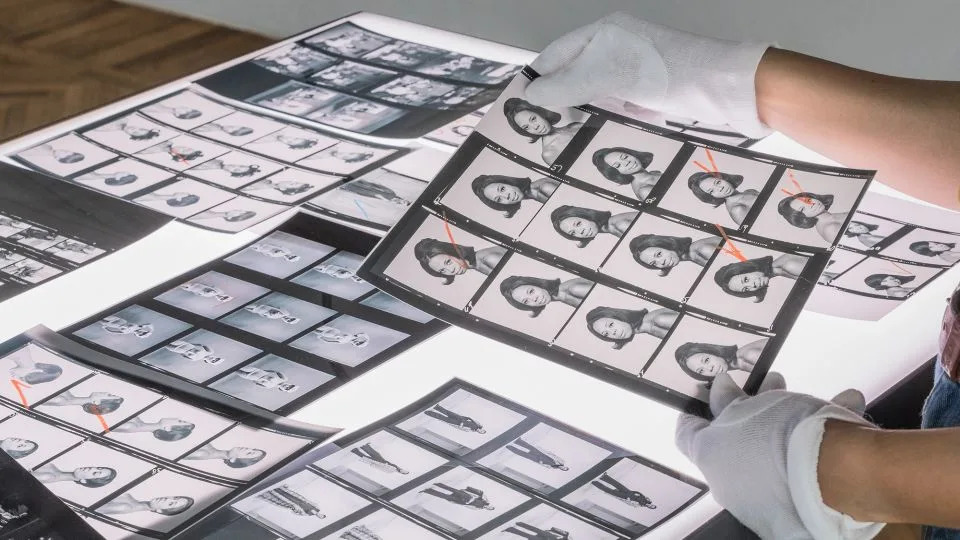
Contact sheets from “The Black Image Corporation," a project by Theaster Gates in 2018. - Delfino Sisto Legnani/Marco; Cappelletti/Courtesy Theaster Gates Studio/Fondazione Prada
Stewardship and Cultural Memory
For nearly a decade Gates has stewarded the Johnson Publishing Company’s photographic collections and periodicals — the assets of the Black-owned media company behind Ebony and Jet, which sold off its holdings in 2016. Gates has repeatedly mined this archive in his practice; for the center he selected roughly 20 images from the Johnson holdings alongside portraits by Howard Simmons. He describes the project as “something old and something new,” recontextualizing archival photographs through shifts in scale and material to underscore their ongoing cultural power.
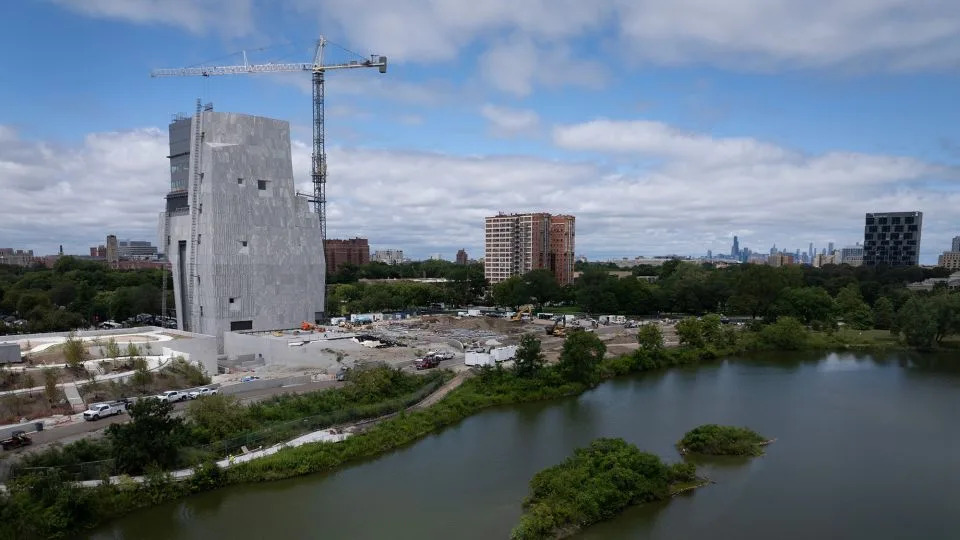
The Obama Presidential Center is a near 20-acre complex that will house a museum, library, programming spaces, gardens and playground when completed next spring. - Scott Olson/Getty Images
“These images are not just historic artifacts; they are the foundational images of Black life,” Gates says, framing the commission as part of his broader work preserving and amplifying Black visual culture.
Sitewide Art Program and Other Commissions
Gates’s frieze joins a distinguished roster of commissioned works across the nearly 20-acre campus. The center previously announced contributions from artists including Nick Cave, Jenny Holzer, Kiki Smith and Julie Mehretu — the latter creating her first work in glass: an 83-foot-tall window composed of 35 painted abstract panels. Other projects include:
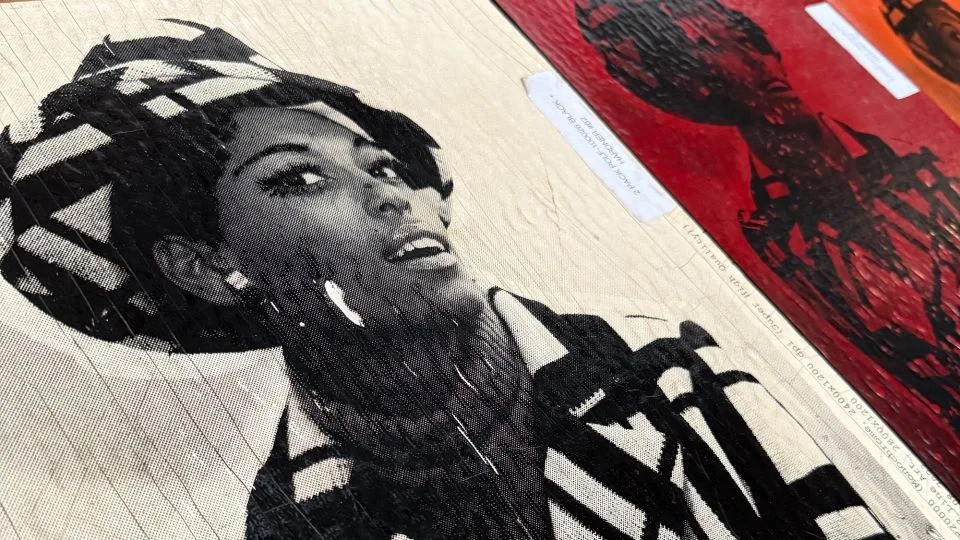
Tar paper-based studies for Gates’ installation, seen at his studio in Chicago. - Courtesy Theaster Gates Studio
- Nick Cave and Marie Watt’s large multimedia installation in the museum lobby, combining textile and sound and drawing on Black and Indigenous traditions;
- Jenny Holzer’s skyroom work using FBI files to honor Freedom Riders;
- Nekisha Durrett’s hand-painted ceramic tiles reimagining Harriet Tubman’s shawl in the Harriet Tubman courtyard;
- Aliza Nisenbaum’s mural in the library reading room, centering the public library as a site for storytelling and shared histories.
Center leaders say art was central to the Obamas’ vision for the site. Louise Bernard, director of the Obama Presidential Center museum, emphasizes that the art program is meant to convene visitors and spark civic imagination: “Democracy is always a work in progress,” she said. “We ask all visitors who come to the center to see themselves as changemakers.”
Gates’s Broader Archival Practice
The commission continues Gates’s work as a custodian of cultural collections. Beyond the Johnson archive, his stewardship includes 60,000 glass lantern slides documenting art and architectural history from the University of Chicago; the personal vinyl archive of house-music pioneer Frankie Knuckles; and roughly 4,000 items of “negrobilia” that were collected to remove derogatory objects from public circulation.
“Being active in archives is essentially a way of being an informal historian,” Gates says. “We need to keep certain truths about history alive so those histories don’t succumb to the falsehoods being generated today.”
Theaster Gates’s frieze at the Obama Presidential Center will be both a public artwork and an act of cultural preservation: a large-scale, visible celebration of Black life, memory and civic presence on Chicago’s South Side.
Help us improve.