
Archaeologists near Grenoble uncovered the foundations of a 16th-century public gallows and 10 nearby burial pits during 2024 excavations, INRAP announced Dec. 12. Documentary records from 1544–1547 describe an 8‑meter square gibbet with eight pillars that could display up to eight condemned people at once. The pits contained 32 skeletons, mostly men; archives likely identify two victims linked to 1570s Huguenot unrest. Some remains show evidence of post‑mortem mutilation, and the gallows appears to have fallen out of use in the early 17th century.
16th-Century Gallows and Mass Graves Unearthed Near Grenoble Reveal Harsh Public Justice

The Grenoble gallows dead were buried together in pits. | Credit: Anne-Gaëlle Corbara/INRAP
Archaeologists working just outside Grenoble have uncovered the foundations of a 16th-century public gallows and nearby mass burial pits during 2024 excavations, the French National Institute for Preventive Archaeological Research (INRAP) announced on Dec. 12.
What Was Found
The team uncovered a square brick foundation and 10 burial pits dating to the 1500s. Documentary research tied the remains to construction records from 1544–1547 describing a timber-framed execution structure at the site.
Gallows Structure
According to the period records, the gallows measured roughly 27 feet (8 meters) on each side and was supported by eight stone pillars about 16.5 feet (5 meters) high. Crossbeams projecting from the pillars formed a gibbet — a hangman-style frame designed both to execute and publicly display condemned people. Based on the layout and dimensions, the structure could have held and displayed up to eight people simultaneously.
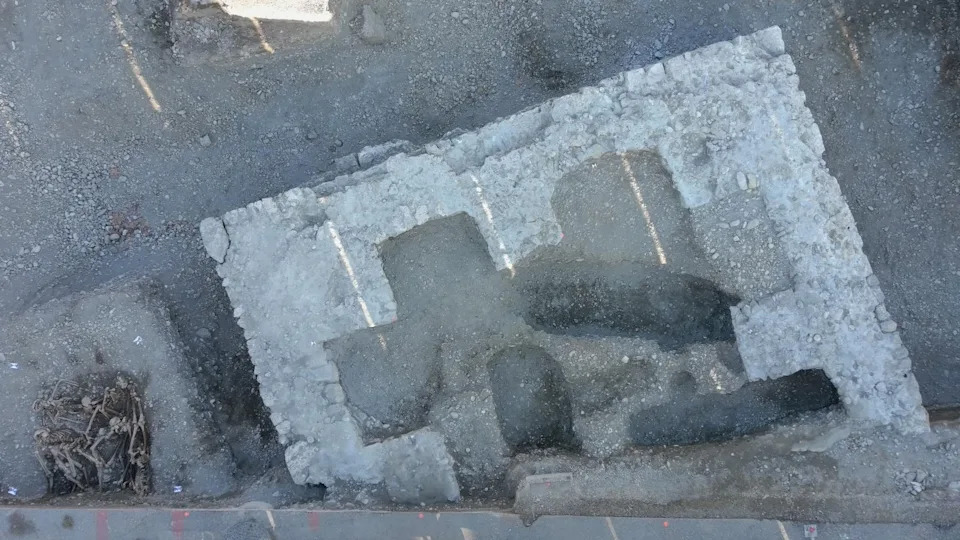
An aerial view of the partially excavated gallows structure, with an excavated pit of human skeletons in the bottom left. | Credit: Nordine Saadi/INRAP
Burials and Human Remains
Excavation of the burial pits produced the remains of 32 individuals, the majority of whom were men. INRAP researchers found evidence that some of the bodies had been deliberately mistreated after death: several skeletons showed signs of dismemberment and decapitation. Archive research identified two likely victims associated with the site: Benoît Croyet, a Protestant accused of taking part in an attack on Grenoble in 1573, and Charles du Puy Montbrun, a Huguenot leader in Dauphiné executed in 1575.
"Burying a condemned person in this way was a means of prolonging the sentence pronounced during their lifetime into death; the individuals found during the excavations were therefore deliberately denied burial," INRAP said in a translated statement.
Historical Context and Significance
The finds offer new insight into how early modern justice was carried out and displayed in public. The presence of a large, purpose-built gallows alongside mass graves illustrates both the judicial practices of the period and the use of public execution as a deterrent and spectacle. Evidence suggests the Grenoble gallows fell out of use in the early 17th century as political and religious norms changed and the formal practices of capital punishment evolved.
Why it matters: The combination of archaeological remains and contemporary records creates a rare, well-documented link between material evidence and the legal and social history of 16th-century France.


