
Archaeologists uncovered about 36 macaque burials at Berenike, a Red Sea port, dated to the 1st–2nd centuries A.D. Many graves included collars, shells, extra food and small companion animals, suggesting the monkeys were kept as pets by Roman officers. The remains point to organized imports across the Indian Ocean—highlighting Roman contacts with India—and show evidence of malnutrition and rudimentary medical care among the animals.
Roman Officers’ Cherished Pets: Dozens of Macaque Burials Found at Berenike

Credit: Shantanukaps / Wikimedia Commons.
Nearly two millennia ago at the Red Sea port of Berenike (in present-day Egypt), high-ranking Roman officers appear to have kept and deeply cherished pet monkeys. Archaeologists uncovered roughly three dozen burials dominated by Indian macaques (rhesus macaques) dated to the first and second centuries A.D., many interred with personal items that suggest close bonds between humans and primates.
What Was Found
Excavations at the site revealed about 36 macaque graves. Many of these burials included collars, shiny shells, extra food offerings and, in a few cases, tiny companion animals—grave goods that point to pets rather than livestock or trade animals. By contrast, cats and dogs buried at the same cemetery rarely received such treatment: only about 3% of cat and dog graves contained personal items compared with roughly 40% of the monkey burials.
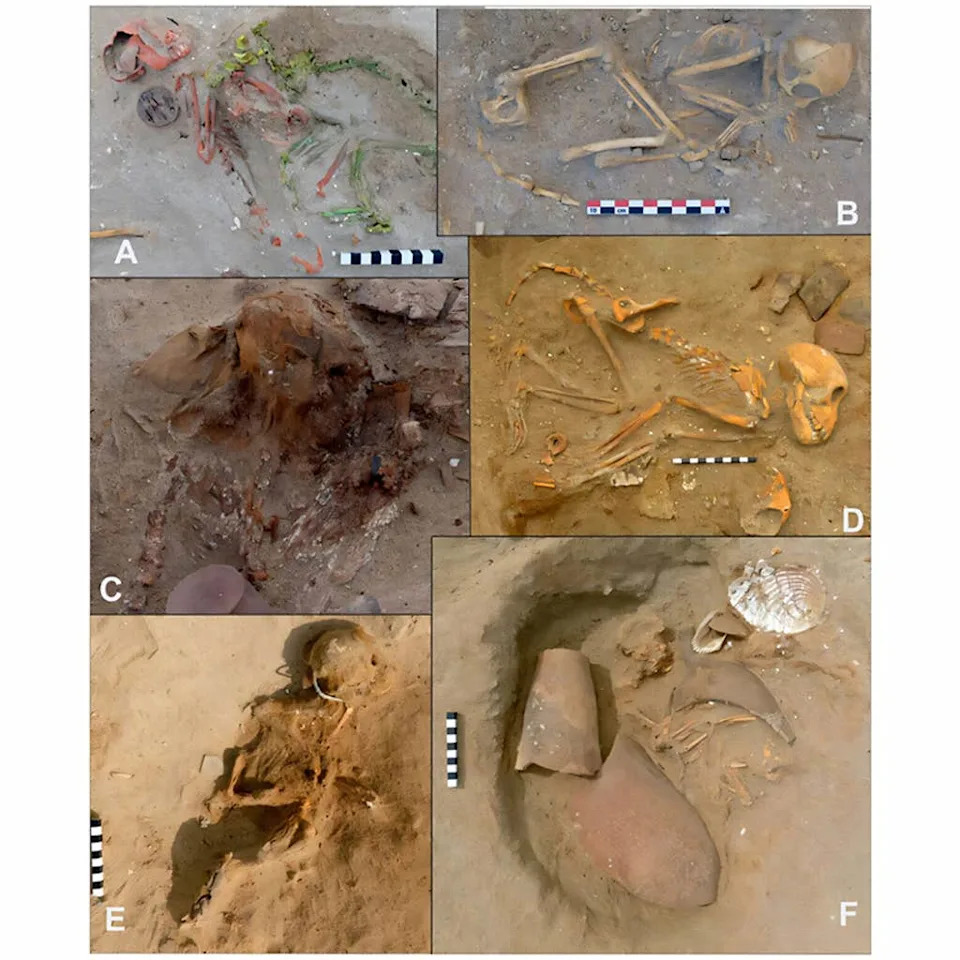
MACAQUE MEMORIALS:The monkeys found buried at Berenike seem to have originated from India, unlike other Roman primate pets.Photos by Osypiński, P. & Osypińska, M.; from Osypińska, M.et al. Journal of Roman Archaeology(2025).
Life, Health and Care
Although the monkeys received conspicuous burials, skeletal evidence suggests some endured difficult lives. Two macaque skulls show signs consistent with malnutrition, likely from diets lacking fresh fruit and vegetables—foods scarce in isolated Berenike. Many animals were probably fed seafood, mirroring local human diets. Archaeologists also found signs of rudimentary medical care: one animal’s feet were coated with tree resin, possibly applied as a poultice or topical treatment.
Trade, Movement and Historical Significance
Unlike previously documented Roman-era primates that originated in Africa, the Berenike macaques indicate imports from across the Indian Ocean. Researchers describe this as the first clearly documented instance of organized overseas movement of non-human primates in the Roman world and see it as evidence of intensified Roman contacts with India during the Early Imperial period. The animals were likely owned by officers from legions operating in Africa and the Near East—elite companions that may have helped spark an enduring exotic-animal trend among Rome’s upper classes.
Scholarly Context: The assemblage has been described in the Journal of Roman Archaeology as a uniquely rich source of zooarchaeological and archaeological evidence for pet primates in antiquity.
Conclusion
These findings illuminate not only ancient trade routes and Roman military presence in the Red Sea region, but also Roman social attitudes toward animals: the macaques were valued for social and psychological qualities, at times elevated to a near “semi-human” status in burial practice and ritual.


