
Archaeologists report what may be the oldest direct evidence of deliberate fire-making: a repeatedly used hearth at Barnham in Suffolk dated to about 415,000 years ago. Finds include heated clay, heat-shattered flint tools and iron pyrite — a mineral used to create sparks — suggesting intentional fire production likely by Neanderthals. Geochemical tests show temperatures exceeding 700°C (1,290°F) and repeated burning in the same location, pushing back the earliest confirmed fire-making far earlier than previously known.
Earliest Direct Evidence of Fire-Making Found in England — Neanderthal Hearth at Barnham Dated to ~415,000 Years Ago
11:12 PM, 12/10/2025

An artist's impression shows sparks from flint and pyrite, in this image released on December 10, 2025. Craig Williams, The Trustees of the British Museum/Handout via REUTERS THIS IMAGE HAS BEEN SUPPLIED BY A THIRD PARTY. NO RESALES. NO ARCHIVES
Scientists have uncovered what appears to be the earliest direct evidence of deliberate fire-making by prehistoric humans at a former clay pit near Barnham in Suffolk, England. The team identified a concentrated patch of heated clay, heat-shattered flint handaxes and two pieces of iron pyrite — a spark-producing mineral — that together point to a repeatedly used hearth dated to roughly 415,000 years ago.
Key Finds
The feature lies beside what would have been a prehistoric watering hole where groups camped. Excavators recovered:
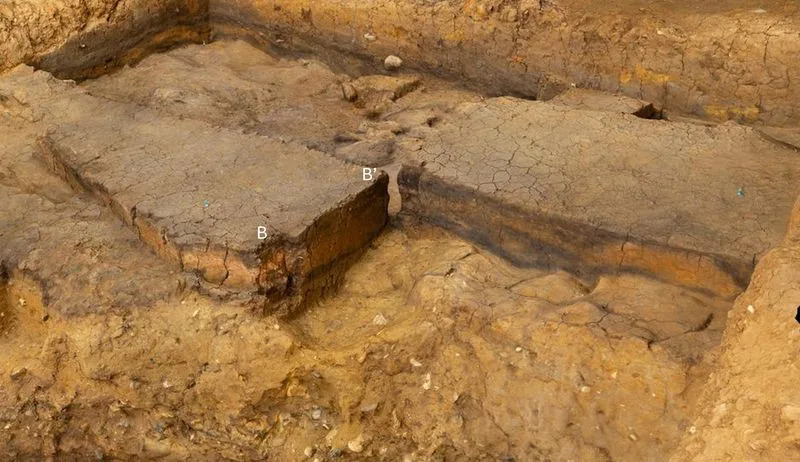
Excavation of the ancient campfire at an archaeological site near the village of Barnham in England, dating to around 400,000 years ago, removing diagonally opposed quadrants. The reddened sediment between band B? is heated clay, in this handout image released on December 10, 2025. Jordan Mansfield, Pathways to Ancient Britain Project/Handout via REUTERS THIS IMAGE HAS BEEN SUPPLIED BY A THIRD PARTY. NO RESALES. NO ARCHIVES
- Heated and fired clay consistent with prolonged, high-temperature exposure;
- Flint tools showing heat-shattering and use-wear;
- Two pieces of iron pyrite (a known spark-producing material) found in context with the hearth;
- Faunal remains and cut marks indicating regular human activity at the site.
Who Made the Fire?
The research team, led by Nick Ashton (Curator of Palaeolithic Collections at the British Museum), argues that the most likely makers were early Neanderthals. While no human bones were recovered at Barnham, skull fragments with Neanderthal-like features were found in the mid-20th century at Swanscombe (less than 100 miles to the south) and closely match fossils from Sima de los Huesos in Spain. As Chris Stringer, a co-author of the study, notes, these regional connections make Neanderthal authorship probable.
"We think humans brought pyrite to the site with the intention of making fire. And this has huge implications pushing back the earliest fire-making," said Nick Ashton.
Broader Significance
Deliberate fire-making is a major milestone in human evolution. Controlled fire enabled cooking, which reduces pathogens and toxins and makes foods easier to digest, potentially reallocating energy to support larger brains. Fire also provided warmth, protection and a social focus—nighttime gatherings around a campfire may have promoted storytelling, social bonding and the development of language and cultural practices.
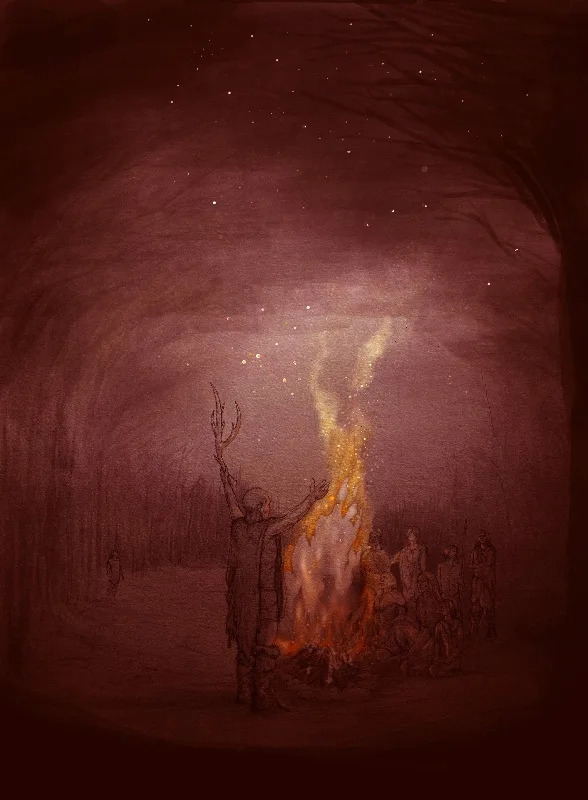
An artist’s impression shows a fire burning at an archaeological site near the village of Barnham in England around 400,000 years ago, in this image released on December 10, 2025. Craig Williams, The Trustees of the British Museum/Handout via REUTERS THIS IMAGE HAS BEEN SUPPLIED BY A THIRD PARTY. NO RESALES. NO ARCHIVES
How the Team Confirmed Intentional Fire
Over four years the researchers applied multiple lines of evidence to rule out natural wildfire or other accidental causes. Geochemical analyses indicate temperatures exceeding 700°C (1,290°F) and signs of repeated burning in the same spot. The presence of pyrite, heat-altered artifacts in tight spatial association and consistent stratigraphic context together support the interpretation of deliberate and repeated fire-making at Barnham.
Context With Earlier Records
Previous evidence for humans using naturally occurring fires (for example from wildfires or lightning) stretches back more than a million years in Africa, but those records lacked clear signs of intentional fire production. Until now, the earliest widely accepted evidence for deliberate fire-making dated to roughly 50,000 years ago at a northern French site.
The Barnham findings, published in Nature, push back the earliest direct evidence of deliberate fire-making by hundreds of thousands of years and show that the use and production of fire was within the behavioral repertoire of Neanderthals and possibly other contemporaneous large-brained human relatives.
Source: Research led by Nick Ashton and colleagues, published in Nature. Reporting and analysis by the study team and associated paleoanthropologists including Rob Davis and Chris Stringer.
Similar Articles

Mesolithic Flints and a 12th‑Century Hall Found Beneath Parliament — New Finds Reframe Central London’s Early History
A three‑year archaeological dig beneath the Palace of Westminster has uncovered artefacts dating from the Mesolithic (around ...

Neanderthals at Belgium’s Goyet Caves Practiced Selective Cannibalism, New Study Finds
New multidisciplinary analyses of remains from Belgium’s Goyet Caves indicate that some Neanderthals practiced selective cann...

Amateur Dig Near Wigan Uncovers Bronze Age Burial — May Be Cut Into a Much Older Henge
The Wigan Archaeological Society uncovered a 4,500‑year‑old Bronze Age cremation at a farm in Aspull and found a large oval r...

16 Massive Pits Near Stonehenge Confirmed as Neolithic — A 1.25‑Mile Monumental Circle
Researchers have confirmed that 16 large pits around Durrington Walls, just north of Stonehenge, were intentionally dug durin...

Study Suggests Neanderthals Were Selectively Targeted for Cannibalism at Goyet Cave
A Scientific Reports study reexamines Neanderthal remains from the Troisième caverne of Goyet (Belgium) and finds evidence th...

12,000-Year-Old Figurine Near the Sea of Galilee Reveals Earliest Human–Animal Connection
The NEG II excavation near the Sea of Galilee revealed a 3.7 cm clay figurine dated to about 12,000 years ago that appears to...

Did Neanderthals Have Religion? What the Archaeological Evidence Suggests
Neanderthal sites show burials, arranged skulls, rock art, engraved bones, feather use and modified talons — behaviors that s...

Massive Neolithic Pit Circle Near Stonehenge Identified as Deliberate Monument
A new study in Internet Archaeology argues that a ring of about 20 pits two miles northeast of Stonehenge was deliberately co...

Neanderthals May Have Butchered Neighboring Groups — Evidence Shows They Targeted Children and Small Females
Analyses of remains from Troisième Caverne in Belgium indicate that more than six individuals—including multiple adolescent/a...

Ancient humans processed plants long before farming — study debunks the 'Paleolithic meat‑eater' myth
The Journal of Archaeological Research paper challenges the myth that prehistoric humans were chiefly meat eaters by document...

Machine Learning Detects Earth's Oldest Chemical Traces of Life in 3.33‑Billion‑Year‑Old Rock
Key finding: Fragmentary carbon from the Josefsdal Chert in South Africa (≈3.33 billion years old) yields the most confident ...

12,000‑Year‑Old Figurine of Woman Embracing a Goose Reveals Early Human–Animal Spiritual Bond
The 12,000‑year‑old clay figurine, recovered from a Natufian village in northern Israel, depicts a woman embracing a goose an...

6,000 Years Beneath Westminster: Stone‑Age Tools, Roman Relic and Medieval Walls Unearthed
Archaeological investigations at the Palace of Westminster have revealed artefacts spanning about 6,000 years, from Stone Age...

Giant Neolithic Pits Around Stonehenge Confirmed As Human-Made — New Research Reveals Purposeful Layout
New research published in the Internet Archaeology Journal confirms that a ring of about 20 giant pits near Stonehenge — the ...

12,000‑Year‑Old Clay Figurine of a Woman Carrying a Goose — Likely the World’s Oldest Human–Animal Sculpture
The discovery of a small, 12,000‑year‑old clay figurine at the Late Natufian village of Nahal Ein Gev II in Israel shows a cr...