Admiral Says All 11 Aboard Suspected Drug Boat Were On U.S. Target List, Lawmakers Told
Defense Secretary Pete Hegseth instructed U.S. forces on Sept. 2 to kill all 11 people aboard a suspected drug-smuggling vessel in the Caribbean Sea because U.S. intelligence and military officials had placed them on an internal list of narco-terrorist targets, the admiral who led the operation told members of Congress during private briefings, according to multiple U.S. officials and a participant familiar with the sessions.
Approved Target List and The Order
The internal list identified people who could be lawfully targeted, including with lethal force if circumstances allowed. Adm. Frank “Mitch” Bradley, who oversaw the Sept. 2 operation, told lawmakers that intelligence sources had confirmed the identities of the 11 people on the small vessel and validated them as authorized targets. After that validation, Bradley said, the military launched airstrikes as part of the administration’s campaign against vessels it alleges are smuggling narcotics.
Strikes, Survivors and Follow-Up Actions
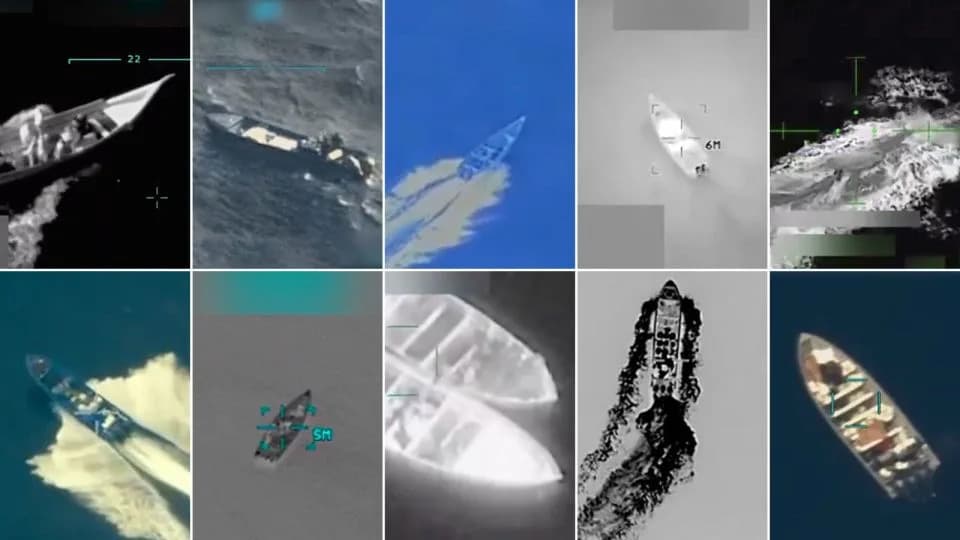
Bradley described the first strike as using a GBU-69 precision-guided munition set to air-burst, which he said killed nine people, capsized the boat and damaged its stern and motor. He said a separate section of the vessel broke away and caught fire but that a major section remained intact and buoyant.
According to Bradley’s account to lawmakers, he observed two survivors amid the wreckage for more than 30 minutes. They appeared uninjured, removed their shirts to check one another and later stood on a portion of the capsized hull. Overhead surveillance reportedly saw the survivors waving their arms but could not determine whether the gestures were directed at aircraft.
Bradley told lawmakers the second strike killed the two survivors. Because the second strike did not fully sink the vessel, he said he authorized third and fourth strikes to complete the mission — specifically to destroy the boat and its contraband.
Rationale and Legal Review
Bradley explained that his decision to order follow-up strikes was based on several factors: the narcotics reportedly remained on board after the initial explosion (bundles of cocaine were observed and believed to be strapped down), the individuals had not surrendered, and the people remained on the approved target list. Bradley characterized the cocaine as the operational threat — effectively treating the contraband as the weapon endangering Americans.
An administration official said Bradley acted in compliance with the law and that a uniformed judge advocate general (JAG) counseled throughout the operation. White House press secretary Karoline Leavitt said Hegseth authorized the strikes and that Bradley acted within his authority.
Questions From Lawmakers And Unanswered Details
Members of Congress have pressed for more detail about the chain of command, the intelligence that placed the 11 people on an approved lethal-target list, and whether the follow-up strikes violated international law. In private briefings, lawmakers asked whether Hegseth had given a "no quarter" order — an illegal wartime directive to show no mercy — and Bradley said he received no such unlawful order and would not have followed one.
Officials have not publicly released evidence to substantiate the administration’s allegations about the vessels or the people aboard. The Pentagon did not provide comment for this account; U.S. Special Operations Command declined to comment.
Wider Campaign And Intelligence On Destination
The Pentagon says 22 strikes on suspected drug-smuggling vessels have killed 86 people — 11 in the Caribbean and 11 in the eastern Pacific. Bradley acknowledged intelligence did not conclude the narcotics were destined for the United States. Instead, he said the small vessel was tracked heading south toward Suriname and that reporting indicated the drugs' likely ultimate markets were in Europe or Africa.
Bradley also said intelligence detected a larger vessel nearby believed to be scheduled to rendezvous with the damaged boat to transfer the narcotics. That larger vessel was not on his approved target list, and he said he lacked the authority to strike it because U.S. intelligence had not confirmed the identities of those on board.
Hegseth: "This is called the fog of war," the secretary told colleagues while defending the second strike during a recent Cabinet meeting, according to officials. Hegseth said he observed the operation but "did not personally see survivors."
Oversight And Legal Scrutiny
Lawmakers say the Sept. 2 strikes and the broader interdiction campaign raise legal, ethical and oversight questions that merit further review. Congress is seeking additional details about the legal basis for treating everyone on an approved target list as lethal targets, the intelligence supporting those listings, and the steps taken to minimize civilian harm.
Note: This account is a reconstruction based on interviews with two U.S. officials and one person familiar with the congressional briefings.