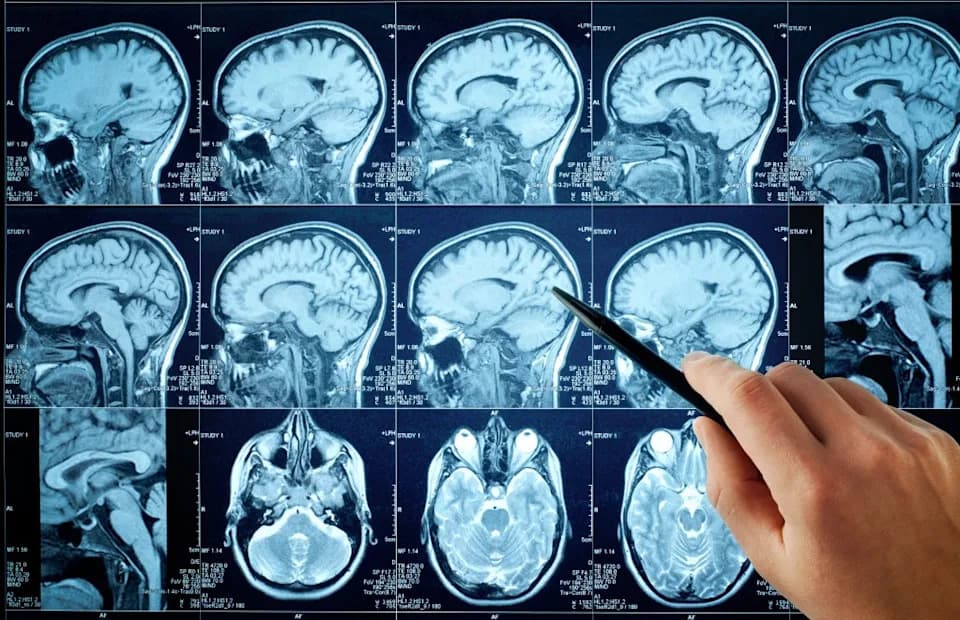
The University of Cambridge-led MRI study of 3,802 neurotypical participants identifies five functional brain epochs with turning points near ages 9, 32, 66 and 83. The analysis shows an extended adolescent brain phase that continues until about 32, when the brain most strongly shifts into a long adult epoch that remains relatively stable until around 66. After that, connectivity declines progressively during early and late aging. The study has limitations, including fewer oldest participants and a generally healthier sample.
New Study Finds 'Adulthood' Brain Stage Begins Around Age 32 — What That Means for Your Health

A large MRI study led by researchers at the University of Cambridge identifies five broad functional phases of the human brain and finds that the shift into the long 'adult' phase typically occurs around age 32 — much later than many people expect.
Key findings
Using MRI measures of brain organization, compartmentalization and white-matter integrity from 3,802 neurotypical participants aged 0 to 90, the team identified five life epochs separated by approximate turning points at ages 9, 32, 66 and 83. The epochs are described as: childhood, an extended adolescent phase, adult, early aging and late aging.
What each epoch looks like
Childhood (up to ~9): a period of rapid growth and changing brain organization.
Extended adolescent phase (~9 to ~32): brain efficiency continues to increase steadily during this long developmental window. Researchers caution that the term adolescent here refers to brain-organization patterns, not adolescent behavior.
Adult epoch (~32 to ~66): age 32 marks the strongest inflection point in the data. The adult epoch is the longest period identified and shows a relative plateau in many measures linked with intelligence and personality.
Early aging (~66 to ~83): gradual reductions in connectivity and early signs of white-matter degeneration become more apparent, aligning with a higher incidence of cardiovascular and metabolic conditions that can affect the brain.
Late aging (~83+): increased reliance on specific brain regions and more pronounced declines in global connectivity.
Dr. Alexa Mousley, lead author, explains that these turning points reflect shifts in brain network organization rather than sudden changes in behavior, and that age 32 emerged as the most pronounced transition in their analysis.
Methods and limitations
The study pooled MRI-derived metrics from thousands of individuals to characterize broad, population-level trends in brain function across the lifespan. Limitations include a smaller number of the oldest participants and recruitment criteria that required participants to meet certain health standards, which may bias the sample toward healthier-than-average brains. These factors could make the observed patterns somewhat more optimistic than those in the general population.
Practical takeaways for brain health
- Sleep: aim for seven to nine hours nightly.
- Cardiovascular risk management: control blood pressure and blood sugar to reduce risks tied to brain aging.
- Diet and social contact: eat a balanced diet rich in fruits and vegetables and maintain connections with others.
- Mental challenge: learning new skills, doing puzzles, studying a language or taking classes helps form new neural connections.
- Exercise: regular physical activity supports new brain cell formation, memory, and processing speed.
Occasional forgetfulness is normal with age, but memory problems that interfere with daily life should prompt medical evaluation. Genetic factors also influence cognitive aging, but lifestyle measures can still provide meaningful benefits.
Overall, mapping these functional brain epochs gives clinicians and researchers a clearer framework to anticipate typical shifts, identify risks and design age-appropriate prevention strategies.
Help us improve.